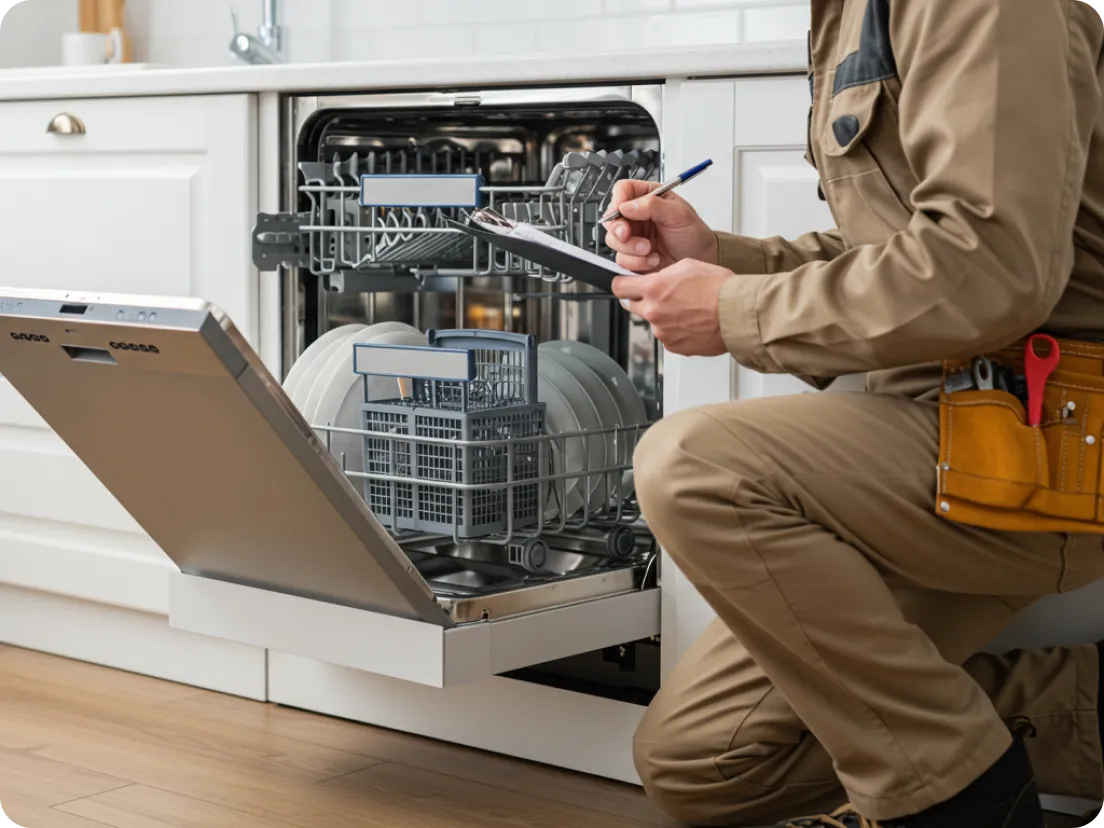


Any modern home relies on well-functioning appliances, and understanding installation and repair costs in 2026 can help you plan ahead when common issues arise. Instead of replacing old units, you can opt for professional repair services to restore functionality at a fraction of the cost of new appliances, as repair prices range from $44 to $143, with the average cost around $80 per hour of work.
Repairing your existing devices not only extends their lifespan but also contributes to more sustainable household practices by reducing electronic waste. Modern appliances are often built with modular components, which means there can be many common malfunctions, such as faulty sensors, worn-out seals, or electronic control issues.
But the good news is that they can be addressed without replacing the entire unit!
This guide will help you understand all you need to know about appliances costs to make well-informed decisions. By the end of this reading, you will have a clearer picture of what to expect when quoting for appliance repair, ensuring you get the best value for your investments.
Types of Appliance-Related Services and Costs
When it comes to appliances, you might need services like installation, repair, and replacement. The pricing for these services can vary widely depending on the device type, the complexity of the task, urgency, materials involved, and the geographic location where the work is performed.
| Type of Service | Cost | Features |
|---|---|---|
Appliance Installation | $124 - $1,225 | Professional setup and connection of new appliances such as refrigerators, ovens, and dishwashers. |
Appliance Repair[1] | $114 - $698 | Fixing malfunctioning appliances, including diagnostics and replacement of faulty parts. |
Appliance Replacement | $340 - $1,750 | Removing old appliances and installing new models, often including haul-away and disposal fees. |
HVAC Appliance Servicing | $152 - $380 | Routine maintenance and minor repairs for heating, ventilation, and air conditioning appliances. |
Built-in Appliance Installation | $788 - $3,897 | Installation of built-in units like wall ovens or custom refrigerators requiring specialized fitting. |
Appliance Emergency Repair | $172 - $818 | Immediate repair services available outside regular business hours for urgent appliance breakdowns. |
Appliance Installation Costs
Appliance installation involves setting up new household appliances such as refrigerators, washers, dryers, ovens, and dishwashers. This service includes connecting the new devices to water, gas, or electrical supplies safely and ensuring they function correctly.
The typical cost range spans from $124 to $1,225, with an average cost around $299, and main price factors include:
- the type and size of the appliance;
- the complexity of the hookups; and
- necessary modifications to existing connections or cabinetry.
Appliance Repair Costs
Appliance repair services cover diagnosing issues and fixing broken household devices to restore proper functionality. This can involve replacing components like thermostats, motors, or heating elements.
Repair costs generally range from $114 to $698, with an average near $249, but can differ depending on the appliance's brand and model, parts availability, extent of damage, and whether the repair requires a service call for on-site diagnostics.
You will see a cost breakdown per hour for each type of repair in the following topics. Keep reading!
Emergency Appliance Repair Costs
Emergency appliance repair is offered for urgent issues that arise outside standard working hours, such as a sudden refrigerator failure or a broken heating unit in winter. These services are priced higher due to shortened notice and after-hours availability.

Key cost drivers include the time of day, travel distance, and the severity of the appliance malfunction. Consider the graph above an average for emergency appliance repair in the U.S., but keep in mind that prices may vary from region to region.
Appliance Repair Cost per Hour
Appliance repair or installation costs can vary widely depending on the type of appliance, the complexity of the task, and the expertise required. On average, you can expect to pay between $63 and $160 per hour for most appliance-related services.

Hourly costs will fluctuate based on the service provider's expertise, geographic location, and any emergency or after-hours availability. For example, a licensed technician specialized in complex appliance repair may charge closer to the higher end of the range, while general appliance services or basic diagnostics may fall toward the lower or average rates.
8 Main Factors That Affect Appliance Repair Costs
Many different factors uniquely impact the cost of appliance repairs, making it important to consider these elements when requesting estimates or scheduling services. Check them out!
- Type and Brand of Appliance: High-end or specialized appliances, such as built-in ovens or luxury/smart refrigerators[2], often require more expensive parts and skilled technicians, affecting the total cost.
- Extent of the Repair or Service Needed: Minor repairs like replacing a gasket will usually cost less than major component replacements or complete system diagnostics and repairs, although there might be a minimum service call fee or a required minimum time billed, such as one or two hours.
- Age and Condition of the Appliance: Older appliances may require more time to troubleshoot and repair, or may use obsolete parts that are expensive or harder to find.
- Location and Accessibility of the Appliance: Devices installed in hard-to-reach spaces, such as tight kitchen corners or behind cabinetry, might require extra labor time and effort, increasing the hourly cost.
- Technician's Experience and Certification: Certified or specialized appliance repair experts may charge premium rates due to their training and higher success rates in repairs.
- Urgency and Timing of Service: Emergency service calls made during weekends and holidays often incur increased hourly rates due to the off-hours availability.
- Travel and Service Call Fees: If the technician needs to travel a long distance or the provider charges a separate service call fee, this will add to the overall cost.
- Diagnostic Fees: Some companies charge a flat diagnostic fee or include diagnostics within the hourly rate. Confirm this before scheduling service.
Also, there might be some particularities related to your own device.
Repair Costs by Common Home Appliances
Appliances come in a variety of configurations and capacities, and these factors directly affect their repair cost. Larger or more feature-rich models generally come with higher prices, while compact or basic versions tend to be more budget-friendly when fixing.
Below, you see a cost breakdown of common appliance types and sizes to help you get a clearer picture of the cost considerations involved.
Note: for air conditioning-related repairs, check this other guide on HVAC costs!
Refrigerators: Compact vs. Full-Size
Compact refrigerators are typically designed for small spaces like dorm rooms or offices. Their smaller capacity means fewer materials and simpler cooling systems, which usually translates into a lower price point, with typical refrigerator repair costs ranging from $113 to $344, with an average around $188.
On the other hand, full-size refrigerators are the standard in most American households, valued for their capacity and range of features, including:
- temperature zones;
- ice makers;
- water dispensers; and
- even smart connectivity.
However, with greater complexity comes a higher likelihood of mechanical or electronic issues, especially involving compressors, thermostats, or control boards. These components require professional attention, and repair costs for full-size refrigerators can go from $194 to $990, with average costs around $440.
Washing Machines: Top-Load vs. Front-Load
Top-load washers have a simpler design, making them more affordable and easier to repair. Common issues like agitator malfunctions, lid switch failures, and drain pump clogs can usually be resolved quickly by a technician.
Typical washing machine repair costs fall between $128 and $275, with average expenses around $182.
Now, for front-load washers, you can expect to spend from $154 to $475, with an average near $293 on repair costs.
Front-load washers are known for their energy efficiency[3] and cleaning performance, but have complex systems like drum bearings and door seals. This complexity can lead to more specialized and costly repairs, with common issues including leaking doors and electronic failures.
Routine maintenance, such as cleaning filters and inspecting seals, can help prevent more serious repairs down the line.
Dishwashers: Built-In vs. Portable
Built-in dishwashers seamlessly integrate into kitchen cabinetry and offer features like multiple spray arms, soil sensors, and quiet wash cycles. However, wear and tear are inevitable on components such as water inlets, drain pumps, and control panels[4].
When these parts fail, the dishwasher repair cost can reflect the complexity of the unit, usually ranging from $160 to $329, with average repairs landing around $214.
Portable dishwashers, on the other hand, offer a practical solution, requiring only a faucet connection to operate. Actually, because they lack the built-in complexity of fixed models, these units are often easier and faster to service: the dishwasher repair cost for portable models falls between $94 and $295, with an average around $188.
Dryers: Top and Front-Load
Top-load and front-load dryers have different internal layouts, affecting repair methods. Gas dryers need specialists certified for gas lines, while electric models typically have issues with thermostats or thermal fuses.
Depending on the model and the nature of the issue, the dryer repair[5] cost typically ranges from $104 to $401, with an average falling near $218.
Repairing vs. Replacing Appliances Costs: Which Is Better?
Deciding between repairing an appliance or replacing it with a new unit depends on appliance age, condition, repair costs, and future reliability[6]. Understanding the cost dynamics involved in both options is critical for cost-effective decisions.
Appliance Repair Costs
Repairs often involve diagnosis fees, parts replacement, and labor, including:
- Diagnostic Fee: Charged by service technicians to identify issues, costing between $69 and $140.
- Parts Replacement: Varies widely depending on the component and appliance model. Expected costs might range from $58 to $422.
- Labor Charges: Hourly rates for appliance repair professionals may fall between $78 and $140 per hour[7].
Example: A refrigerator compressor repair can be costly if parts and labor are extensive, while simpler fixes like thermostat replacement may remain affordable.
Appliance Replacement Costs
Replacing appliances involves the purchase price of a new unit plus installation and any associated add-ons as noted above.
- New Appliance Purchase: Cost varies widely by appliance type, brand, and features, typically from $329 to $3,897.
- Installation Fees: Often separate from purchase, installation may cost $132 to $490, depending on complexity.
- Disposal of Old Appliance: Expect to pay from $74 to $190 if disposal of old appliances is needed.
When considering repair vs. replacement[8], consider these three guidelines:
- Repair if the cost is less than a defined percentage (commonly 50%) of the replacement purchase price.
- For appliances older than a typical lifespan benchmark (e.g., 8-12 years for refrigerators), replacement is often more cost-effective.
- Factor in energy efficiency improvements from newer models, which may yield ongoing savings beyond upfront costs.
And, if the purchase is the best option for you, do not forget to take into consideration the cost of common add-ons.
Cost of Common Add-Ons for Appliances
When buying or upgrading appliances, consider add-ons that can affect the overall cost but provide peace of mind for repairs. Common add-ons include extended warranties, installation kits, removal of old units, delivery fees, and smart technology integration.
| Add-On | Cost | Details |
|---|---|---|
Extended Warranty | $110 - $496 | Additional coverage beyond the manufacturer's warranty. |
Installation Kit | $18 - $70 | Required parts for proper appliance setup, like venting or hoses. |
Delivery Fees | $59 - $190 | Transportation of the new appliance to your home. |
Smart Appliance Setup | $72 - $222 | Configuring Wi-Fi and app integration for smart features. |
Keep in mind that these are not obligatory, and you can customize your add-ons however you like.
DIY vs. Professional Appliance Repairs: Is It Worth It?
DIY when it comes to appliance repairs is not advisable, as it can lead to safety hazards or subpar performance. Hiring a qualified professional often proves safer, more efficient, and more cost-effective over time by ensuring the job is done right the first time.

Risks of DIY in Appliance Repair
- Safety First [9] : Many appliances involve electrical wiring, gas lines, or intricate mechanical systems. Without proper training, DIY repairs can pose serious risks, including electric shock, gas leaks, or fire hazards.
- Time and Efficiency: What seems like a quick fix can easily turn into a prolonged project. Without the right tools or experience, you may spend hours troubleshooting only to make the issue worse.
- Avoid Hidden Costs: Initial savings from skipping professional help can quickly
disappear if mistakes lead to damaged parts or require emergency intervention later on.
Advantages of Hiring a Pro
- Quality and Longevity [10] : Certified technicians know how to repair appliances correctly, helping them run more efficiently and extending their lifespan, ultimately protecting your investment.
- Warranty and Insurance: Professional services typically come with warranties and liability coverage, offering peace of mind that DIY fixes cannot match.
- No Hassle: When you hire a pro, you are not just fixing the issue; you are doing it safely, efficiently, and with lasting results.
In summary, while DIY might appear less expensive initially, the benefits of hiring a skilled professional generally outweigh the risks and hidden costs, providing peace of mind and better long-term value.
How to Save on Appliance Repair Costs
Saving on appliance expenses does not mean sacrificing quality or safety on repairs: it means making smart choices that maximize your budget.
Here are some practical tips to reduce these kinds of costs:
- Compare Professional Quotes: Request estimates from multiple professionals to find competitive pricing.
- Schedule Routine Maintenance: Regular upkeep prevents major breakdowns and prolongs appliance lifespan.
- Look for Package Deals: Professionals sometimes offer discounts for combining installation with repair or maintenance services.
- Time Your Service Wisely: Off-season scheduling or booking services during promotional periods can lower costs.
- Choose Energy-Efficient Appliances: While an upfront investment, these can reduce utility bills and maintenance needs over time.
- Avoid Unnecessary Repairs: Ask your technician to explain whether a repair is essential or if replacement is more cost-effective.
Ready to get the best value without the hassle? Contact a trusted professional through homeyou today and find vetted experts in your area who offer competitive prices and quality service. Do not risk costly mistakes: let seasoned pros handle your appliance needs safely and efficiently!
Write down the brand, model number, and a clear description of symptoms, including any error codes. Note when the problem started and what changed recently, such as a power outage. Clear access around the appliance and locate shutoffs for water, gas, or electricity for faster, safer service.
Many companies credit the diagnostic charge toward the final repair if you approve the work, but policies vary. Ask when scheduling whether diagnostics are included in hourly labor, waived with repair authorization, or charged as a separate flat fee. Get the policy in writing on the estimate.
Treat it as urgent if there is a gas smell, sparking, smoking, burning odor, active water leaking, or repeated breaker tripping. Shut off power, water, or gas if it is safe, and call a professional. Food-safety issues from a dead refrigerator can also justify after-hours service.
Some repairs can be completed on the first visit, but uncommon parts, older models, and specialty brands often require ordering components. Ask the provider about typical truck stock for your appliance type and expected lead times. Clarify whether an additional trip fee applies for return visits.
Coverage depends on the plan, the appliance age, and what failed. Warranties often exclude installation issues, misuse, or pre-existing problems, and may require using approved contractors. Before booking, confirm authorization steps, service call responsibilities, and any caps on parts or labor to avoid surprise denials.
Ask whether the technician is licensed or certified for the appliance type, especially for gas appliances. Confirm insurance, warranty on labor and parts, and whether they use OEM or aftermarket components. Request a written estimate that lists diagnostic charges, hourly rates, and any service call or travel fees.
Follow maintenance steps specific to the appliance: clean dryer vents, dishwasher filters, and washer seals; keep refrigerator coils free of dust; and avoid overloading machines. Ask the technician what caused the failure and whether related parts show wear. A small preventative fix can prevent a larger breakdown later.
Sometimes, yes. Older homes may have outdated outlets, insufficient circuits, nonstandard gas shutoffs, or incompatible water lines. Built-in appliances can also require cabinetry adjustments for fit and ventilation. Before buying, measure carefully and ask an installer to verify hookups, clearances, and code compliance requirements.
References
[1] Ziebarth, Ann C. "Appliance Service and Repair." Journal of Consumer Studies and Home Economics, vol. 16, no. 1, Mar. 1992, pp. 89-95. https://doi.org/10.1111/j.1470-6431.1992.tb00502.x.
[2] Floarea, Aurel-Dorian, and Valentin Sgarciu. "Smart Refrigerator: A Next Generation Refrigerator Connected to the IoT." 2022 14th International Conference on Electronics, Computers and Artificial Intelligence (ECAI), June 2016, pp. 1-6. https://doi.org/10.1109/ecai.2016.7861170.
[3] Advanced Solutions International, Inc. Energy Efficiency. www.aham.org/AHAM/Energy\_Efficiency/AHAM/EnergyEfficiency/Energy\_Efficiency.aspx?hkey=500a671c-c0f8-4f12-a9b8-577e99595583.
[4] Tecchio, Paolo, et al. "Understanding Lifetimes and Failure Modes of Defective Washing Machines and Dishwashers." Journal of Cleaner Production, vol. 215, Jan. 2019, pp. 1112-22. https://doi.org/10.1016/j.jclepro.2019.01.044.
[5] Kemp, Ian C., and Stuart P. Gardiner. "An Outline Method For Troubleshooting And Problem-Solving In Dryers." Drying Technology, vol. 19, no. 8, Aug. 2001, pp. 1875-90. https://doi.org/10.1081/drt-100107277.
[6] McCollough, John. "Factors Impacting the Demand for Repair Services of Household Products: The Disappearing Repair Trades and the Throwaway Society." International Journal of Consumer Studies, vol. 33, no. 6, July 2009, pp. 619-26. https://doi.org/10.1111/j.1470-6431.2009.00793.x.
[7] "Home Appliance Repairers." Bureau of Labor Statistics, 25 Apr. 2023, www.bls.gov/oes/2023/may/oes499031.htm.
[8] Bovea, María D., et al. "Repair Vs. Replacement: Selection of the Best End-of-life Scenario for Small Household Electric and Electronic Equipment Based on Life Cycle Assessment." Journal of Environmental Management, vol. 254, Nov. 2019, p. 109679. https://doi.org/10.1016/j.jenvman.2019.109679.
[9] Association of Home Appliance Manufacturers. Safety Standards. www.aham.org/AHAM/Safety/Standards/AHAM/Safety/Safety\_Standards.aspx?hkey=a56e2960-3774-4c70-af00-f3c8097d1a0b.
[10] Adler, Lee, and James D. Hlavacek. "Key Repair Service Factors for Consumer Durable Goods." Journal of Marketing Research, vol. 15, no. 4, Nov. 1978, pp. 634-38. https://doi.org/10.1177/002224377801500414.