

In 2026, asbestos removal costs typically range from $1,139 to $6,306 for residential properties, with most homeowners spending around $2,276 for professional abatement services.
The wide price variation depends on factors such as the amount of asbestos-containing materials, location accessibility, and local regulations.
Asbestos testing costs average between $237 to $815 for comprehensive sampling and analysis, while asbestos remediation costs can vary significantly based on the scope of contamination and removal complexity.
This complete guide will help you understand the costs of asbestos removal so you can budget better when addressing this serious health hazard safely and effectively.
Types of Asbestos Services and Associated Costs
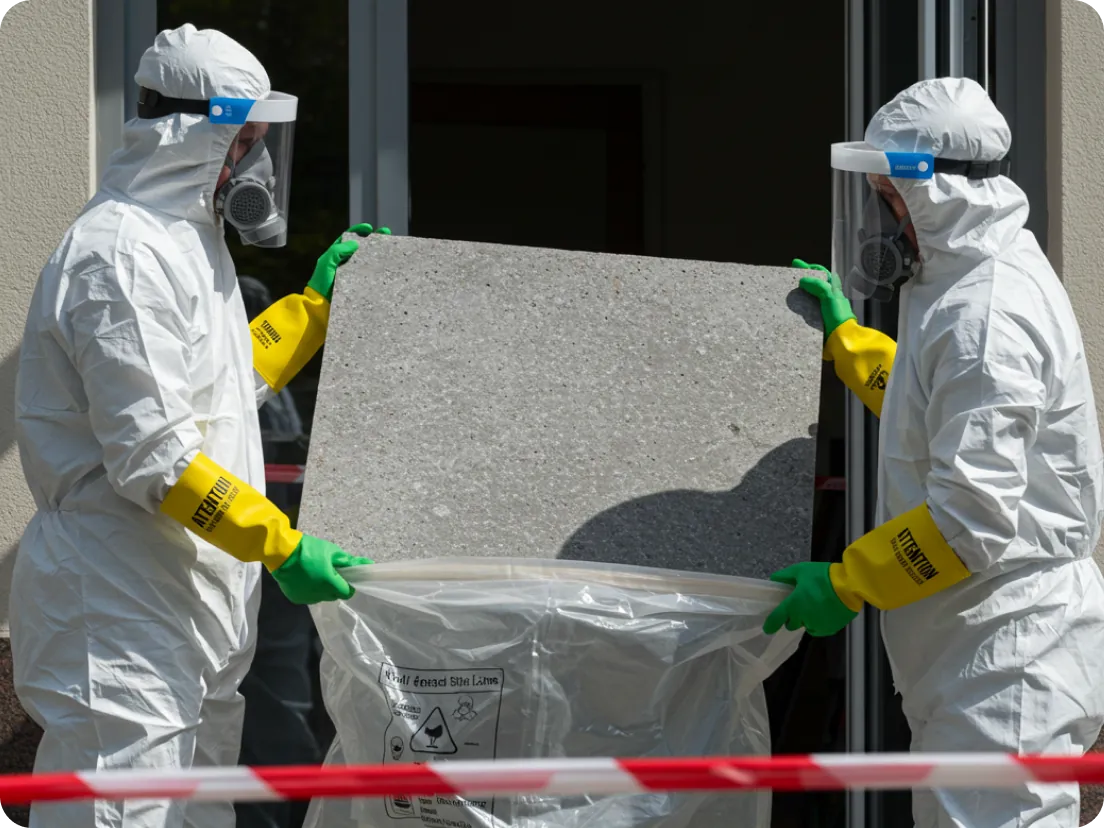
It is not just any low-cost handyman that can handle asbestos removal. Professional asbestos contractors provide specialized services that require extensive training, certification, and specialized equipment. The Environmental Protection Agency[1] mandates strict protocols for all asbestos-related work to protect public health.
Below is a detailed breakdown of common asbestos services and their estimated costs:
| Type of Service | Cost | Features |
|---|---|---|
Asbestos Testing | $237 - $815 | Includes sampling and laboratory analysis |
Small-Scale Removal | $773 - $3,420 | Less than 160 sq ft or 260 linear ft |
Large-Scale Removal | $11,861 - $33,886 | Whole-house or commercial abatement |
Pipe Insulation Removal | $875 - $3,420 | Depends on the pipe diameter and accessibility |
Floor Tile Removal | $374 - $1,434 | Includes safe disposal procedures |
Popcorn Ceiling Removal | $989 - $6,360 | Requires containment and air filtration |
Siding Removal | $1,163 - $3,789 | Weather and accessibility dependent |
Air Monitoring | $314 - $588 | Required during and after abatement |
(National averages based on EPA contractor data and industry reports)
1. Asbestos Testing Cost and Inspection Services
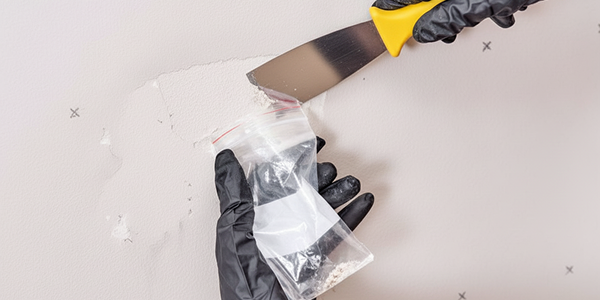
Before any removal work begins, professional testing is essential to identify asbestos-containing materials and assess contamination levels. The Occupational Safety and Health Administration[2] requires testing before any renovation or demolition work in buildings constructed before 1980.
- Cost Range: Asbestos testing cost typically ranges from $237 to $815 for residential properties.
- Average Cost: $484 for comprehensive testing of a typical home.
- What's Included: Professional sampling, laboratory analysis, detailed reporting, and recommendations.
- Variables: Costs increase with property size, number of samples required, and expedited laboratory processing.
Testing Cost Breakdown:
- Basic Testing (3-5 samples): $198 - $530
- Comprehensive Testing (6-12 samples): $458 - $1,330
- Large Property Testing (12+ samples): $1,330 - $2,524
- Rush Laboratory Processing: Additional $32 - $79 per sample
2. Small-Scale Asbestos Removal Costs
Small-scale removal projects involve less than 160 square feet of asbestos-containing material or 260 linear feet of pipe insulation. These projects still require professional contractors but involve less complex containment procedures.
- Cost Range: Small-scale removal typically costs $773 to $3,420.
- Average Cost: $1,871 for standard small-scale abatement.
- Variables Affecting Cost:
- Material type and friability level
- Accessibility and workspace constraints
- Local disposal fees ($67 to $92 per cubic yard)
- Required permits ($408 to $1,787)
3. Large-Scale Asbestos Abatement Cost
Large-scale projects involve extensive asbestos removal requiring full containment systems, negative air pressure, and comprehensive worker protection. The EPA[3] classifies these as projects exceeding small-scale thresholds.
- Cost Range: Large-scale asbestos remediation cost ranges from $11,861 to $33,886 or more.
- Average Cost: $22,018 for whole-house abatement in a typical residential property.
- Variables Affecting Cost:
- Total square footage of affected areas
- Number of different material types
- Structural complexity and access challenges
- Duration of the project and labor requirements
- Post-abatement cleanup and air clearance testing
How Much Does Asbestos Removal Cost Per Hour?
Professional asbestos contractors typically charge project-based rates rather than hourly fees due to the specialized nature of the work and regulatory requirements. However, understanding the underlying labor costs helps homeowners evaluate quotes and understand pricing structures.

Most asbestos cleaning cost calculations include minimum project fees regardless of actual time spent, as setup and containment procedures are required for any asbestos work. The National Institute for Occupational Safety and Health[4] emphasizes that proper procedures cannot be rushed, making time-based pricing less common.
Factors Affecting the Cost of Asbestos Removal
The total cost of asbestos removal depends on multiple variables, from material hazards to regulatory demands. Below are the five primary factors that determine pricing.
- Type and Condition of Asbestos Materials: Friable asbestos (easily crumbled) poses higher risks and costs due to intensive containment needs. Non-friable materials (intact) are lower risk but still require professional handling. Damage increases costs due to contamination and cleanup requirements.
- Location and Accessibility: Urban areas usually have higher labor rates but more contractors available, while rural areas may face extra travel fees. Hard-to-reach spaces like attics and crawl spaces increase labor time and costs.
- Regulatory Compliance Requirements: Permit fees range from $528 to $3,049 based on project scope and jurisdiction. Inspections add $278 to $884, and air quality monitoring costs $171 to $981 daily, along with administrative expenses for notification requirements.[4]
- Disposal and Transportation Costs: Asbestos waste must be transported to licensed facilities, costing $330 to $683 per truckload. Disposal fees average $14 - $109 per cubic yard, while specialized packaging and labeling add 10-15% to material costs.
- Emergency vs. Scheduled Services: Emergency removals command premium rates (1.5-2x standard pricing), with weekend/holiday work adding a 25-50% surcharge. Expedited lab testing for samples incurs an extra $123 - $260 per sample.
More complex projects requiring specialized containment, extensive decontamination, or affecting large areas will cost significantly more than simple, localized removals.
Asbestos Removal Costs by Material Type
Different asbestos-containing materials, such as insulation services, for example, require specific removal techniques, directly impacting project costs. The Consumer Product Safety Commission has identified common materials found in homes built before 1980.
1. Insulation Materials
Asbestos was commonly used in various insulation materials due to its excellent heat resistance. These applications are often challenging and hazardous to remove because of the high friability of asbestos fibers in insulation. Proper containment and specialized protective equipment are essential to prevent airborne contamination. Costs vary significantly based on the location and complexity of the insulation.
| Item | Cost | Description |
|---|---|---|
Pipe Insulation | $388 - $885 | High friability risk, complex containment |
Boiler Insulation | $1,290 - $3,935 | Heat-resistant suits required |
Attic Insulation | $1,696 - $3,285 | Extensive air sealing needed |
Wall Insulation | $1,189 - $6,752 | May require wall removal/reconstruction |
2. Building Materials
Many older homes feature asbestos-containing building materials, such as floor tiles and siding. These materials are generally less friable but still pose significant health risks when disturbed. Removal costs reflect the additional labor required to safely detach these materials, manage adhesives, and address structural elements like ceilings and roofs.
| Item | Cost | Description |
|---|---|---|
Floor Tiles (9"X9") | $917 - $3,254 | Includes adhesive removal |
Popcorn Ceiling | $1,284 - $3,786 | Overhead work complexity |
Siding Materials | $1,795 - $7,298 | Weather exposure considerations |
Roofing Materials | $4,131 - $18,855 | Height safety requirements |
3. Specialized Applications
Certain specialized environments, such as industrial settings or laboratories, also contain asbestos in fireproofing materials, ductwork insulation, and equipment. These applications often require advanced removal techniques, specialized dismantling procedures, and strict adherence to safety protocols, resulting in higher overall costs.
| Item | Cost | Description |
|---|---|---|
Fireproofing Materials | $1,180 - $7,438 | Industrial-grade containment |
Ductwork Insulation | $2,177 - $6,504 | HVAC system integration |
Laboratory Equipment | $4,192 - $25,022 | Specialized dismantling required |
Emergency Asbestos Removal Cost
When asbestos-containing materials are damaged due to water leaks, fires, storms, or construction accidents, immediate professional intervention becomes necessary to protect occupants from dangerous fiber exposure.
Emergency asbestos removal services operate outside normal business hours and require rapid response capabilities, specialized equipment mobilization, and expedited regulatory notifications.
These urgent response services command premium pricing due to the immediate availability requirements, after-hours labor costs, and accelerated project timelines needed to ensure public safety.

Emergency asbestos removal typically costs 1.5 to 2 times standard removal rates, with weekend and holiday services commanding additional 25-50% surcharges. The urgency of protecting occupants from immediate health risks makes emergency response essential despite the premium costs involved.
DIY vs. Professional Asbestos Removal Cost Comparison
CRITICAL WARNING: DIY asbestos removal is extremely dangerous and strongly discouraged by all health agencies. The EPA, OSHA, and CDC unanimously recommend professional abatement due to severe health risks[1][2][6].

Do not attempt to deal with asbestos yourself; homeyou and other specialists strongly recommend that you hire a professional for your safety.
Why Professional Asbestos Abatement is Essential
The health risks associated with asbestos exposure make professional removal the only safe option. The National Cancer Institute[5] reports that asbestos exposure causes mesothelioma, lung cancer, and other fatal diseases with no safe exposure threshold.
Critical Health Risks of DIY Removal:
- Mesothelioma: Fatal cancer with a 10-50 year latency period
- Asbestosis: Progressive, incurable lung scarring
- Lung Cancer: Significantly increased risk even from brief exposure
- Family Exposure: Contamination spread to household members
- Legal Consequences: Violations of federal and state regulations
Professional Advantages:
- Certified Training: Extensive safety and removal technique education
- Specialized Equipment: Industrial-grade containment and filtration systems
- Insurance Coverage: Protection against liability and health claims
- Regulatory Compliance: Full adherence to EPA, OSHA, and state requirements
- Health Monitoring: Professional oversight of worker and area safety
- Proper Disposal: Licensed facility handling and documentation
How Much Does Asbestos Testing Cost vs. Removal Prevention
Early detection through professional testing can significantly reduce the overall cost of asbestos removal by identifying problems before they become major contamination issues.
Asbestos Testing Scenarios and Associated Costs
Understanding the costs associated with asbestos testing and removal under different scenarios can help you plan and save significantly. Here's a breakdown:
Preventive Testing
- Testing Cost: $244 - $963
- Potential Removal Cost: none (if test results are negative)
- Savings: $458 - $2,779
Pre-Renovation Testing
- Testing Cost: $264 - $831
- Potential Removal Cost: $1,025 - $3,929 (limited scope)
- Savings: Major cost avoidance by identifying asbestos before starting renovations.
Emergency Testing
- Testing Cost: $320 - $980
- Potential Removal Cost: $1,320 - $9,747 (extensive work may be needed)
- Savings: Helps with risk mitigation and compliance, potentially avoiding higher emergency remedial costs
Each scenario offers distinct advantages and is suitable depending on the timing and purpose of the asbestos testing. Preventive and pre-renovation testing can lead to significant savings, while emergency testing is crucial for urgent situations.
Regular testing every 5-10 years in older buildings can prevent minor issues from becoming major abatement projects.
Cost-Saving Strategies for Asbestos Projects
While safety cannot be compromised, property owners can manage asbestos removal costs through strategic planning and informed decision-making.
- Bundle Projects Strategically: Combining asbestos removal with planned renovations or other hazardous material abatement (like lead paint) can reduce overall costs. Scheduling multiple areas for simultaneous treatment also improves efficiency.
- Timing Considerations: Planning non-emergency work during contractors' slower seasons avoids premium rates. Allowing adequate time for competitive bidding ensures better pricing and scheduling flexibility.
- Proper Planning and Preparation: Thorough testing before project planning helps avoid surprises. Obtaining multiple quotes from qualified contractors and understanding regulatory requirements upfront prevents delays and extra costs.
- Insurance and Financial Assistance: Checking homeowner's insurance for coverage, investigating state or local abatement programs, and exploring EPA grants for low-income households can provide financial relief.
- Professional Consultation: Hiring certified inspectors and experienced project designers ensures accurate assessments and cost-effective solutions. Verifying contractor licensing and insurance minimizes risks.
- Long-Term Cost Management: Addressing asbestos early prevents costly deterioration. Maintaining documentation, considering encapsulation where legal, and planning regular monitoring reduces future expenses[6].
Regulatory Compliance and Asbestos Remediation Cost
Federal, state, and local regulations significantly impact asbestos project costs through mandatory procedures, notifications, and oversight requirements.
Federal Requirements Affecting Costs:
- EPA Notification: $153 - $346 for project
registration - OSHA Compliance[7]: Worker protection standards adding 15-25% to labor costs
- DOT Regulations: Transportation requirements for waste disposal
State and Local Requirements:
- State Licensing Fees: $199 - $382 annually per contractor
- Local Permits: $53 - $117 per project
- Inspection Requirements: $237 - $1,481 per mandatory inspection
- Air Quality Monitoring[8]: $250 - $989 per project phase
Documentation and Record-Keeping Costs:
- Chain of Custody Documentation: Administrative overhead of 5-10%
- Waste Manifests: Required tracking adding $19 - $43 per shipment
- Final Reports: Professional documentation costing $173 - $490[9]
Property owners should prioritize safety over cost savings, obtain multiple qualified quotes, and plan projects strategically to manage expenses while ensuring complete compliance[10] with health and safety regulations.
Age is the biggest clue. Homes built before 1980 commonly used asbestos in insulation, ceiling textures, vinyl tiles, siding, and some roofing products. You cannot confirm asbestos by sight alone. Avoid disturbing the material and schedule sampling by a licensed inspector for reliable identification.
Stop work right away, keep people and pets out of the area, and shut off fans or HVAC that could circulate fibers. Do not sweep, vacuum, or remove debris. Close doors, isolate the space if possible, and call a certified asbestos professional to evaluate and advise next steps.
In some situations, encapsulation or enclosure is allowed and can be safer than removal because it reduces disturbance. It is typically considered when the material is intact, stable, and can remain undisturbed. A qualified asbestos professional must evaluate condition, location, and local rules before recommending it.
Ask for state licensing information, proof of current training certifications, and evidence of liability and workers' compensation insurance. Request a written work plan describing containment, negative air filtration, and disposal methods. Verify they will provide required permits, air monitoring or clearance testing documentation, and waste manifests.
It depends on the location and scope of the work. Many jobs can be contained so occupants stay out of the work zone only. Larger projects, work near bedrooms or HVAC systems, or damaged friable materials may require temporary relocation for safety and to allow uninterrupted containment and cleanup.
Sampling is often completed in a single visit, but turnaround depends on the laboratory and whether rush processing is requested. Standard results commonly take a few business days. Plan ahead before renovations, since scheduling an inspector and waiting for results can delay demolition or contractor start dates.
Removed material is sealed in specialized, labeled containers or bags, then transported by approved haulers to licensed disposal facilities. Proper documentation tracks the waste from your property to final disposal. Ask your contractor for copies of manifests and records, which can be useful for future real estate disclosures.
Common surprises include finding additional asbestos in adjacent materials, needing more containment due to tight access, extra cleaning after contamination, required third-party air monitoring, or delays from permits and inspections. Repairs after removal, such as replacing insulation, drywall, flooring, or HVAC cleaning, can also expand the overall project scope.
References
[1] Environmental Protection Agency. "Asbestos Laws and Regulations." EPA, 2024. https://www.epa.gov/asbestos/asbestos-laws-and-regulations
[2] Occupational Safety and Health Administration. "Asbestos - Construction Standards." OSHA, 2024. https://www.osha.gov/asbestos/construction
[3] Environmental Protection Agency. "Information for Owners and Managers of Buildings that Contain Asbestos." EPA, 2024. https://www.epa.gov/asbestos/information-owners-and-managers-buildings-contain-asbestos
[4] Environmental Protection Agency. "Overview of the Asbestos National Emission Standards for Hazardous Air Pollutants (NESHAP)." EPA, 2024. https://www.epa.gov/asbestos/overview-asbestos-national-emission-standards-hazardous-air-pollutants-neshap
[5] National Cancer Institute. "Asbestos Exposure and Cancer Risk Fact Sheet." NCI, 2024. https://www.cancer.gov/about-cancer/causes-prevention/risk/substances/asbestos/asbestos-fact-sheet
[6] National Institute for Occupational Safety and Health. "Limiting Potential Exposures of Workers to Asbestos." NIOSH/CDC, 2003. https://www.cdc.gov/niosh/docs/2003-141/default.html
[7] Occupational Safety and Health Administration. "Asbestos Standards." OSHA, 2024. https://www.osha.gov/asbestos/standards
[8] Agency for Toxic Substances and Disease Registry. "Asbestos Toxicity: What Are U.S. Standards and Regulations for Asbestos Levels?" ATSDR/CDC, 2024. https://archive.cdc.gov/www%5Fatsdr%5Fcdc%5Fgov/csem/asbestos/standards%5Fand%5Fregulations.html
[9] National Institute for Occupational Safety and Health. "Asbestos Fibers and Other Elongate Mineral Particles." NIOSH/CDC, 2011. https://www.cdc.gov/niosh/docs/2011-159/default.html
[10] Environmental Protection Agency. "EPA Actions to Protect the Public from Exposure to Asbestos." EPA, 2026. https://www.epa.gov/asbestos/epa-actions-protect-public-exposure-asbestos