

Foundation expenses differ depending on the type, size, and complexity of the project, with prices generally ranging from $2,283 at the low end up to $18,455 for more extensive jobs in 2026. On average, you can expect to pay around $7,909, though exact costs will depend on specific needs and regional factors.
Ignoring early signs of foundation damage can lead to much more serious structural issues. According to the Federal Emergency Management Agency (FEMA), foundation problems are one of the leading causes of long-term property damage after natural disasters like floods and earthquakes, potentially compromising the entire structure if left unaddressed[1].
That is why acting quickly (and understanding what goes into the price) is essential. In this reading, you will get to know the price range for this kind of project and understand what factors influence the final bill.
Key takeaways
Foundation costs in 2026 range from $2,283 to $18,455, depending on project scope and requirements.
The average foundation cost is typically around $7,909, serving as a useful benchmark.
Affordable options exist for simpler repairs, while premium solutions may involve more extensive structural work.
Understanding what drives price differences helps you avoid unexpected expenses and select qualified contractors.
Regular maintenance, such as monitoring drainage systems, can extend the lifespan of your foundation.
Types of Foundation Services and Cost Ranges
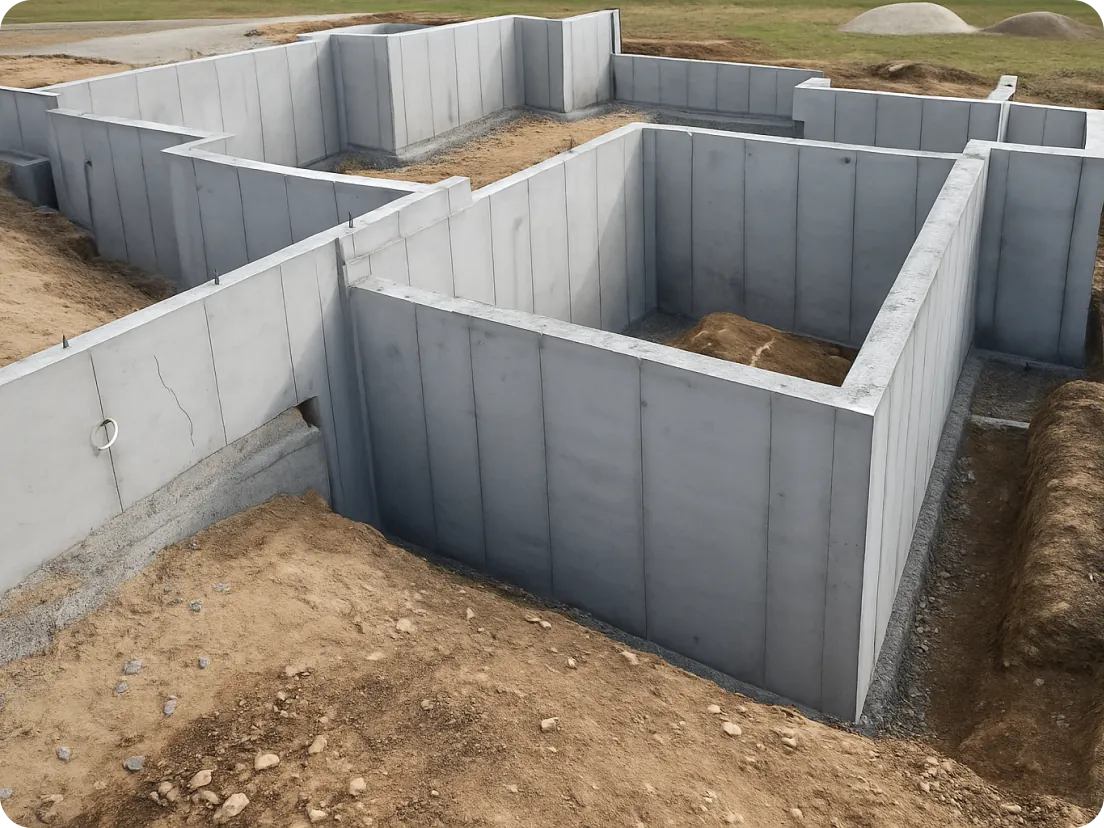
Foundations are a critical part of any building project, and the type of foundation used can significantly affect the overall cost. Common services include slab foundations, pier and beam installations, crawl space foundations, and basements[2]. Pricing varies widely depending on factors such as project size, soil conditions, materials, local labor rates, and the complexity or urgency of the work.
| Type of Service | Cost | Features |
|---|---|---|
Slab Foundation Installation | $7,382 - $22,524 | A concrete slab poured directly on the ground, common for modern homes with simpler footing requirements. |
Pier and Beam Foundation Setup | $8,318 - $23,566 | Foundation type using concrete piers and wooden or steel beams, often used in areas prone to flooding or uneven soil. |
Crawl Space Foundation Build | $7,027 - $21,843 | Creates a small access space between the ground and the home flooring, allowing easier access for plumbing and electrical work. |
Basement Foundation Construction | $24,764 - $143,109 | A deep foundation involving excavation and wall forming, providing additional living or storage space under the home. |
Foundation Crack Repair | $272 - $1,290 | Repairs to cracks and structural damages in existing foundations to maintain integrity and prevent further damage. |
Slab Foundation Installation Costs
This service involves pouring a single layer of concrete directly onto the ground to form the base of a home or structure[3]. It is typically chosen for areas with stable soil and minimal frost risk[4].
The cost ranges from $7,382 to $22,524, with an average price around $12,939, varying according to:
- the slab thickness;
- site preparation needs; and
- the presence of reinforcing materials like rebar or wire mesh.
Basement Foundation Construction Costs
Basement foundations require extensive excavation to create usable below-ground living or storage space and add concrete costs to build walls and floors, which makes this service generally more costly due to:
- the complexity of excavation;
- basement waterproofing needs[5]; and
- structural support.
Costs range between $24,764 and $143,109, with an average near $53,596. Important price drivers include the depth and size of the basement, soil conditions, and waterproofing requirements.
Foundation Repair Costs
Repair services address structural issues in existing foundations caused by shifting soil, poor initial installation, or age. The process may involve patching, epoxy injections, or underpinning, depending on severity.
Costs fall between $272 and $1,290, with a typical average of $694. Pricing depends on crack size, repair method, and accessibility of the foundation area.
How Much Does It Cost to Fix, Repair, or Build a Foundation per Hour?
Foundation services cost per hour can vary based on the type of work required, the expertise of the contractor, and geographic location. Generally, foundation specialists charge between $68 and $299 per hour, with the average hourly cost hovering around $211.

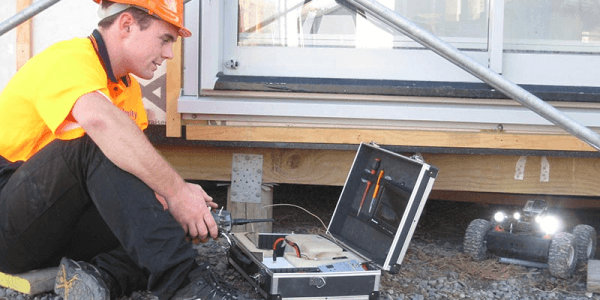
Before any repair begins, foundation inspection plays a crucial role in identifying underlying issues. Professionals assess the structural integrity, looking for cracks, uneven settling, or signs of moisture intrusion that may indicate more serious concerns.
Based on this evaluation, repair work can begin with targeted solutions, ranging from filling cracks and sealing entry points to reinforcing weakened sections or correcting structural shifts caused by soil movement.
In more complex cases, excavation might be necessary to access deeper or obstructed areas that require reinforcement or replacement, especially when damage lies beneath the surface. Excavation is also common in large-scale foundation upgrades, preparing the site for substantial structural interventions.
To prevent future problems, you should also opt for foundation waterproofing services, in which the contractor will apply sealants, membranes, or install drainage systems, creating a barrier against moisture and protecting the structure from erosion, mold problems, and long-term deterioration.
8 Main Factors That Affect Foundation Costs
Several unique factors determine how much a foundation project will ultimately cost. Recognizing these influences can help you anticipate expenses and set realistic expectations before beginning foundation work. They are listed and detailed below.
- Type of Foundation: Different options, such as slab, crawl space[6], or basement, require varying levels of labor, materials, and equipment, directly affecting cost.
- Extent of Damage or Repair: Minor cracks may only need small repairs, whereas major settling, structural shifts, or water damage could necessitate extensive and costly interventions.
- Soil Conditions: Poor or unstable soils require specialized foundation solutions or extra excavation, increasing hourly labor and material expenses.
- Access to the Site: Limited access to the foundation area, such as tight yards or difficult terrain, can slow work progress and raise hourly charges.
- Contractor Experience and Licensing: Licensed and highly experienced foundation specialists typically charge more, reflecting their expertise and reliability.
- Materials and Techniques Used: The choice of concrete mix, waterproofing membranes, or underpinning technologies can influence both labor time and material costs.
- Geographic Location: Regional labor rates, building codes, and supply availability vary widely, affecting baseline costs for foundation services.
- Permits and Inspections: Local requirements for permits and official inspections may add to costs due to fees and additional labor to ensure compliance.
Special attention to factors 1 and 2, which will be better explained in the next topic. Keep reading to learn more.
Costs to Build a Foundation by Size and Type
Foundations vary significantly depending on the building's footprint, depth, and construction style, all of which influence the materials and labor required. Larger or more complex foundations typically demand more resources and time, driving the overall price upward.
Concrete Slab Foundations
A concrete slab foundation is a popular choice for many homes due to its simplicity and cost-effectiveness[7]. It involves pouring a single layer of concrete directly on the ground to create a flat base.
- Typical Cost Range: $7,382 - $22,524.
- Average Cost: $12,939.
This foundation type is generally less expensive for smaller footprints, with costs increasing according to the slab's thickness and the overall square footage.
Crawl Space Foundations
A crawl space foundation elevates the house[8] slightly above ground level, creating a small accessible space beneath the floor. This type provides easier access to plumbing and electrical lines but requires additional materials like perimeter walls[9] and ventilation.
- Typical Cost Range: $7,027 - $21,843.
- Average Cost: $13,114.
Size impacts the cost significantly, as larger crawl spaces require more materials and labor.
The height and insulation needs also affect pricing.
Basement Foundations
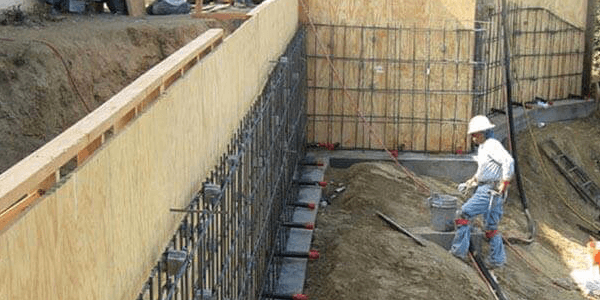
Basement foundations provide full, usable space beneath the home, which can add significant value. They require excavation and reinforced walls, so they tend to be costly and complex.
- Typical Cost Range: $24,764 - $143,109.
- Average Cost: $53,596.
Keep in mind that the total square footage of the basement drives up expenses, and deeper basements or those with waterproofing needs can also increase prices notably.
Pier and Beam Foundations
Pier and beam foundations use concrete piers or wooden beams to support the home above ground level. This type is commonly used in uneven terrain or flood-prone areas.
- Typical Cost Range: $8,318 - $23,566.
- Average Cost: $15,018.
Cost depends on the number of piers needed, which relates to the building size. More extensive setups with additional beams can also drive up labor and material costs.
Custom or Specialty Foundations
Some projects require custom foundation solutions, such as piles, caissons, or specialized reinforced concrete, often for larger or complex buildings, designed based on soil conditions, structural demands, or unique architectural features.
- Typical Cost Range: $18,137 - $67,237.
- Average Cost: $34,821.
Costs vary widely depending on engineering requirements and size.
Emergency Foundation Services Cost: National Average
When foundation problems pose immediate risks, such as severe cracks, sudden settling, or water intrusion, emergency services may be required to prevent further structural damage. These urgent repairs typically involve quick assessments, temporary stabilization, or rapid excavation, which can increase labor intensity and pricing.

Emergency foundation services often range higher than standard repairs due to the urgency, after-hours labor, and specialized equipment involved. These interventions may include emergency shoring, rapid concrete pouring, temporary waterproofing, or structural bracing, depending on the severity of the issue.
Cost of Common Foundation Add-Ons
When budgeting for foundation work, it is important to consider that additional features and services may significantly impact the total expense. Add-ons often address specific structural needs or site conditions and may be necessary for long-term durability and safety. Typical options include:
- Waterproofing and drainage systems, which enhance moisture control with waterproof coatings, membranes, or perimeter drains to prevent water intrusion and damage. Cost range: $72 to $279 per linear foot.
- Basement insulation to improve energy efficiency[10] and indoor comfort. Cost range: $1 to $4 per square foot.
- Foundation piering and underpinning to stabilize or reinforce the foundation, typically required for settling or shifting soil conditions. Cost range: $1,189 to $3,915 per pier installed.
- Radon mitigation systems to reduce radon gas levels, crucial in certain geographic areas for health safety. Cost range: $819 to $2,323 per installation.
- Installation of vapor barriers and moisture mats beneath concrete slabs to prevent moisture migration from the ground. Cost range: $2 to $5 per square foot.
- Soil stabilization and grading to promote proper water runoff and avoid erosion. Cost range: $29 to $74 per cubic yard.
When contracting for foundation work, request detailed quotes specifying which add-ons are included to avoid unexpected expenses.
Foundation Cost Calculator per Square Foot
Calculating foundation costs on a per-square-foot basis provides a helpful framework for estimating overall project expenses and comparing bids from contractors. This method considers the total foundation area, plus adjustments for add-ons and site conditions.
For example, let's say you are building a 1,200 sq. ft. foundation with a base rate applied per square foot. On top of that, additional expenses like waterproofing and soil testing are included. The final estimate brings together all these elements:
Estimated Total Cost: $22,459
See? But the good news is that you do not need to do this calculation once you count on a good foundation pro.
DIY vs. Professional Foundations: Costs and Risks
When it comes to foundation work, many homeowners weigh the option of tackling the project themselves versus hiring a professional, but this journey is not well-advised, as improper installation can lead to structural damage, costly repairs, or safety hazards.

Risks of Attempting a DIY Foundation Project
- Inadequate knowledge of soil types and foundation requirements, which can cause premature settling or cracking
- Improper mixing or pouring of concrete, leading to weak structural support
- Missing critical waterproofing steps, increasing the likelihood of moisture problems and mold
- Lack of necessary permits and building code compliance, risking fines and failed inspections
Advantages of Hiring a Qualified Professional
- Professionals assess soil conditions properly, use the right materials, and follow local building codes
- Experienced crews complete the job faster and with fewer errors, saving time and reducing stress
- Many professionals provide guarantees on their work, protecting your investment
- Theproper handling of equipment and techniques reduces the chance of accidents or structural failures
Ultimately, while DIY seems cheaper initially, homeyou strongly recommends professional foundation work, which is a safer, more efficient, and cost-effective solution in the long run. And you can save money on other fronts!
How to Definitely Save on Foundations Costs
Foundation projects are an essential investment in your home's safety and value, but that does not mean you cannot look for ways to save smartly. By planning carefully and making informed decisions, you can reduce costs without compromising quality or safety.
Here are some practical tips to lower your foundation expenses:
- Compare estimates from several contractors to ensure competitive pricing and services.
- Schedule work during off-peak seasons, as some contractors offer discounts during slower periods of the year.
- Avoid unnecessary upgrades or changes once work begins to prevent added fees
- Prepare your site in advance, clearing debris, vegetation, and obstacles yourself to reduce labor hours charged by professionals.
- Ask about financing options or payment plans. Many contractors provide flexible solutions to spread out costs.
Ready to get reliable, cost-effective foundation services without the risks of DIY? Contact a trusted professional through homeyou today to compare prices and find the best local expert for your project!
References
[1] "Foundation." FEMA.gov, 22 Dec. 2021, www.fema.gov/about/glossary/foundation.
[2] U.S. Department of Housing and Urban Development. The Rehab Guide: Foundations. HUD, 2000. www.huduser.gov/publications/pdf/foundations.pdf.
[3] "Structure." FEMA.gov, 8 July 2020, www.fema.gov/about/glossary/structure.
[4] "Slab Foundations Continue to Overtake Basements in New Homes." NAHB, 31 Aug. 2021, www.nahb.org/blog/2021/08/slab-foundations-continue-to-overtake-basements-in-new-homes.
[5] Filonenko, Olena, et al. "IMPROVING WATERPROOFING PROPERTIES IN THE WALL BASEMENT AREA BY INJECTION METHOD." ACADEMIC JOURNAL Series Industrial Machine Building Civil Engineering, vol. 2, no. 53, Oct. 2019, pp. 122-27. https://doi.org/10.26906/znp.2019.53.1902.
[6] "Slab Vs. Crawl Spaces: What Is the Difference?" NAHB, 7 July 2023, www.nahb.org/blog/2023/07/sponsored-content-mono-slab-ez-form.
[7] Zhao, Na. "New Single-Family Homes Foundations in 2021." Eye on Housing | National Association of Home Builders Discusses Economics and Housing Policy, 5 Oct. 2022, eyeonhousing.org/2022/10/new-single-family-homes-foundations-in-2021.
[8] "Elevated Building." FEMA.gov, 5 Mar. 2020, www.fema.gov/about/glossary/elevated-building.
[9] "Foundation Walls." FEMA.gov, 5 Mar. 2020, www.fema.gov/about/glossary/foundation-walls.
[10] Emery, A. F., et al. "Thermal Performance of a Residential Basement." ASME 2000 International Mechanical Engineering Congress and Exposition, Nov. 2000, pp. 187-94. https://doi.org/10.1115/imece2000-1427.