
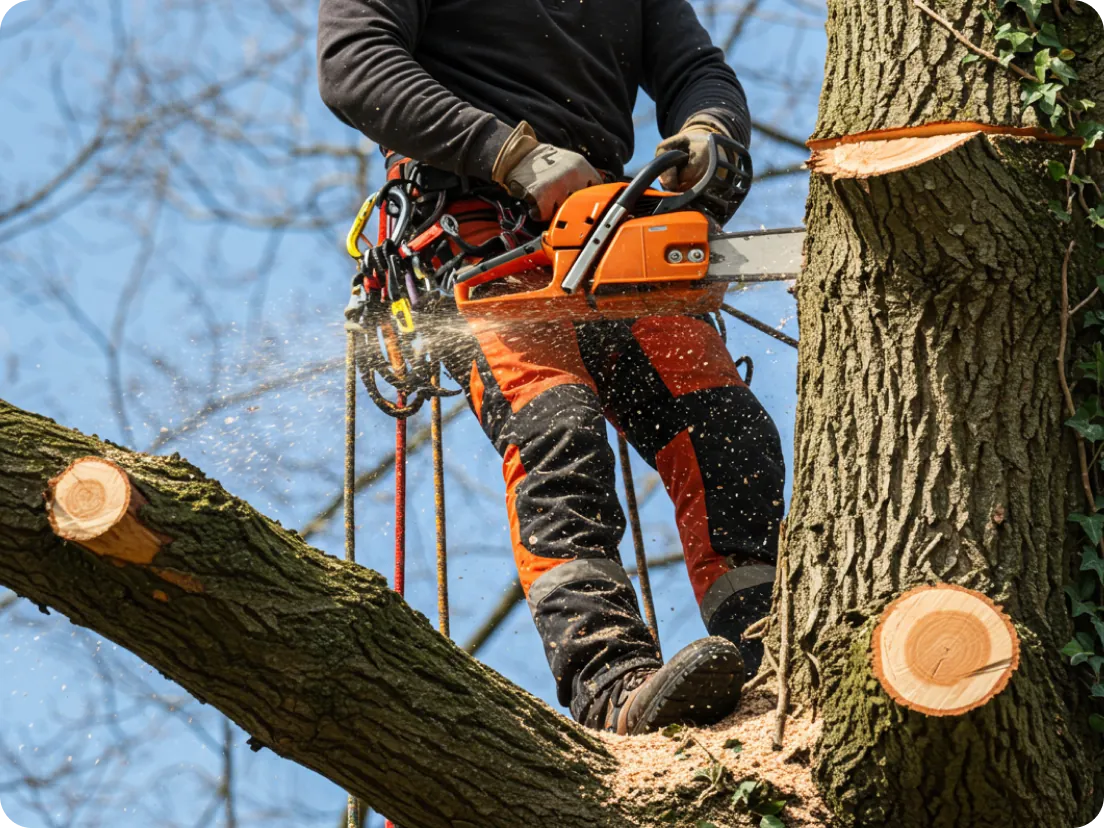


Tree service prices in 2026 differ widely depending on the scope of work, tree size, and location, ranging from minor pruning to large tree removals. Typically, you can expect costs to fall somewhere between $194 and $2,091, with an average around $875.
Beyond aesthetics, proper tree maintenance is crucial for safety and property value[1]. Neglecting regular trimming can lead to overgrown branches that pose risks during storms and may interfere with power lines, resulting in costly damage. Investing in professional tree services ensures the health of your trees and the safety of your surroundings.
This reading will cover factors that influence service pricing and provide insights for informed decision-making, whether for maintenance or emergency removal.
Key takeaways
Tree service costs generally range from $194 to $2,091, depending on the complexity of the job.[2]
Most homeowners pay about $875 for common tree maintenance and removal tasks.
Affordable options often cover basic pruning and trimming, while premium services include extensive removal or emergency work.
Understanding these price ranges can help avoid unexpected expenses and ensure you get fair value for the service provided.
Types of Tree Services and How Much They Cost
Tree services encompass a variety of tasks related to the care, maintenance, and removal of trees. These services can range from routine pruning[3] to emergency removals and stump grinding. Pricing varies widely based on the scope of work, tree size and location, urgency, and regional factors.
| Type of Service | Cost | Features |
|---|---|---|
Tree Pruning | $83 - $1,199 | Trimming branches to maintain tree health, safety, and aesthetics. |
Tree Removal | $384 - $1,931 | Complete removal of trees that are dead, diseased, or hazardous. |
Stump Grinding | $153 - $518 | Grinding and removing tree stumps after removal or cutting. |
Emergency Tree Removal | $889 - $6,230 | Fast response for fallen or dangerous trees after storms or damage. |
Tree Cabling And Bracing | $213 - $1,099 | Installing support systems to stabilize weak or split trees. |
Tree Health Inspection | $87 - $474 | Assessing tree health to prevent disease and identify risks. |
Tree Removal Costs
Tree removal involves cutting down and hauling away entire trees that pose a risk or obstruct property. It is necessary for dead, dying, or structurally compromised vegetation. Factors influencing price include:
- tree height;
- diameter;
- difficulty of access to the location; and
- and disposal requirements.
Removal costs typically depend on tree height, location, and complexity of the job, with prices generally ranging from to .
| Size | Cost | Details |
|---|---|---|
Small (<15 Ft) | $288 - $949 | Less equipment, simpler job |
Medium (15-30 Ft) | $366 - $2,465 | More labor/equipment required |
Large (>30 Ft) | $1,343 - $3,227 | Specialized equipment, possible crane use |
* Cost ranges are based on a national average.
Emergency Tree Removal Costs
Emergency services are performed on short notice in response to storm damage, fallen trees, or hazardous conditions that threaten safety or property. Due to the urgency and risk involved, this service commands a premium cost ranging from $889 to $6,230, with a midpoint near $1,867.

High cost drivers also include response time, equipment needs, and site difficulty.
Stump Grinding Costs
After trees are removed, stump grinding eliminates remaining stumps by grinding them down below ground level. This service is commonly chosen to prevent tripping hazards and allow for landscaping or new planting. Pricing falls between $153 and $518, averaging near $328, depending on stump size, number of stumps, and terrain accessibility.
How Much Does Tree Service Cost Per Hour
Homeowners are often charged on an hourly basis for tree services, with varying rates. Typically, hourly labor costs cover general maintenance such as trimming, pruning, or stump grinding, as well as more specialized tasks like tree removal or emergency storm cleanup.

Hourly rates for tree services generally fall within a range influenced by the specific work involved. For example, standard tree trimming or pruning costs may be priced at the lower to mid-end of the hourly spectrum.
More labor-intensive activities, such as large tree removals or emergency storm damage response, tend to be at the higher end of the range. Additionally, services that require specialized equipment or certification can also command higher hourly rates.
8 Factors That Affect Tree Services Cost + Examples
Several unique factors influence how much you will pay for tree services in 2026. These factors relate directly to the nature of the trees, the property, and the specific service required, making it essential to assess each element to get an accurate estimate.
- Tree Size and Height: Larger trees require more time, equipment, and labor, raising costs. For instance, removing a mature oak tree can be significantly more expensive per hour than trimming a young ornamental tree, reflected in variables like $248.
- Accessibility of the Tree Location: Hard-to-reach areas such as steep slopes, confined spaces, or near electrical power lines generally increase the costs. In this case, costs can fetch $197.
- Equipment and Tools Required: Jobs requiring cranes, chippers, or aerial lifts have higher hourly rates due to the expense and expertise involved, with maximum expense getting to $1,350.
- Geographic Location and Seasonality: Costs vary by region due to labor rates and seasonal demand, often increasing during peak times like late fall or after storms.
- Health and Condition of Trees: Diseased, dead, or hazardous trees require extra care for safe removal, often resulting in higher hourly charges that can reach $390.
- Permitting and Local Regulations: Some municipalities require permits or inspections, adding time and cost, which can influence hourly labor rates.
- Company Experience and Certification: Tree service companies[4] with advanced certifications (e.g., ISA Certified Arborists[5]) or extensive experience may charge premium hourly rates, reaching $238 per hour.
- Tree Service Insurance: Reputable companies carry liability insurance and workers' compensation for job-related damages or injuries. Insurance costs typically account for 10% to 20% of operating expenses, influencing their hourly or project rates.
A homeowner in a suburban neighborhood needs to remove a large diseased oak tree over 50 feet tall, leaning toward power lines, after a summer storm. The removal requires a certified arborist, specialized equipment like an aerial lift and crane, and coordination with the utility company.
Additionally, since this is a hazardous tree that must be handled urgently, emergency service rates apply. The complex access and safety measures push the price toward the higher end, potentially reaching $390 per hour, with total costs nearing several thousand dollars.
In contrast, if the homeowner only needed a tree trimming service on a small maple in their front yard with easy truck access, the job could be completed within a few hours at a standard rate closer to $73, making it a far more affordable project.
Tree Services Cost by Size and Complexity: Real Averages
When it comes to tree services, the overall cost largely depends on the size, height, and complexity of the tree or trees involved. Larger and more challenging jobs require more labor, specialized equipment, and time, all of which impact pricing.
Small Trees (up to 20 Feet)
Small tree services typically involve trees that are up to 20 feet tall with relatively straightforward access and minimal branching. These trees often require less equipment and fewer workers.
- Description: These include young or ornamental trees in yards or small gardens.
- Cost Range: $49 to $107 per hour.
- Average Cost Per Service: .
Medium Trees (20 to 50 Feet)
Medium-sized trees are taller and often require more careful handling due to their increased height and branch density. Jobs on these plants can be more labor-intensive and sometimes necessitate the use of bucket trucks or ropes for safe pruning and removal.
- Description: Common mature trees in residential areas[6], such as maples or oaks.
- Cost Range: $73 to $152 per hour.
- Average Cost Per Service: .
Large Trees (50 to 80 Feet)
Large trees present increased risks and challenges due to their size, weight, and potential proximity to structures or power lines. The removal or pruning of them usually involves a crew with specialized equipment, such as cranes or large chippers.
- Description: Mature, towering trees requiring professional-grade gear and several workers.
- Cost Range: $181 to $392 per hour.
- Average Cost Per Service: .
Extra-Large Trees (80 Feet and Above)
Extra-large trees are exceptionally tall or wide and often require a multi-day effort, extensive manpower, and heavy machinery. They may also require permits or specific safety measures, increasing the complexity and cost.
- Description: Iconic or legacy trees, often in parks or large estates, require highly experienced arborists.
- Cost Range: $248 to $498 per hour.
- Average Cost Per Service: $1,871.
Plus, when servicing multiple trees or handling large-scale property clearing, pricing often shifts to a project-based or bulk rate due to economies of scale and longer timelines. Residential or commercial properties requiring work on clusters of trees or land clearing can cost from $1,590 to $10,234 per project, with an average of $4,663.
How Much Does Tree Planting Service Cost?
If you are looking to enhance your landscape, planting new trees[7] is one of the best long-term investments you can make. But like other tree-related work, the cost of professional planting varies depending on several key factors.
In 2026, this kind of service typically ranges from $153 to $2,031 per tree, depending on the species, size, and site conditions.
Smaller ornamental trees or saplings on open, accessible ground are on the lower end of the scale. Larger specimens or planting in challenging locations can significantly increase costs, especially when heavy equipment or soil preparation is required.
Other elements that influence the final price include:
- soil amendments;
- staking and supports;
- mulching;
- delivery fees; and
- site preparation.
Additionally, some companies may charge a flat project fee rather than a per-tree rate, particularly for large-scale plantings or commercial jobs.
How Often Should You Trim Trees?
Regular tree trimming is essential for maintaining tree health, safety, and aesthetic appeal. The general recommendation is to hire a tree trimming service every 3 to 5 years, but the exact frequency depends on several factors:
- Tree Species: Fast-growing species like willows or poplars may require more frequent trimming (every 2-3 years) than slow-growing species such as oaks.
- Tree Age and Size: Younger trees benefit from formative pruning annually or biannually, while mature trees may only need periodic maintenance pruning.
- Location: Trees near structures, power lines, or driveways should be trimmed more often to prevent damage or obstructions.
- Health Status: Diseased or damaged branches should be removed promptly to prevent further decay or pest infestation.
Typical professional tree trimming costs range from $31 to $118 per hour, with average small-to-medium trees costing between $87 and $813.
| Size | Cost | Details |
|---|---|---|
Small (<15 Ft) | $87 - $427 | Routine maintenance, minimal equipment |
Medium (15-30 Ft) | $154 - $813 | Standard trimming, some equipment needed |
Large (>30 Ft) | $313 - $1,094 | Requires cranes or lifts, higher safety risk |
What Are the Signs That You Should Remove Your Tree?
Tree removal is a significant undertaking that is generally more costly than trimming, but necessary when trees pose safety risks or health issues unresolvable through pruning. Key indicators that tree removal should be considered include the following.
- Severe Structural Damage: Large cracks, splits, or a leaning trunk that suggests instability.
- Pest Infestation: Invasive insects or infestations that threaten tree survival and surrounding plants and cannot be solved through pest control services.
- Extensive Disease or Decay: Visible fungus, extensive dead branches, or hollow trunk sections.
- Blocked Sunlight or Obstructive Growth: Trees severely shading gardens, obstructing views, or interfering with power lines beyond safe pruning options.
- Root Damage or Heaving: Tree roots damaging sidewalks, foundations, or underground utilities.
- Storm Damage: Trees that have been uprooted or severely damaged by weather and cannot be safely pruned.
Quick reminder: It is always best to consult a professional on the subject before cutting any trees, as the service might imply the payment of fees and permits.
DIY vs. Professional Tree Services Costs + Risks
DIY tree services might seem like a money-saving option initially, but the reality often tells a different story. Tree work can be dangerous, time-consuming, and requires specialized tools and knowledge. In contrast, hiring a professional arborist or tree service company ensures the job is done safely, efficiently, and to a high standard, often saving you money and headaches in the long run.

Risks of Attempting DIY Tree Services
- Personal Injury: Tree work involves climbing, cutting, and heavy lifting, activities that can cause severe injuries without proper training and safety gear.
- Inadequate Equipment: Most homeowners lack access to professional-grade tools needed for large or hazardous trees, resulting in inefficient or incomplete work.
- Property Damage: Incorrect pruning or removal may harm your landscaping, structures, or the health of surrounding trees.
- Legal and Liability Issues: Improper tree removal may violate local safety codes or lead to complications if neighboring properties are affected.
Advantages of Hiring a Qualified Professional
- Safety First: Certified arborists use appropriate safety measures
and have insurance protections in place for both workers and your property. - Expertise and Efficiency: Professionals assess tree health, identify risks, and execute efficient removal or maintenance[8] with minimal disruption.
- Better Long-Term Value: Properly maintained trees support property value and curb appeal, avoiding potential costly damage or premature tree death.
- Clean-Up Included: Most pros handle debris removal, leaving your yard clean without extra effort.
As shown in the graph, DIY tree services may appear cheaper upfront, primarily limited to tool rentals or basic equipment costs. However, professional services, while higher in initial expense, factor in specialized equipment and expertise, leading to safer executions and potentially fewer costly mistakes or injuries, especially for trees too close to power lines or roofing structures.
How to Save on Tree Services Costs: 6 Effective Tips
Tree services can represent a significant investment, but there are smart ways to minimize these expenses without cutting corners on quality or safety. Understanding how to save can help you get the job done correctly while staying within your budget.
Tips to Reduce Tree Services Costs:
- Get Multiple Quotes: Compare estimates from several reputable professionals to find competitive pricing and services.
- Schedule Off-Season Jobs: Tree work during slower seasons (typically late fall or winter) might result in lower rates.
- Prepare Your Yard: Clear obstacles like garden furniture or tools to reduce the time professionals spend setting up.
- Limit Scope: Identify specific tree issues beforehand, for example, opting for trimming instead of full removal when appropriate.
- Bundle Services: If you have multiple trees or yard projects, request pricing for combined services to receive discounts.
- Maintain Trees Regularly: Regular pruning and inspections can prevent costly emergency removals later.
Ready to get professional, safe, and cost-effective tree services? Contact a trusted local expert through homeyou today to find the best deals and ensure your trees receive the care they deserve.
References
[1] Morales, Dominic. "The Contribution of Trees to Residential Property Value." Arboriculture & Urban Forestry, vol. 6, no. 11, Nov. 1980, pp. 305-08. https://doi.org/10.48044/jauf.1980.074.
[2] Abbott, Richard, and Kenneth Miller. "Estimating and Pricing Tree Care Jobs." Arboriculture & Urban Forestry, vol. 13, no. 4, Apr. 1987, pp. 118-20. https://doi.org/10.48044/jauf.1987.025.
[3] Clark, James and Nelda P. Matheny. "The Research Foundation to Tree Pruning: A Review of the Literature." Arboriculture & Urban Forestry (2010).
[4] "Estimating and Pricing Tree Care Jobs." Arboriculture & Urban Forestry, vol. 13, no. 4, Apr. 1987, pp. 118-20. https://doi.org/10.48044/jauf.1987.025.
[5] International Society of Arboriculture > Credentials > Types of Credentials > ISA Certified Arborist. www.isa-arbor.com/credentials/types-of-credentials/isa-certified-arborist.
[6] Summit, Joshua, and E. Gregory McPherson. "Residential Tree Planting and Care: A Study of Attitudes and Behavior in Sacramento, California." Arboriculture & Urban Forestry, vol. 24, no. 2, Mar. 1998, pp. 89-97. https://doi.org/10.48044/jauf.1998.012.
[7] Brancalion, Pedro H. S., and Karen D. Holl. "Guidance for Successful Tree Planting Initiatives." Journal of Applied Ecology, vol. 57, no. 12, July 2020, pp. 2349-61. https://doi.org/10.1111/1365-2664.13725.
[8] O'Brien, Patrick, et al. "Performance Standards for Municipal Tree Maintenance." Arboriculture & Urban Forestry, vol. 18, no. 6, Nov. 1992, pp. 307-15. https://doi.org/10.48044/jauf.1992.059.


