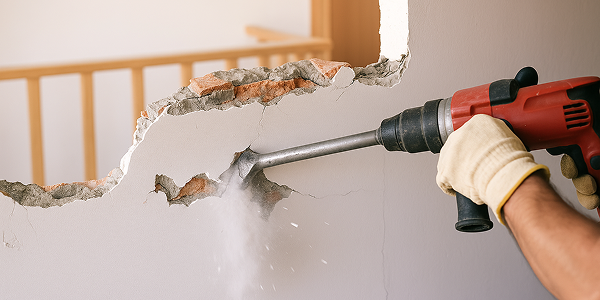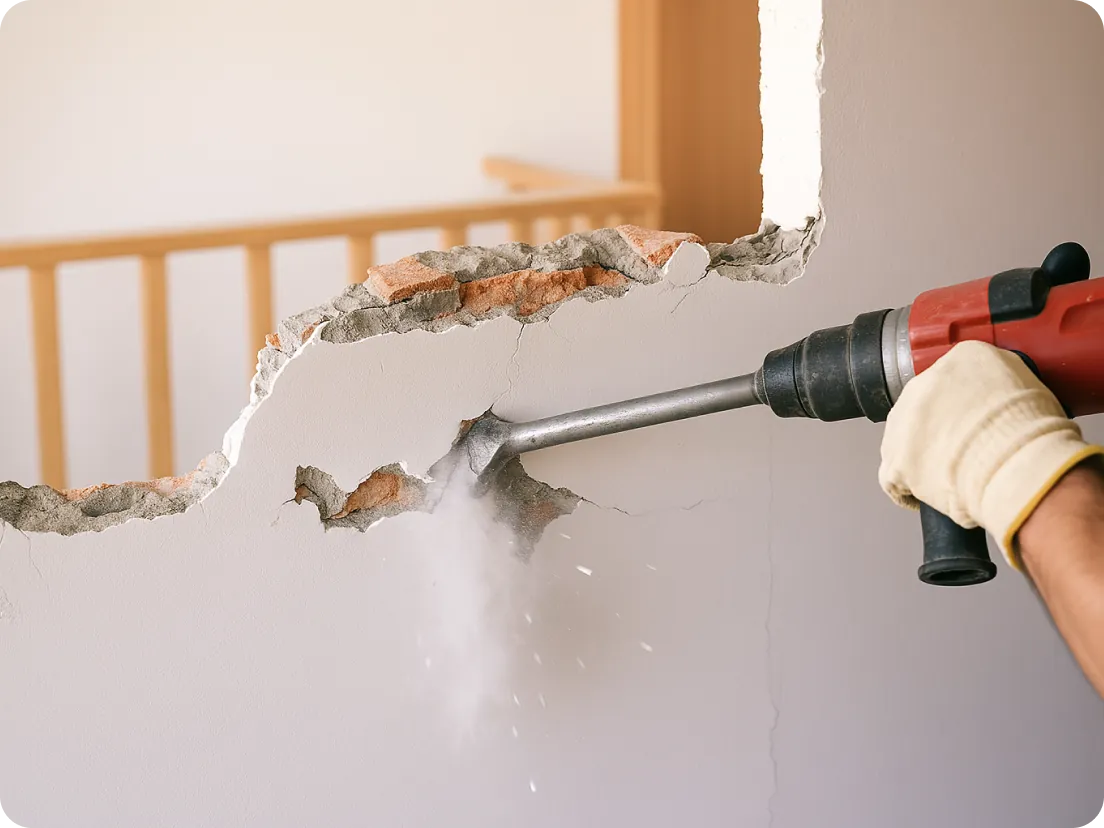


In 2026, house demolition cost typically ranges from $6,136 to $26,441 for a standard single-family home, with most homeowners spending around $15,745 for professional demolition services. The wide price variation depends on factors such as home size, construction materials, location accessibility, and local disposal regulations.
Home demolition costs can vary significantly based on the scope of work required. Partial demolitions like bathroom demolition cost an average of between $881 to $11,241, while complete structure removal may reach $11,241 or more for larger properties. Concrete demolition cost adds $514 to $3,280 per square foot to the overall project expenses.
When you know these cost variations, it helps you to budget more effectively for your demolition projects. In this complete cost guide, we will cover everything about demolition costs, from partial room teardowns to complete structure removal.
Types of Demolition Services and Associated Costs
Professional demolition contractors offer specialized services that require extensive training, specialized equipment, and adherence to regulatory compliance. The Occupational Safety and Health Administration mandates strict safety protocols for all demolition work to protect workers and the public[1].
Below is a detailed breakdown of standard demolition services and their estimated costs:
| Type of Service | Cost | Features |
|---|---|---|
Interior Demolition | $1,189 - $5,279 | Selective removal of walls, fixtures, flooring |
Bathroom Demolition | $714 - $2,588 | Complete bathroom gutting, including fixtures |
Kitchen Demolition | $394 - $2,984 | Cabinet, appliance, and countertop removal |
Garage Demolition | $1,835 - $9,983 | Detached structure removal |
Partial House Demolition | $1,590 - $18,851 | Selective structural removal |
Complete House Demolition | $6,927 - $24,764 | Full structure removal and debris cleanup |
Concrete Demolition | $514 - $3,280 | Foundation, driveway, sidewalk removal |
Hazardous Material Removal | $274 - $989 | Asbestos, lead paint abatement |
1. Interior Demolition Costs
Interior demolition typically ranges from $1,189 to $5,279 for residential properties and involves the selective removal of non-structural elements within a building[2]. The Environmental Protection Agency requires testing for hazardous materials, like asbestos removal, in buildings constructed before 1978[3].
Interior Demolition Cost Breakdown:
- Basic Room Demolition (100-200 sq ft): $941 - $2,682
- Multi-Room Demolition (200-500 sq ft): $1,787 - $6,181
- Whole-House Interior (500+ sq ft): $6,964 - $24,400
- Hazardous Material Testing: Additional $240 - $834
2. Bathroom Demolition Cost Specifics
Bathroom demolition requires careful handling of plumbing systems, electrical components, and potential water damage. The National Association of Home Builders reports that bathroom renovations often begin with complete demolition.
Bathroom demolition cost typically ranges from $714 to $2,588, with an average cost of $1,420 for complete bathroom demolition.
Variables Affecting Cost:
- tile and fixture complexity;
- plumbing disconnection requirements;
- electrical system modifications; and
- disposal fees for ceramic and metal fixtures.
3. Complete House Demolition Costs
Complete structure removal involves total building demolition, foundation removal, and site cleanup. The Department of Housing and Urban Development provides guidelines for safe demolition practices in residential areas.
The cost of complete house demolition varies from $6,506 to $24,769, and the average cost stays around $15,869 for standard single-family home demolition.
Variables Affecting Cost:
- home size and square footage;
- construction material types;
- foundation complexity; and
- site accessibility and cleanup requirements.
Demolition Cost Per Hour and Labor Rates
Professional demolition contractors typically charge project-based rates, but knowing underlying labor costs helps homeowners evaluate quotes and understand pricing structures.

Hourly rates can vary a lot depending on the job. Tearing out a non-load-bearing wall is usually much cheaper than removing a structural beam or dealing with asbestos. Specialized work takes more time, skill, and equipment, which is why it costs more.
| Type of Labor | Cost | Details |
|---|---|---|
Demolition Supervisor | $32 - $46/hour | OSHA 30-hour training and state licensing |
Equipment Operator | $19 - $39/hour | Heavy machinery certification |
General Demolition Worker | $21 - $54/hour | OSHA 10-hour safety training |
Hazardous Material Specialist | $32 - $54/hour | EPA-approved certification |
Most demolition cost calculations include minimum project fees regardless of actual time spent, as equipment mobilization and safety setup are required for any demolition work. The National Institute for Occupational Safety and Health emphasizes that proper safety procedures cannot be rushed, making time-based pricing less common for smaller projects[4].
Factors Affecting How Much Home Demolition Costs
Several critical factors influence the overall expense of demolition projects:
- Size and Complexity of Structure: Building size directly impacts costs through labor, equipment needs, and disposal volumes. Small homes (under 1,000 sq ft) typically cost $5,742 - $18,598, while larger homes (2,000+ sq ft) range from $14,510 - $32,937. Multi-story structures add $14,229 - $38,679 per story due to increased complexity.
- Construction Materials and Methods: Materials dictate demolition methods and disposal costs. Wood-frame structures are the most affordable, while brick, masonry, and concrete require specialized equipment and cost more. Steel frames may offset costs with scrap metal value.
- Location and Accessibility: Urban areas often have higher labor rates but better equipment access, while rural sites may face mobilization fees. Difficult terrain or narrow access can increase costs by 25-50%, and nearby utility lines may require additional safety measures.
- Permits and Regulatory Compliance: Local regulations add expenses, including demolition permits ($237 - $1,785), utility disconnections ($197 - $680), and environmental assessments ($1,827 - $3,699). Traffic control for street closures may cost $851 - $4,222.
- Disposal and Debris Management: Waste handling costs vary by material: general debris ranges from $67 to $83 per cubic yard, concrete/masonry from $53 to $93, and hazardous materials from $189 to $378. Metal recycling can offset some disposal costs.
Additionally, utility disconnections, such as those for gas, water, or electrical services, also contribute to the final demolition cost.
Urgent Demolition Services Cost
Emergency demolition services address urgent situations requiring immediate attention, such as storm damage, fire damage, or structural collapse risks. These services typically cost 50-100% more than standard scheduled demolition work due to immediate response requirements and safety considerations.

Emergency demolition situations often involve compromised structures requiring specialized safety protocols and equipment. The higher costs reflect immediate mobilization requirements, safety equipment needs, and potential after-hours work. Insurance coverage may offset some emergency demolition costs, particularly when related to covered perils like storms or fires[5].
Concrete Demolition Cost and Specialized Services
Concrete demolition represents a significant portion of many demolition projects, requiring specialized equipment and techniques. The American Concrete Institute provides guidelines for safe concrete removal practices[6].
Concrete Demolition Cost Calculator Factors
Several variables affect concrete demolition cost calculations:
| Material Type | Cost | Details |
|---|---|---|
Sidewalks (4 Inches) | $8 - $21/square foot | Standard jackhammer work |
Driveways (6 Inches) | $6 - $15/square foot | May require saw cutting |
Foundation Walls | $14 - $37/square foot | Rebar removal complexity |
Basement Floors | $4 - $13/square foot | Confined space challenges |
Reinforced Slabs | $7 - $15/square foot | Heavy equipment required |
Specialized Concrete Demolition Methods
- Jackhammer Demolition: $2 - $10 per square foot for standard thickness
- Saw Cutting: $5 - $37 per linear foot for precise cuts
- Hydraulic Breaking: $5 - $16 per square foot for thick sections
- Chemical Demolition: $7 - $16 per square foot for sensitive areas
DIY vs. Professional Demolition Cost Comparison
While some homeowners consider DIY demolition to reduce costs, professional services often provide better value when considering safety, efficiency, and potential complications.

Why Professional Demolition Services Provide Value
The complexity of modern demolition work makes professional services essential for most projects. The Occupational Safety and Health Administration reports that construction and demolition account for significant workplace injuries among untrained individuals[5].
Critical Risks of DIY Demolition:
- Structural Collapse: Improper load-bearing wall removal
- Utility Line Damage: Gas, electric, and water line strikes
- Hazardous Material Exposure: Asbestos, lead paint, and mold[7][8]
- Equipment Accidents: Heavy machinery operation without training
- Legal Violations: Permit and disposal regulation non-compliance[9]
Professional Service Advantages:
- Certified Training: Extensive safety and demolition technique education
- Specialized Equipment: Industrial-grade tools and machinery
- Insurance Coverage: Protection against liability and property damage
- Regulatory Compliance: Full adherence to local building codes and regulations
- Efficient Completion: Professional teams complete work faster and more safely
- Proper Disposal: Licensed facility handling and environmental compliance[10]
Cost-Saving Strategies for Demolition Projects
While safety cannot be compromised, property owners can manage demolition costs through strategic planning and informed decision-making.
- Strategic Timing and Scheduling: Planning demolition during off-peak seasons (like winter) can cut costs significantly. Combining demolition with new construction boosts efficiency, and allowing time for competitive bids leads to better pricing. Emergency demolitions can be 50-100% more expensive than scheduled ones.
- Material Recovery and Value Extraction: Salvaging materials such as hardwood flooring and fixtures can reduce costs. Metal recycling adds scrap value, and donations may provide tax deductions. Consider deconstruction to preserve valuable materials.
- Comprehensive Planning and Preparation: A detailed project scope and accurate plans help avoid costly mid-project changes. Getting multiple contractor quotes, coordinating utility disconnections, and preparing access routes minimizes unexpected expenses.
- Regulatory and Permit Efficiency: Applying for permits early can prevent expedited processing fees. Hiring experienced contractors ensures compliance with local regulations and addresses all requirements upfront to avoid delays.
- Optimized Waste Management: Sorting debris for recyclables lowers disposal costs, and correctly sizing dumpsters avoids extra fees. Collaborating with local disposal facilities can secure better rates for bulk disposal.
- Professional Consultation and Risk Management: Engaging qualified contractors familiar with local standards ensures effective project execution. Proper insurance and detailed contracts help safeguard against liabilities and change orders.
Stay on Budget with Demolition Services
House demolition costs in 2026 reflect the complexity and safety requirements of modern demolition work[11]. While home demolition costs vary significantly based on project scope, location, and complexity, the investment in professional demolition services protects both immediate project success and long-term property value.
Ready to start your demolition project with trustworthy pros? Contact homeyou today for a free consultation and competitive pricing on all your demolition cost needs. Our experienced team provides comprehensive services, from initial assessment to final cleanup, ensuring your project stays on budget and on schedule.
Expect a site visit, scope confirmation, and paperwork such as permits and utility shutoffs. You typically need to remove personal property, secure pets, and clarify what stays versus goes. Ask about access for trucks and dumpsters, neighbor notifications, and how the crew will protect areas not being demolished.
Usually, utilities must be officially disconnected by the utility company or a licensed trade, not just switched off at the panel. Contractors can often coordinate scheduling, but you should confirm who is responsible in writing. Proper disconnection reduces fire, flooding, and gas risks and avoids inspection or permit delays.
Timeline depends on permitting, hazardous-material testing, accessibility, and how much cleanup is included. The physical teardown may be quick, but approvals, utility disconnects, and debris hauling can add days or weeks. Ask your contractor for a schedule that includes inspection milestones and final site grading expectations.
Foundation removal is not always included, and keeping it can limit what you can build next. Local codes and engineering requirements may require partial or full removal, especially if the new footprint differs. Confirm whether slab, footings, basements, and backfill are part of the scope and how the site will be left.
Hidden conditions drive surprises, such as undocumented additions, thicker-than-expected concrete, or buried debris. Hazardous materials found after work starts can pause the job for testing and specialized removal. Access problems, required traffic control, extra dumpster swaps, and additional utility work also commonly expand the final scope.
Yes, but it is typically done through planned salvage or deconstruction rather than fast mechanical demolition. Salvage can reduce disposal volume and sometimes creates resale, recycling, or donation value. However, careful removal takes extra labor and time, so savings depend on material value and how salvage is coordinated.
Compare scope line by line: what is being demolished, what remains, and who handles permits, utility disconnects, hazardous testing, hauling, and final cleanup. Request proof of insurance, a debris disposal plan, and a change-order process. Ask whether pricing is lump-sum or includes allowances for dumpsters and disposal weight.
It can be, when demolition is required due to a covered peril and documented by the insurer. Coverage often depends on adjuster approval, safety orders, and whether the structure is deemed a total loss. Obtain written authorization before starting, keep photos and reports, and confirm who pays for emergency stabilization and debris removal.
References
[1] Occupational Safety and Health Administration. "Construction Industry Safety Standards." OSHA, 2024. https://www.osha.gov/construction
[2] Occupational Safety and Health Administration. (1994). Demolition regulations do apply to the removal of ceilings and interior non-load-bearing walls, and partitions. U.S. Department of Labor. https://www.osha.gov/laws-regs/standardinterpretations/1994-01-27-0
[3] Environmental Protection Agency. "Renovation, Repair, and Painting Program." EPA, 2024. https://www.epa.gov/lead/renovation-repair-and-painting-program
[4] National Institute for Occupational Safety and Health. "Construction Safety and Health Guidelines." NIOSH/CDC, 2024. https://www.cdc.gov/niosh/construction/
[5] Occupational Safety and Health Administration. (2026). Demolition - Standards. U.S. Department of Labor. https://www.osha.gov/demolition/standards
[6] American Concrete Institute. "Guide for Demolition of Concrete." ACI, 2024. https://www.concrete.org/publications/internationalconcreteabstractsportal.aspx
[7] U.S. Environmental Protection Agency. (2026). Lead-Based Paint and Demolition. https://www.epa.gov/large-scale-residential-demolition/lead-based-paint-and-demolition
[8] U.S. Environmental Protection Agency. (2026). Asbestos-Containing Materials (ACM) and Demolition. https://www.epa.gov/large-scale-residential-demolition/asbestos-containing-materials-acm-and-demolition
[9] Occupational Safety and Health Administration. (2026). 1926.850 - Preparatory operations. U.S. Department of Labor. https://www.osha.gov/laws-regs/regulations/standardnumber/1926/1926.850
[10] U.S. Environmental Protection Agency. (2024). Overview of the Asbestos National Emission Standards for Hazardous Air Pollutants (NESHAP). https://www.epa.gov/asbestos/overview-asbestos-national-emission-standards-hazardous-air-pollutants-neshap
[11] Occupational Safety and Health Administration. (2026). Demolition - Overview. U.S. Department of Labor. https://www.osha.gov/demolition