
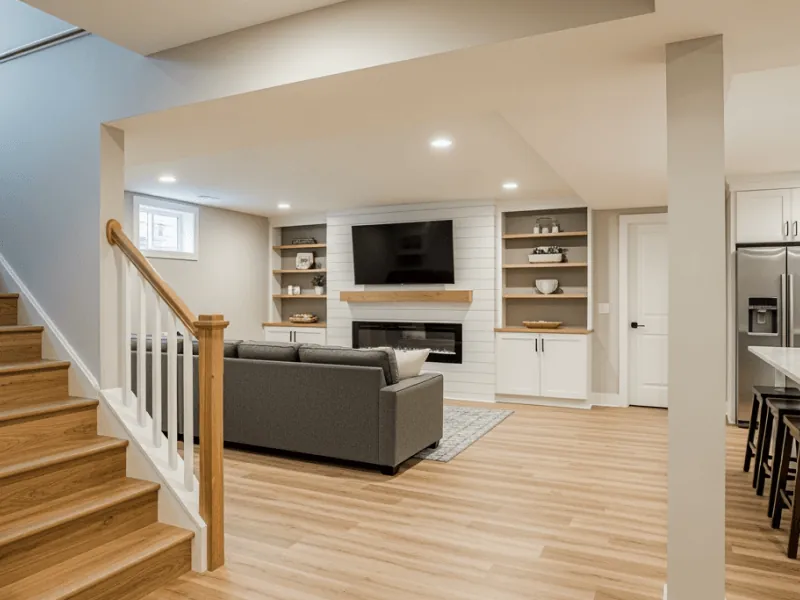


You can expect the typical cost to finish a basement to range from as low as $14,811 to as high as $48,013, with the average spend typically around $32,848.
However, keep in mind that the finished basement price in 2026 can vary significantly in cost depending on the size, materials, and complexity of the project[1].
This page will cover detailed insights into the factors influencing the cost to finish a basement, including the different remodelling options, prices per hour, DIY vs. pros, and tips on selecting the right contractor and saving money. Keep reading if you wish to balance quality and affordability.
Key takeaways
The cost to finish a basement in 2026 ranges from $14,811 to $48,013, with most homeowners spending about $32,848.
Basement size and layout complexity are major cost drivers: small, simple designs cost less, while large or irregular layouts increase expenses.
Electrical, plumbing, and custom features can significantly raise project costs, especially when rerouting systems or adding bathrooms[2].
Building permits and inspections are typically required and may add $213 - $989 to the overall price[3][4].
Hiring professionals ensures code compliance, quality workmanship, and faster completion, while DIY can lead to hidden costs, delays, and safety risks[5].
Choosing standard designs, mid-range materials, and completing some prep work yourself can reduce costs by 15-30% without sacrificing quality.
Types of Finished Basements
The final basement finishing cost involves various types of services that transform an unfinished space into a functional and comfortable area. These services can range from simple budget-friendly drywall installation to complete remodeling, including electrical, plumbing, and flooring work. [6]
| Type of Service | Cost | Features |
|---|---|---|
Drywall Installation | $1,199 - $5,198 | Installing drywall panels to create walls and ceilings in the basement space. |
Flooring Installation | $2,191 - $6,510 | Laying down flooring materials such as carpet, laminate, or tile specifically for basements. |
Electrical Wiring Upgrade | $2,642 - $8,248 | Upgrading or installing electrical wiring, outlets, and lighting to meet basement needs[2]. |
Plumbing Installation | $2,879 - $17,950 | Adding or modifying plumbing for bathrooms, wet bars, or laundry areas in the basement[2]; can add on plumbing installation costs. |
Basement Insulation | $1,416 - $6,304 | Installing insulation to improve energy efficiency and climate control in the basement[7][8]. |
Basement Bathroom Addition | $8,811 - $34,852 | Building a full or half bathroom within the basement space needs to consider additions and remodels expenses. |
Basement Bathroom Addition Cost
When adding a bathroom to the basement, you convert it into a more livable space and increase home value. This service is typically needed when homeowners want to create a guest suite or provide convenience without going upstairs.
The cost to finish a basement with a bathroom ranges between $8,811 and $34,852, with an average around $18,755. Key factors affecting price include the complexity of plumbing reroutes, fixture quality, and basement accessibility[2].
Basement Framing Cost
Framing is essential for dividing the basement into rooms or functional areas by constructing walls and ceilings with wood or metal studs[9]. This service's price varies from $5 to $13, averaging $8. Main cost drivers include basement size, wall height, and whether additional blocking or fire treatment is required.
Electrical Wiring Upgrade Cost
Homeowners must upgrade or install electrical wiring in a basement to guarantee the space meets modern safety standards and supports appliances, lighting, and HVAC systems[2][9], which can add on AC or ventilation expenses, for example. It costs between $2,177 and $13,615, with an average of $7,312. Pricing depends on the amount of wiring needed, the number of outlets, panel upgrades, and adherence to electrical codes.
Hourly Cost to Finish a Basement
Contractors commonly charge on an hourly basis for labor-intensive tasks such as framing, drywall installation, electrical work, and finishing touches. For instance, the electrical average hourly prices usually stay around $107. These rates per hour will help you estimate the overall cost when combined with the time required for each phase[1].

These hourly rates typically account for the skilled labor necessary to complete different basement finishing tasks. For instance, framing usually commands a moderate hourly rate due to its physical labor intensity and precision. Drywall installation and finishing can be time-consuming, so these costs reflect the care needed to produce a smooth, paint-ready surface.
Electrical and plumbing work is generally more specialized and may come at a premium hourly rate, especially if the basement requires new wiring or additional plumbing fixtures[2]. Finally, painting and finishing are usually at the lower end of the hourly cost spectrum but remain an important part of the final aesthetic.
To get a more precise estimate, consider the estimated hours the contractor forecasts for each part of the job and multiply these by the respective hourly rates. Many contractors offer a blend of hourly and fixed rates to give homeowners more predictability in pricing.
8 Factors That Affect the Cost to Finish a Basement
Several unique factors can influence how much you ultimately pay to finish your basement[1]. Some of them are as follows:
- Basement Size and Layout: Larger basements or those with unusual shapes require more time and materials, raising both labor and material costs. Complex layouts may involve more framing, drywall, and finishing work[6].
- Level of Finishing Detail: A basic finish with standard drywall and flooring materials will cost less than a high-end finish featuring custom cabinetry, built-in entertainment areas, or costly hardwood flooring.
- Electrical and Plumbing Needs: The complexity and extent of electrical wiring or plumbing installations can significantly impact costs, especially if new circuits, lighting, or bathroom plumbing are required[2].
- Existing Basement Conditions: Moisture issues, foundation cracks, or uneven floors need to be addressed before finishing. Foundation repairs or waterproofing add to both labor time and budget.
- Permitting and Inspections: Local building codes often require permits and inspections that add fees and occasionally extend project timelines[3][4][5].
- Contractor Experience and Location: Labor rates vary by region and are based on the contractor's expertise. Highly experienced professionals or costly metro areas usually command higher hourly rates[5].
- Material Choices: The type and quality of materials selected for framing, drywall, flooring, and finishes can raise or lower overall hourly costs depending on installation requirements.
- Additional Features: Special requests like radiant heating, soundproofing, or custom lighting integrations will increase labor intensity and hourly charges.
By considering these factors, you can better assess quotes and understand where adjustments can be made to control costs without sacrificing quality.
Basement Finishing Costs by Size and Layout
Larger basements or more complex configurations will ultimately require more materials, labor, and time, which all contribute to higher overall expenses[1]. So read on to understand how different basement sizes and types of spaces will affect your budget so that you can plan more accurately.
Small Basement Finishes (up to 500 sq ft)
Small basement projects commonly involve finishing a limited area, such as a small rec room or home office.
- Cost Range: $6,887 - $16,747
- Average Cost: $12,613
- Details: Ideal for homeowners looking to add functional space without major structural work. Costs remain lower due to limited materials and labor requirements.
These projects often have straightforward layouts with fewer walls and systems to install[6].
Medium Basement Finishes (500-1,000 sq ft)
If you have a medium-sized basement, it probably accommodates several functional areas like a family room, laundry, or a small guest bedroom.
- Cost Range: $15,348 - $34,968
- Average Cost: $24,232
- Details: Allows for multiple designated rooms and more design customization. Includes intermediate complexity in framing, drywall, and finishes.
The cost to finish a 1000 sq ft basement often includes added electrical and plumbing work, increasing costs proportionately[2].
Large Basement Finishes (1,000-1,500 sq ft)
Large finish projects often create expansive recreational spaces or add multiple bedrooms and bathrooms.
- Cost Range: $25,866 - $76,474
- Average Cost: $43,375
- Details: Suitable for enhancing the home's livable space substantially, demanding higher labor costs on electrical installation and plumbing[2].
These require significant planning, more materials, and sometimes structural alterations. So the cost to finish a 1000 square feet basement with a bathroom will be significantly higher.
Full Basement Finishes (1,500+ sq ft)
Finishing a full basement means remodeling the entire lower level, often turning it into a complete living area with several rooms, a bathroom, a kitchenette, and storage.
- Cost Range:$37,263 - $124,070
- Average Cost: $61,599
- Details: Offers the highest return on investment but involves comprehensive budgeting for construction, permits, HVAC, and finishes[3][4].
For a full basement finish, maximum material and labor intensity will be necessary due to extensive square footage and system requirements.
Basement Finishes with Complex Layouts
Complex projects involving angled walls, support beams, or multiple ceiling heights can increase costs regardless of basement size due to additional design and carpentry work costs and challenges[9].
- Cost Range: $44,962 - $143,580
- Average Cost: $84,285
- Details: Includes irregular layouts that require custom framing, drywall work, and finish carpentry, raising both labor and material costs.
If you are still not convinced that it is worth adding the average cost to finish a basement to your budget, below are some aspects that you might not have considered yet.
Basement Finishing Cost by State
The cost to finish a basement can vary quite a bit depending on where you live. Labor rates, material availability, permit requirements, and even climate play a big role in shaping your overall budget. Urban states and coastal areas usually see higher prices, while regions with lower housing costs often provide more affordable options.
| State | Cost |
|---|---|
California | $63,843 - $113,409 |
Texas | $31,535 - $59,534 |
Florida | $28,676 - $61,913 |
New York | $78,774 - $154,196 |
Illinois | $39,898 - $84,646 |
In states like California and New York, labor costs and strict building codes can make basement finishing more expensive. On the other hand, states such as Texas and Florida tend to be more affordable thanks to lower labor rates and fewer regulatory hurdles.
Always get multiple quotes from local contractors and factor in permit requirements, which can add to your project timeline and budget.
Basement Finishing ROI (Return on Investment)
Finishing a basement doesn't just give you more usable space; it can also add serious value to your home. Many buyers see a finished basement as a bonus living area, whether it's for entertainment, guest rooms, or even rental space.
| Basement Project Type | Average ROI | Notes |
|---|---|---|
Standard Finished Basement | 70% | Great for family rooms, offices, or playrooms. |
Basement with Bathroom Addition | 75% | Higher ROI since added bathrooms increase home value. |
Full Basement Conversion | 65% | Strong ROI if designed as a living space or rental unit. |
Luxury Basement Remodel | 55% | ROI depends on neighborhood demand; high-end features appeal in upscale markets. |
ROI depends heavily on design efficiency, quality of materials, and neighborhood expectations. A well-planned basement can return much of its cost at resale, especially if it includes a bathroom or additional bedroom. However, going too upscale in a modest neighborhood may limit your returns.
DIY vs Professional Finish Basement Costs
When deciding whether to tackle a project yourself or hire a professional, cost is a key factor, but it's not the only one. While DIY might seem cheaper initially, there are hidden costs and risks that can quickly add up. On the other hand, hiring a professional often guarantees better quality, faster completion, and long-term savings[5].

Here are some reasons why hiring a professional usually makes sense[5]:
- Safety Risks: DIY basement finishing involves tasks like electrical wiring, plumbing, and structural modifications[2]. Mistakes in these areas can lead to dangerous conditions such as fire hazards, water damage, or structural failure.
- Time and Efficiency: Professionals bring experience and specialized tools that can significantly reduce project timelines compared to amateurs.
- Quality and Durability: Licensed contractors ensure work complies with local building codes and industry best practices[3][4][9], helping avoid costly repairs down the road.
- Permits and Legal Compliance: Professionals often handle securing permits and scheduling inspections[3][4], which can be complicated and time-consuming for homeowners.
- Unexpected Costs: DIYers may underestimate expenses, especially when encountering unforeseen problems or needing to buy specialty equipment.
In summary, while DIY can seem attractive from a budget standpoint, hiring a qualified professional can ultimately be more cost-effective. It provides peace of mind, higher quality results, and protects your home investment[5].
7 Ways to Save on Finish Basement Costs
The average cost to finish an unfinished basement doesn't have to break the bank. With a strategic approach, you can keep costs manageable while still achieving a beautiful, functional space. Here are some practical tips to help you save money on your finished basement project:
- Plan Thoroughly: Develop a detailed plan and budget before starting [1]. Knowing exactly what materials and services you need reduces costly changes along the way.
- Choose Materials Wisely: Opt for mid-range materials rather than premium or luxury finishes. High quality doesn't always mean high cost, especially if you shop sales or bulk deals.
- Do Prep Work Yourself: Tasks like demolition, painting, or cleaning can be handled on your own, reducing labor fees.
- Compare Multiple Quotes: Get estimates from several professionals to guarantee competitive pricing[5]. Look beyond price; check reviews and credentials for value.
- Schedule Efficiently: Coordinate tasks logically to avoid downtime or repeated visits by contractors.
- Use Financing Options: Some pros offer financing or payment plans, making it easier to spread out costs without compromising quality.
- Leverage Tax Credits or Rebates: Check for local or federal programs that offer incentives for home improvements involving energy-efficient upgrades or safety improvements[10][11].
Ready to get expert help and find the best rates? Contact professional contractors at homeyou for trusted, vetted Finish Basement specialists who deliver great quality at competitive prices. Save time, avoid mistakes, and enjoy your new space confidently!
FAQ Section
References
[1] Douglas County Government. "Basement Finish Requirement Guide." Douglas County, www.douglas.co.us/documents/basement-finish-guide.pdf/.
[2] Municipal Research and Services Center of Washington. "Building Codes and Permits." MRSC.org, mrsc.org/explore-topics/planning/administration/building-codes.
[3] Prince William County Building Development Division. "Finishing a Residential Basement." Prince William County, www.pwcva.gov/department/building-development-division/basement.
[4] City of De Pere. "Basement Remodeling Guidelines." City of De Pere, www.deperewi.gov/egov/documents/1643917508\_66107.pdf.
[5] Town of Simsbury Building Department. "Basement Finish Contractor Guide." Town of Simsbury, www.simsbury-ct.gov/sites/g/files/vyhlif9751/f/pages/basementguidecontractors\_20190923161150.pdf.
[6] Town of Middleton Building Department. "Basement Finishing Details." Town of Middleton, www.middletonma.gov/DocumentCenter/View/259/Basement-Finishing-Handout-PDF.
[7] U.S. Department of Energy. "Where to Insulate in a Home." Energy Saver, www.energy.gov/energysaver/where-insulate-home.
[8] U.S. Department of Energy. "Adding Insulation to an Existing Home." Energy Saver, www.energy.gov/energysaver/adding-insulation-existing-home.
[9] International Code Council. "Building Planning - Section R305.1.1." ICC Digital Codes, codes.iccsafe.org/s/IRC2018P5/chapter-3-building-planning/IRC2018P5-Ch03-SecR305.1.1.
[10] Internal Revenue Service. "Energy Efficient Home Improvement Credit." IRS.gov, www.irs.gov/credits-deductions/energy-efficient-home-improvement-credit.
[11] U.S. Environmental Protection Agency. "Insulation Tax Credit." ENERGY STAR, www.energystar.gov/about/federal-tax-credits/insulation.


