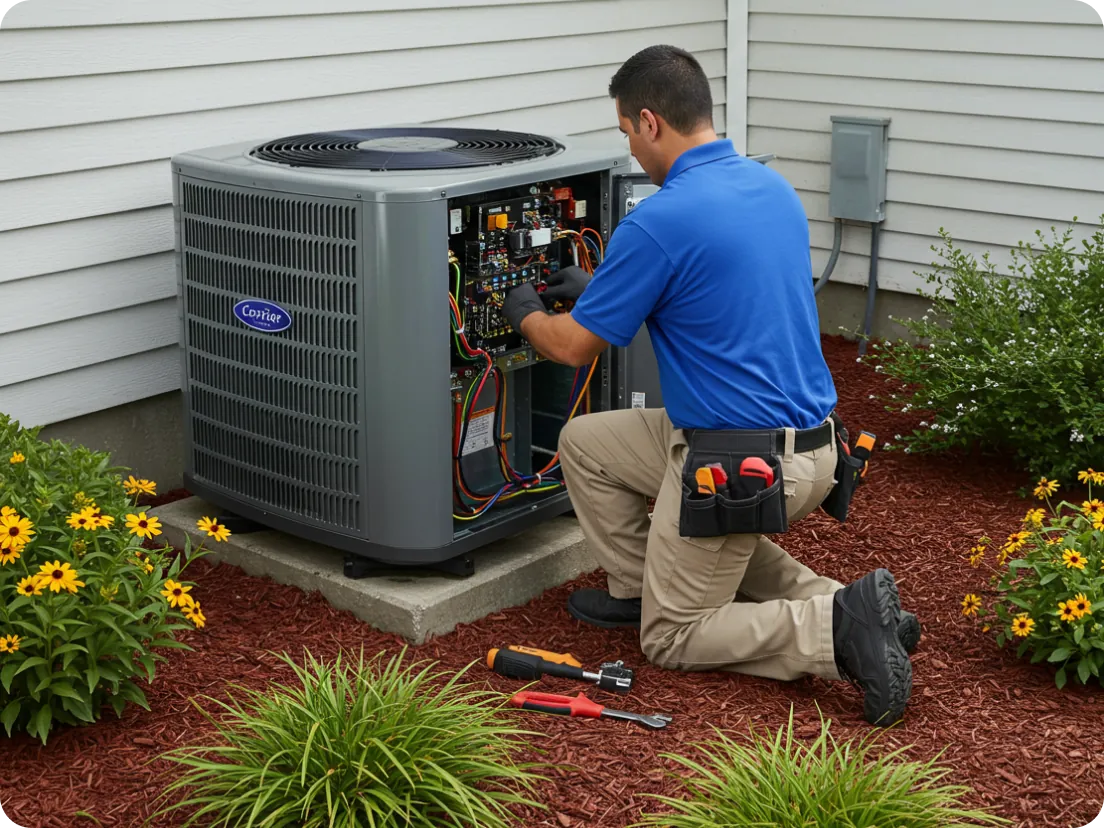


In 2026, the average HVAC cost per hour of service stays around $104, with prices typically ranging from $70 to $156.
Maintaining comfortable indoor temperatures year-round often involves heating, ventilation, and air conditioning. HVAC system costs for these services can vary greatly depending on unit type, project scope, and regional factors[1].
When installing a new HVAC system or replacing an old one, it is important to understand the factors affecting costs. This guide will assist you in estimating expenses, assessing service options, and discovering ways to save on your HVAC project.
Types of HVAC Services and Costs
HVAC professionals offer a broad range of services tailored to meet the diverse needs of homeowners and businesses alike. Their expertise covers everything from routine maintenance tasks that ensure system efficiency to complex installations of advanced HVAC systems.
Below is a detailed breakdown of common HVAC services and their estimated costs:
| Type of Service | Cost | Features |
|---|---|---|
HVAC Maintenace | $84 - $287 | Includes filter changes and system checks. |
Air Conditioner Repair | $170 - $647 | Depends on the part replacement and labor. |
Furnace Repair | $145 - $496 | Complex repairs may exceed a thousand dollars. |
Ductwork Installation/Repair | $245 - $5,551 | Costs rise with system complexity. |
New Hvac System | $5,146 - $9,923 | Includes new system, ductwork, and labor. |
(National averages sourced from energy efficiency and industry reports[2] [3])
These cost ranges reflect national averages and may vary based on location, system type, and additional labor or materials required. To provide further clarity, below is a closer look at each type of service detailed in the table above.
1. Routine HVAC Maintenance
Routine HVAC maintenance includes essential upkeep tasks such as changing filters, inspecting components, and cleaning systems to ensure peak efficiency. Regular maintenance can prevent minor issues from escalating into costly repairs.
- Cost Range: Typically, routine HVAC maintenance costs range from $84 to $287 per visit.
- Average Cost: $160 per maintenance check.
- Frequency: It's recommended to have maintenance performed at least once or twice a year for both heating and cooling systems.
2. Air Conditioner Repair
Common air conditioner repairs often involve dealing with faulty components: HVAC capacitor replacement, replacing compressors, or fans that have stopped functioning. The costs associated with these repairs can fluctuate significantly, influenced by the severity of the damage and the specific parts required to restore the system to optimal performance.
- Cost Range: Minor repairs may cost between $194 and $245, while more serious ones range from $590 to $1,913 or more.
- Average Cost: $170 to $647 for typical repairs.
- Factors Affecting Cost: The type of part replaced, system age, and complexity of the repair.
3. Furnace Repair
Furnace problems frequently emerge due to component wear and tear or the malfunctioning of crucial parts. Minor repairs can be inexpensive and quickly resolved, but more significant issues may demand a considerable financial investment, often leaving homeowners to weigh the costs against their heating needs during winter.
- Cost Range: Furnace repairs can range from $145 for minor fixes like a broken thermostat to $2,416 or more for replacing major components like the heat exchanger or blower motor.
- Average Cost: $145 to $496, depending on the severity of the issue.
- Factors Affecting Cost: The furnace's age, the parts that need replacement, and labor costs in your area.
4. Ductwork Installation/Repair
Installing or repairing ducts can be complex, depending on the layout and design of the home. Ensuring proper sealing and insulation of ductwork is crucial for efficient airflow and energy savings.
- Cost Range: Duct repair typically costs between $245 and $691, while full ductwork installation can range from $1,496 to $5,551 or more, depending on the home's size and duct complexity.
- Average Cost: $446 for duct repairs; $2,905 for installation.
- Factors Affecting Cost: The extent of the repair, system complexity, and the square footage of your home.
5. Full HVAC System Installation
This service involves the comprehensive installation of heating and cooling systems, including the necessary ductwork and electrical work. The cost reflects the size of the system, labor requirements, and additional features such as zoning or smart thermostat integration.
- Cost Range: The cost to replace the HVAC system completely can range from $5,146 to $11,936 or more, depending on the system's size, complexity, and brand.
- Average Cost: $5,146 to $9,923 for a standard HVAC installation cost in a medium-sized home.
- Factors Affecting Cost: The system's brand, energy efficiency, home size, and additional features like zoning or smart thermostats.
How Much Do HVAC Services Cost Per Hour?
Contractors typically charge hourly rates for specific services, especially diagnostics, routine maintenance, and AC repair prices. These rates can vary widely based on the contractor's expertise, the complexity of the job, and regional labor costs.
Knowing the typical hourly rates can help homeowners budget appropriately and choose the right professional for their needs. Below is an overview of average hourly rates in 2026, providing insight into the costs associated with different types of HVAC work:

Hourly rates include labor but may not cover materials or extra fees. Routine maintenance typically takes one to two hours, involving tasks like inspecting, cleaning, and changing filters, depending on system size and accessibility.
Diagnostic services usually take about an hour to identify issues through tests and inspections. Major repairs, such as replacing compressors or coils, can take two to five hours due to their complexity.
Full system installations may last one to four days, depending on factors like system type and home size, and involve removing old equipment and testing the new system.
What Factors Affect HVAC Costs?
Several factors contribute to the overall cost of HVAC services. Understanding these can help homeowners make informed decisions:
- System Type: Central air systems, ductless mini-splits, and heat pumps each have different price points.
- Energy Efficiency: High-efficiency systems with better SEER ratings cost more upfront but save money on utility bills.
- Ductwork Needs: Homes without existing ductwork require additional labor and materials, increasing costs.
- Project Scale: Larger homes require more extensive systems and labor.
- Location: Regional climate and labor costs influence pricing.
- HVAC Unit Size: Larger units designed to heat or cool extensive spaces naturally cost more due to higher material and labor requirements.
- Home Age: Older homes may require more extensive modifications, such as updated ductwork or electrical systems, which add to the expense.
These variations are crucial for homeowners planning home project budgets. For instance, warmer regions may prioritize air conditioning systems, while colder areas often invest in robust heating solutions.
HVAC Costs By Unit Size and Type
One of the key aspects influencing the price of HVAC services is the size and type of the unit. This detailed section will break down the cost of HVAC contractor's service based on the unit's size (measured in tons) and its type (central air, ductless mini-split, heat pumps, and others).
1. Central Air Conditioning Unit Costs
Central air conditioning units are a popular choice for cooling large spaces, especially homes with ductwork already installed[4]. Costs for installing, repairing, or maintaining central air systems depend on the size of the unit and the complexity of the job.
| Item | Cost |
|---|---|
1.5 tons Central AC Installation | $4,127 - $7,143 |
2.0 tons Central AC Installation | $4,638 - $8,621 |
3.0 tons Central AC Installation | $5,619 - $9,576 |
4.0 tons Central AC Installation | $6,724 - $11,487 |
1.5 tons Central AC Repair | $167 - $589 |
2.0 tons Central AC Repair | $213 - $784 |
3.0 tons Central AC Repair | $258 - $973 |
Central AC Maintenance (All Sizes) | $79 - $236 |
Factors Affecting Costs:
- Unit Tons: Larger units (in tons) generally cost more due to the increased cooling capacity and more expensive components.
- Ductwork: If the home requires air conditioner duct repairs or new ductwork, costs will increase.
- Efficiency Ratings: Higher efficiency units (SEER ratings) can raise initial installation costs but lower long-term operating costs.
2. Ductless Mini-Split Systems Costs
Ductless mini-split systems are ideal for homes or rooms that do not have existing ductwork. These systems are easy to install and more energy-efficient than traditional HVAC systems, but they typically cost more per unit of capacity.
| Item | Cost |
|---|---|
1.0 tons Ductless Mini-Split Installation | $2,084 - $4,132 |
1.5 tons Ductless Mini-Split Installation | $2,563 - $4,591 |
2.0 tons Ductless Mini-Split Installation | $3,047 - $5,467 |
1.0 tons Ductless Mini-Split Repair | $112 - $487 |
1.5 tons Ductless Mini-Split Repair | $159 - $576 |
Ductless Mini-Split Maintenance (All Sizes) | $78 - $194 |
Factors Affecting Costs:
- Installation Complexity: The cost of installing a mini-split system involves placing both an indoor and outdoor unit, which can increase labor costs.
and outdoor unit, which can increase labor costs. - Multiple Zones: If the system is designed to heat or cool multiple zones (rooms), installation will be more expensive.
3. Packaged HVAC Unit Costs
Packaged HVAC units are typically used in commercial settings or in homes where space for multiple units (e.g., an indoor furnace and an outdoor AC unit) is limited. These units combine both heating and cooling in one package.
| Item | Cost |
|---|---|
2.0 tons Packaged HVAC Installation | $6,149 - $9,984 |
3.0 tons Packaged HVAC Installation | $7,182 - $11,927 |
4.0 tons Packaged HVAC Installation | $8,163 - $13,876 |
2.0 tons Packaged HVAC Repair | $209 - $879 |
3.0 tons Packaged HVAC Repair | $256 - $1,064 |
Packaged HVAC Maintenance (All Sizes) | $104 - $287 |
4. Heat Pumps Costs
Heat pumps are versatile systems that can heat and cool a home, making them a great option for moderate climates[9]. They are more energy-efficient than traditional HVAC systems, but the initial heat pump installation investment can be higher and requires heat pump cleaning.
| Item | Cost |
|---|---|
1.5 tons Heat Pumps Installation | $5,087 - $7,942 |
2.0 tons Heat Pumps Installation | $5,573 - $9,614 |
3.0 tons Heat Pumps Installation | $6,642 - $10,953 |
1.5 tons Heat Pumps Repair | $171 - $592 |
2.0 tons Heat Pumps Repair | $218 - $781 |
3.0 tons Heat Pumps Repair | $263 - $986 |
Heat Pumps Maintenance (All Sizes) | $83 - $241 |
Factors Affecting Costs:
- Dual Purpose: Heat pumps both heat and cool, meaning you're paying for the versatility of the system.
- Location and Climate: Heat pumps are ideal in climates where temperatures don't regularly fall below freezing.
Factors Affecting Costs:
- Space-Saving: These units combine heating and cooling in one, reducing the need for separate systems.
- Efficiency and Size: Larger packaged units tend to cost more but are often more efficient.
Should You Repair or Replace Your HVAC System?
When your HVAC system starts acting up, it can be tough to decide whether to repair it or replace the AC unit altogether. Considering the specific issues your system is facing can help you make the best choice. Below are common reasons to replace or repair your HVAC system.
Reasons to Repair Your HVAC System:
- The issue is minor, such as a faulty thermostat or clogged filter.
- Repairs are affordable and well below 50% of the HVAC replacement cost.
- The system is relatively new and still under warranty.
- The system has been well-maintained and performs efficiently outside of the current issue.
Reasons to Replace Your HVAC System:
- The system is over 10 years old and has frequent issues.
- Repair costs are approaching or exceeding 50% of the HVAC unit replacement cost.
- High utility bills suggest the system is inefficient.
- Your system is incompatible with modern energy-efficient technologies.
Regardless of the choice you make, hiring a professional HVAC contractor and choosing the best time to replace an air conditioner is always the best idea.
Why Hire Professional HVAC Services
While minor tasks like changing filters or cleaning vents can be handled DIY, most HVAC services should be performed by professionals. Attempting repairs or installations without expertise can result in higher long-term expenses. Here's a comparison:

Professionals ensure warranties, safety, and efficiency, making them a smart choice for major tasks. Doing it yourself might seem cheaper at first, but with the risks you take, the expenses may go beyond professional costs. Take a look!
- Voiding Warranties: Improper installations or repairs may void equipment warranties, leaving you unprotected if future issues arise.
- Energy Inefficiency: Mistakes in repair or installation can lead to inefficient system operation, causing higher energy bills.
- Safety Hazards: Mishandling electrical components or refrigerants can result in personal injury or property damage.
- Misdiagnosis: Without the right tools or expertise, diagnosing complex issues often leads to incorrect fixes, increasing the likelihood of costly repairs later.
- Higher Long-Term Costs: Initial DIY savings are often offset by the need for professional corrections, making it a more expensive option overall.
For these reasons, professional HVAC services are highly recommended for most tasks.
How to Cut HVAC Costs?
Managing HVAC costs doesn't have to be overwhelming. With a few strategic steps, you can maintain a comfortable home environment while keeping expenses in check. Below are some practical tips to help you save money on HVAC installation, maintenance, and repairs.
- Schedule Off-Season Maintenance: Contractors may offer discounts during spring and fall.
- Combine Projects: Bundle multiple services in one visit to save on service fees.
- Research Rebates: Many utility companies offer rebates for energy-efficient systems[6].
- Invest in Preventive Maintenance: Annual checks can reduce costly emergency repairs.
- Get Multiple Quotes: Compare estimates from at least three reputable contractors.
By understanding HVAC costs in 2026 and reaching out to our home service pros, you can plan better, save money, and guarantee your home is comfortable throughout the year.
Common HVAC services include routine maintenance (inspection, cleaning, filter checks), diagnostics to pinpoint problems, repairs for air conditioners or furnaces, ductwork sealing or replacement, and full system installation or replacement. Some visits include testing airflow and safety controls, but parts, permits, and after-hours fees may be separate.
Timing depends on the task and system access. Routine maintenance often takes one to two hours. Diagnostics are commonly about an hour. Major repairs such as compressor or coil replacement can take two to five hours. Full HVAC replacement typically takes one to four days, including removal, installation, and testing.
Most standard homeowners policies do not cover HVAC replacement due to age or normal wear. However, sudden mechanical failure caused by a covered event, such as a power surge or storm damage, may be covered. Some homeowners add a home warranty or equipment breakdown rider specifically for HVAC systems. Checking your policy details before you need a repair can prevent costly surprises.
An undersized system runs constantly without reaching the target temperature, while an oversized one cycles on and off too frequently, causing humidity problems and uneven comfort. The correct size is determined by a Manual J load calculation, which factors in your home's square footage, insulation, window area, and local climate.
Central air conditioners and heat pumps generally last 15-20 years, while furnaces can last 20-30 years with proper care. Lifespan depends heavily on maintenance frequency, local climate, and how hard the system works relative to your home's size. Systems that were improperly sized or installed tend to wear out faster.
Common surprises include needing duct sealing or full duct replacement, electrical updates in older homes, and replacement of related components found during diagnostics. Parts costs can rise for major components like compressors or blower motors. After-hours emergency service, disposal of old equipment, and permits or inspections may also add to the final bill.
Ask what the estimate includes (labor, materials, diagnostics, and fees), whether the technician is licensed and insured, and what warranties apply to parts and labor. Confirm the planned equipment size and efficiency rating and whether ductwork will be tested or sealed. Also ask about timeline, cleanup, and how change orders are handled.
Homeowners can safely replace or clean filters every 1-3 months, clear debris around the outdoor unit, and check that vents are unobstructed. Anything involving refrigerant, electrical components, or the internal workings of the system, including coil cleaning, refrigerant checks, and ductwork sealing, should be handled by a licensed technician.
References
[1] U.S. Department of Energy. "Heating and Cooling Systems." Energy Saver, 2024, www.energy.gov/energysaver/heat-and-cool.
[2] Air Conditioning Contractors of America (ACCA). "HVAC Industry Standards." 2023, www.acca.org/standards.
[3] U.S. Environmental Protection Agency. "Energy Star Certified HVAC Equipment." 2024, https://www.energystar.gov/saveathome/heating-cooling.
[4] North American Technician Excellence (NATE). "Central Air Conditioning Efficiency Guidelines." 2023, www.natex.org.
[5] International Energy Agency (IEA). "Heat Pumps: Policy and Market Trends." 2024, www.iea.org/reports/heat-pumps.
[6] Database of State Incentives for Renewables & Efficiency (DSIRE). "Utility Rebates for HVAC Systems." 2024, www.dsireusa.org.