

When researching bay window cost and installation in 2026, expect pricing to shift with window size, materials, and how much carpentry the opening needs. Many projects fall between $1,837 and $4,862, with a typical project costing about $2,946.
This guide breaks those ranges into the cost factors that usually matter most, including materials, labor, removal, and site prep. Also, you will see side-by-side comparisons (budget vs. premium), plus practical tips to help you match the right window to your home and priorities[1].
Key takeaways
Low-end bay window projects can start around $1,837.
Most standard installations cluster near $2,946.
High-end or custom configurations can approach $4,862.
Material selection and installer experience are the primary cost drivers.
Choosing the right contractor helps protect comfort, energy performance, and long-term durability.
6 Factors That Affect the Cost of Bay Window Installation
A bay window estimate is usually a combination of the window unit itself, the labor to set it correctly, and the carpentry needed to support and weatherproof the opening. Here are the cost drivers that most often move a quote up or down.
- Window Size and Shape: Larger or custom-shaped bays require more material and fabrication, plus more time for framing and finishing. Wider projections and unusual geometry can add complexity.
- Frame Material: Wood, vinyl, aluminum, and fiberglass differ in price, durability, and maintenance needs. Higher-end materials usually cost more up front, while some lower-maintenance options can reduce long-term upkeep.
- Structural Work and Support: Many bays need added headers, reinforced framing, or exterior brackets and braces, especially in larger or load-bearing openings. Enclosure and weatherproofing requirements can also add detail work around flashing and sealing[2].
- Installation Location and Accessibility: Second-story installations, tight exterior access, and setups that require scaffolding or equipment increase labor time and rental costs. Weather can also affect scheduling and how well sealants and flashing details can be installed.
- Labor and Contractor Experience: Bay windows demand careful carpentry, flashing, and air-sealing. Contractors with strong experience may charge more, but good workmanship can reduce the odds of leaks, drafts, and callbacks.
- Glazing and Energy Performance: Low-emissivity coatings, double- or triple-pane glass, gas fills, and safety glass all affect price and comfort. The choice between repair and replacement also influences cost, scope, and potential energy outcomes[3].
These factors can affect pricing in many ways. For example, a premium window can still be the smaller part of the bill if the opening needs structural work and extensive trim.
Bay Window Installation Cost by Type
Bay window pricing depends heavily on the scope of work, from a quick repair to a full replacement or a brand-new opening. Style, frame material, and glazing technology can also change both performance and total price, so it helps to budget with a little flexibility[4].
| Type of Service | Cost | Features |
|---|---|---|
Bay Window Installation | $1,837 - $4,862 | New construction or brand-new openings that require cutting into the wall plus framing, flashing, insulation, and finish trim. |
Bay Window Replacement | $2,473 - $5,891 | Swapping an old bay with a new unit in an existing opening; may add framing if resizing or repairing damaged areas. |
Bay Window Repair | $337 - $1,793 | Targeted fixes such as hardware replacement, sash realignment, glass pane repair, or minor frame repairs. |
Bay Window Removal | $623 - $2,187 | Safe removal of an old bay window; disposal, temporary weatherproofing, or framing to close the opening are often extra. |
Bay Window Sealing | $187 - $783 | Weatherproofing and air-sealing around the frame to stop drafts and prevent water infiltration. |
Bay Window Restoration | $1,637 - $5,231 | Extensive repair and refinishing for historic or damaged windows, often preserving original materials. |
Bay Window Upgrade | $1,137 - $4,137 | Improvements such as higher-performance glazing, new hardware, or frame retrofits to boost energy efficiency. |
Bay Window Installation Costs
Installation means placing a new bay window into a new or significantly modified opening, then completing the surrounding work, such as framing, flashing, insulation, and interior and exterior trim.
Expect a project estimate from $1,837 to $4,862, with an average of $2,946. Costs tend to rise with larger window assemblies, higher-end frames and glass, and any need to adjust headers or supporting framing.
If the work changes a load-bearing wall or adds a new exterior projection, permits are often required, and some projects may need additional review. These steps add time and fees.
On-site work can be as short as one to two working days for a straightforward, accessible install, but more structural projects can take several days once interior and exterior finishing is included.
Bay Window Replacement Costs
Replacement typically involves removing an existing bay unit and installing a new one in the current opening, often to address damage or improve comfort and efficiency.
Typical pricing runs from $2,473 to $5,891, averaging $3,867. Costs increase if the opening needs resizing, the sill and flashing need repair, or you choose upgraded glazing and trim.
One common wildcard is hidden moisture damage revealed during removal, such as rot at the sill, framing, or surrounding sheathing, which can add carpentry and materials.
Bay Window Repair Costs
Repairs focus on specific problems, such as broken glass, sticking sashes, rotted trim, or hardware issues, when the overall structure is still in good shape.
Window repair costs work ranges from $337 to $1,793, with an average of $847.
The biggest pricing drivers are labor time, access (especially on upper floors), and whether parts are readily available. If the fix requires replacing insulated glass units (IGUs), you may also need to account for special ordering and longer lead times.
Bay Window Restoration Costs
Restoration is a deeper rehab approach, often used for older or historic bay windows. It can combine carpentry, glazing work, and refinishing to preserve the original look.
Restoration projects are typically priced between $1,637 and $5,231, with an average of $2,987. Costs trend higher when there is widespread deterioration, custom millwork is needed, or the project requires careful, time-intensive craftsmanship.
Bay Window Cost by Material
Material choice affects not just the purchase price, but also maintenance, durability, and energy performance. Some materials prioritize affordability and easy upkeep, while others focus on long-term resilience or a higher-end finish.
Many qualifying window systems also meet ENERGY STAR criteria for thermal performance[5].
| Material Type | Cost | Details |
|---|---|---|
Wood | $2,873 - $6,128 | Classic appearance with strong insulating properties. Requires regular painting or staining and more maintenance than synthetics, and is vulnerable to moisture and rot if not well protected. |
Vinyl | $1,837 - $4,173 | Low-maintenance and affordable, resistant to rot. Limited color and finish options compared with wood. |
Aluminum | $2,013 - $4,627 | Lightweight and slim-profile frames, good for modern aesthetics. Conducts heat more than other materials unless thermally broken and may need detailing to meet some energy codes. |
Fiberglass | $2,637 - $5,521 | Strong, stable, and low-maintenance with good thermal performance. Often painted for a refined look. |
Composite | $2,718 - $5,877 | Engineered for durability and low maintenance, mimics wood grain without the same upkeep. Good mid-to-high-end option. |
Clad Wood | $3,147 - $6,783 | Interior wood finish with exterior protective cladding for low maintenance and a premium interior appearance. |
Steel | $3,521 - $7,648 | Extremely durable and slim, ideal for industrial or contemporary styles. May require specialized installation, corrosion protection, and thermal breaks to limit heat transfer. |
Material pricing varies with manufacturing complexity, finish options, and local availability.
Custom sizing, specialty hardware, and higher-performance glazing can push window costs higher, while labor and structural support for a projecting bay can add significantly to the installed total.
Long-term value is closely tied to durability and moisture control. Details like flashing, sealing, and integration with the wall system matter for preventing air leaks and water intrusion, and durability-focused design choices can reduce life-cycle costs[6].
Many modern bay windows arrive as factory-built assemblies, which can streamline installation, while fully site-built bays can offer more flexibility but often require more labor and skilled finish work.
Cost to Install Bay Window by Size
Size and configuration are major price drivers because larger assemblies require more materials, heavier glass handling, and often more structural support. Projection depth and exterior tie-ins also matter, since they can increase framing, flashing, siding, and trim work.
Small Single-Window Bay
A compact bay typically contains three narrow units and projects roughly 8 to 12 inches beyond the exterior wall, making it a fit for small bedrooms or alcoves. These installations may reuse existing openings and require less structural change.
Cost: $1,237 - $3,371; Average $2,283.
Labor is often shorter due to lighter materials and simpler trim, but older framing and matching existing finishes can still increase costs.
Standard Front-Facing Bay
A standard front-facing bay often features a center picture window with two operable side units, projecting a foot or more from the wall. It is a common choice for living rooms or formal spaces where curb appeal is a priority.
Cost: $1,753 - $4,691; Average $3,247.
Common cost adders include matching exterior siding or cladding, adding roof and flashing details, and building out interior trim or a seat. If you need a specific glass style to match the home, material costs can rise.
Living Room Bay
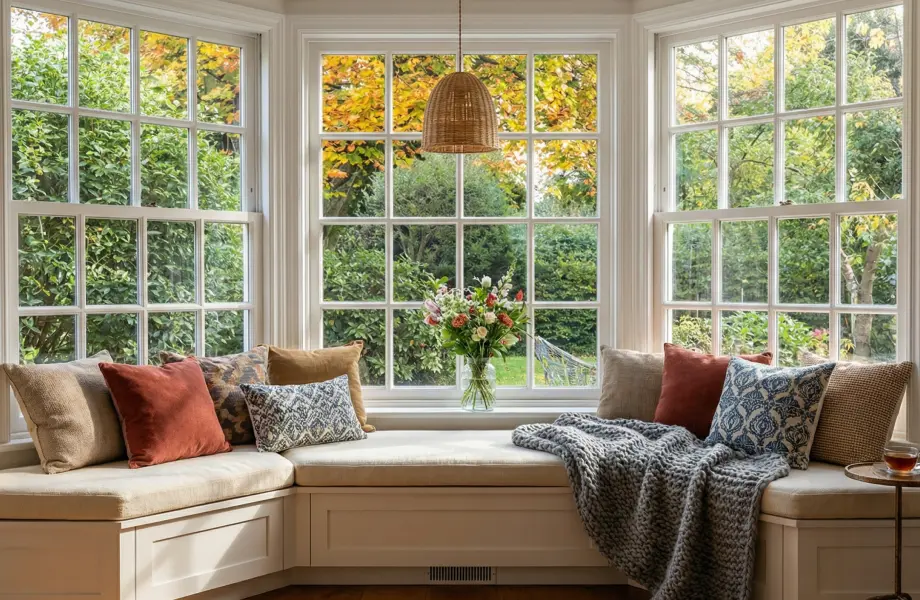
A larger living room bay is designed for wider openings and often uses three or more large panes. These bays maximize light and views and may create space for a window seat.
Cost: $2,137 - $5,637; Average $3,878.
Pricing typically increases with heavier framing, potential header upgrades, and more elaborate interior finishes. Larger glass units can also affect delivery and handling requirements.
Kitchen Bay
Kitchen bays are often shallower and designed to fit above counters or sinks. They may need moisture-resistant materials and operable windows for ventilation.
Cost: $1,567 - $4,173; Average $2,891.
Costs can increase if the job requires custom sill details, coordination with backsplash or cabinetry, or working in a tight footprint that slows installation.
Custom or Large Bay Window
Custom or oversized bays include unique shapes, extended projections, or specialty glazing, and they are usually built to order.
Cost: $2,873 - $7,891; Average $5,147.
Permits, inspections, and site access can also expand both timeline and labor costs. Very large or structurally complex bays may require an architect or structural engineer to design supports and connections, which adds professional fees and time.
How Much Does It Cost to Install a Bay Window by State
Costs vary by state due to differences in labor rates, contractor availability, delivery costs, local demand, and permit and inspection requirements[7].
| State | Cost | Details |
|---|---|---|
California | $2,143 - $5,571 | Higher labor and living costs raise installation prices, and long lead times for custom windows can increase expenses. |
Texas | $1,581 - $4,217 | A large market with many contractors creates competitive pricing, though urban areas have higher labor costs than rural regions. |
Florida | $1,763 - $4,813 | Climate considerations such as impact-rated glass and hurricane straps can add to costs, and seasonal demand peaks before storm seasons. |
New York | $2,237 - $5,897 | Dense urban construction, tight job-site logistics, and frequent permit requirements can push prices higher, and many projects require local permits[8]. |
Illinois | $1,667 - $4,491 | Midwestern labor costs are moderate, but winter installation windows and insulation needs influence scheduling and material choices. |
Georgia | $1,537 - $4,138 | A mix of urban and rural markets yields varied bids, with lower statewide labor rates but occasional higher costs in major metro centers. |
Ohio | $1,593 - $4,321 | Generally moderate labor costs, but cold-weather installation constraints and insulation upgrades can affect final pricing. |
These state ranges are best used as a starting point. To pin down your exact bay window installation price, get multiple itemized quotes and confirm what is included (permits, disposal, trim, and exterior repairs).
Federal resources may also help some property owners with repair and efficiency assistance[9].
Keep in mind that cities, counties, and homeowners associations may have additional rules affecting projections, appearance, permits, and approval timelines.
Check with your local building department and any HOA before you finalize plans.
Cost of Installing a Bay Window Per Hour
Hourly pricing is most common for smaller tasks, such as adjustments, diagnostics, and minor repairs. Full installs and replacements are more often quoted as flat, per-project bids.
Hourly rates usually cover labor and on-site problem-solving. Materials, permits, disposal, and unexpected additional work may be billed separately, so it is worth confirming how those items are handled before work begins.

Expect hourly work to vary with access, window size, and whether any structural support must be modified. Many contractors also have a minimum service charge, often one to two hours of labor plus any trip or service fee, even if the task is quick. Ask about these terms up front.
Cost of Bay Window Installed: DIY vs. Pro
Some smaller bay window tasks can be DIY-friendly, but full installations and replacements are advanced projects that typically require structural and waterproofing know-how.
The DIY ranges below assume a very experienced DIYer with strong carpentry and framing skills.

As you can see, there is a considerable cost difference between these two options, but there are a few more things to consider before deciding whether to do it yourself or hire a professional.
Common DIY Risks and Practical Challenges
DIY bay window work can reduce labor cost, but mistakes can be expensive. Poor alignment can affect operation and insulation. Incorrect flashing and sealing can lead to leaks, trapped moisture, and rot.
Even smaller repairs depend on accurate measurements and compatible parts, or the same issue can return quickly.
Some manufacturers and local requirements may also tie warranty coverage or approvals to permitted, code-compliant installation, so confirm those details before starting.
Advantages of Hiring a Professional
A qualified installer brings experience with framing, flashing, and code requirements, which helps reduce leak risk and long-term repairs.
Professional installation can also support better comfort and efficiency by reducing drafts and controlling water intrusion, and good installation practices can affect performance in ways that overlap with improvements discussed for storm windows[10].
Add-Ons for Bay Window
As in any other home project budget, bay window add-ons can improve comfort, efficiency, and appearance, but they raise the total project cost. The table below lists common bay window add-ons and what you typically get for the extra investment.
| Add-On | Cost | Details |
|---|---|---|
Energy-Saving Film | $187 - $628 | A thin film applied to glass to reduce heat gain and UV transmission. It can improve comfort without replacing the entire window but is an aftermarket layer with more limited performance than factory glazing. |
Custom Trim | $463 - $1,738 | Decorative interior or exterior trim tailored to match home style. Proprietors choose this for a finished, built-in look. |
Integrated Window Seat | $1,387 - $5,128 | Built-in seat with storage or upholstery added to the bay area, creating functional seating and extra storage. |
Window Treatments | $317 - $1,643 | Blinds, shades, or curtains sized for the bay configuration. These add privacy and light control. |
Security Bars | $397 - $1,937 | Exterior or interior bars that increase protection against intrusion, often chosen for ground-floor bays. |
Smart Blinds | $873 - $3,477 | Motorized blinds with remote or app control, offering convenience and integration with home automation. |
Insect Screen | $233 - $1,181 | Retractable or fixed screens to keep bugs out while allowing fresh air and visibility. |
Add-on costs depend on material quality, how much customization is needed for angled bay sections, and whether the product is off-the-shelf or made to order. Labor can climb quickly when add-ons require extra wiring, framing, or detailed finish work.
Energy-focused upgrades, such as Low-E glass or window films, can reduce heat transfer and may deliver savings over time, depending on your climate and how your home is heated and cooled[11].
Film is usually applied after installation and may affect some warranties, while factory Low-E glazing is built into the unit and generally provides more predictable performance.
Built-ins like window seats and heavy trim may also require added support and careful moisture detailing.
ROI You Can Expect With Bay Window Installation
A bay window can change how your home looks and feels, and it can affect ongoing comfort and energy use. ROI depends on the window's quality, the installation workmanship, your local market, and whether incentives apply.
Key ROI Drivers
- Material Quality and Durability: Better frames and glazing tend to hold up longer and maintain appearance, which can reduce early repairs.
- Energy Efficiency: Insulated frames and efficient glazing can lower heating and cooling costs, and may help the project qualify for incentives or rebates[12].
- Professional Installation: Proper fitting, flashing, and sealing help prevent air and water leaks that can undercut performance.
- Market Demand: In areas where buyers value architectural character and natural light, bay windows may have a stronger resale impact.
- Maintenance Requirements: High-maintenance materials and poor sealing can reduce perceived value over time.
- Curb Appeal and Aesthetics: A well-designed bay can increase daylight and the sense of space, which can influence buyer interest.
| Service | Estimated ROI | Details |
|---|---|---|
Basic Repair | around 30-45% | Fixing sash, seals, or trim extends life but offers limited resale boost compared with replacement. |
Full Replacement | around 60-75% | New structural bay with quality windows improves curb appeal and thermal performance. |
Energy-Efficient Installation | around 60-75% | High-performance glazing and insulated frames increase energy savings and buyer appeal. |
Premium Upgrade | around 65-80% | Custom bays with high-end materials and design details can offer strong resale impact in desirable markets. |
Treat ROI as directional guidance, not a guarantee. Returns vary with market conditions, the home's value, and installation quality. Comfort, daylighting, views, and usable seating space can also matter a lot, even when financial payback is slower.
Important Factors to Consider Before Starting a Bay Window Installation
Before starting a bay window project, it helps to understand a few practical considerations beyond the price of the window itself.
Factors like permits, weatherproofing requirements, and installation timelines can influence both the overall cost and how smoothly the project goes.
Permits, Codes, and Inspection Considerations
Because bay windows can alter exterior walls, affect insulation and egress, and add projections or small roofs, local codes and permits often apply.
Many jurisdictions require permits and inspections for new openings, changes to load-bearing framing, or modifications to the exterior envelope.
Plan for permit fees, possible engineering, and inspection visits in your budget and timeline. Your contractor can guide the process, but the homeowner is typically responsible for confirming the work meets local codes and any HOA rules.
Weatherproofing and Maintenance Expectations
Bay windows have more corners and seams than flat windows. That extra complexity makes correct flashing, sealing, and integration with siding and roofing especially important for avoiding water intrusion and rot.
After installation, check caulking, paint, and trim periodically, especially on wood bays and around any roof area above the bay. Addressing small gaps early can help prevent larger structural repairs later.
Typical Project Duration and Lead Times
Total duration includes lead time (ordering the window) plus on-site work. Standard factory-built bay units may take a few weeks from order to delivery, while custom sizes and specialty glass packages can take several additional weeks.
On-site work for a straightforward first-floor replacement is often completed in a single day, with possible follow-up for paint or exterior touch-ups.
New openings, structural changes, or extensive interior and exterior finishes can extend the job to several days. Planning around these timeframes can help reduce disruption at home.
How to Save on a Bay Window
There are several ways to control costs without cutting corners on the installation details that matter most.
- Time Your Project: If you can schedule during a slower season and stay flexible on dates, you may get better availability and pricing.
- Compare Multiple Bids: Request at least three detailed proposals so you can compare scope, materials, and warranty terms, not just totals.
- Choose Energy-Efficient Glass: Products that meet efficiency standards may qualify for federal tax credits[13].
- Opt for Standard Sizes and Simple Designs: Standard units and simpler configurations are typically less expensive than custom shapes or specialty glass.
- Bundle Related Work: Pair the bay window with other exterior or interior work to reduce repeat mobilization and scheduling overhead.
- Verify Installer Credentials: Confirm licensing, insurance, references, and what the warranty covers.
- Request Itemized Quotes: Ask what is included, such as demolition, disposal, permits, framing, drywall and paint, exterior siding or roofing tie-ins, and cleanup.
Smart planning helps reduce surprises. Connect with local bay window contractors through homeyou to compare quotes and find installers.
Frequently Asked Questions About Bay Windows
References
[1] U.S. Department of Energy, "Update or Replace Windows", Energy Saver, https://www.energy.gov/energysaver/update-or-replace-windows.
[2] "Residential Building Enclosure", WBDG - Whole Building Design Guide, https://wbdg.org/resources/residential-building-enclosure.
[3] Baker, P., "Measure Guideline Window Repair, Rehabilitation, and Replacement", https://doi.org/10.2172/1060622.
[4] U.S. Department of Energy, "Window Types and Technologies", https://www.energy.gov/energysaver/window-types-and-technologies.
[5] ENERGY STAR, "What Makes It ENERGY STAR?", https://energystar.gov/products/res\_windows\_doors\_skylights/key-product-criteria.
[6] U.S. Department of Housing and Urban Development, "Durability by Design A Guide for Residential Builders and Designers", https://huduser.gov/portal/sites/default/files/pdf/Guide-Durability-by-Design.pdf.
[7] ICC, "Introduction to Building Codes", https://iccsafe.org/products-and-services/i-codes/code-development/cs/introduction-to-building-codes.
[8] Goodfriend, Anne, "When Does a Repair Need a Permit", Home Repair Resource Center, http://hrrc-ch.org/?p=3795.
[9] U.S. General Services Administration, "Home Repair and Energy Efficiency Assistance", USA gov, https://usa.gov/repairing-home.
[10] U.S. Department of Energy, "Do-It-Yourself Savings Project: Install Exterior Storm Windows With Low-E Coating", https://energy.gov/energysaver/do-it-yourself-savings-project-install-exterior-storm-windows-low-e-coating.
[11] U.S. Department of Energy, "Storm Windows", https://www.energy.gov/energysaver/storm-windows.
[12] McCall, James D., et al, "Cost Modelling for Energy Efficient Window Replacements", https://doi.org/10.2172/1507690.
[13] U.S. Department of Energy, "Federal Tax Credits for Energy Efficiency", Energy Star, https://www.energystar.gov/about/federal-tax-credits.