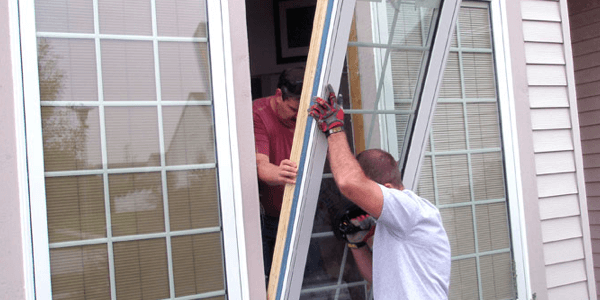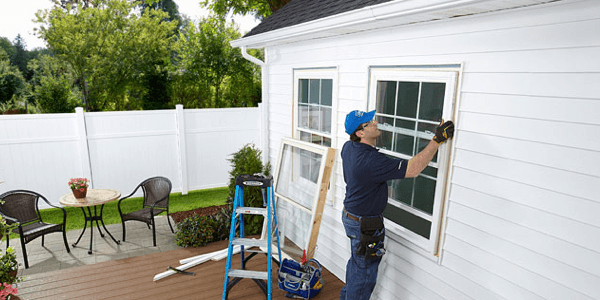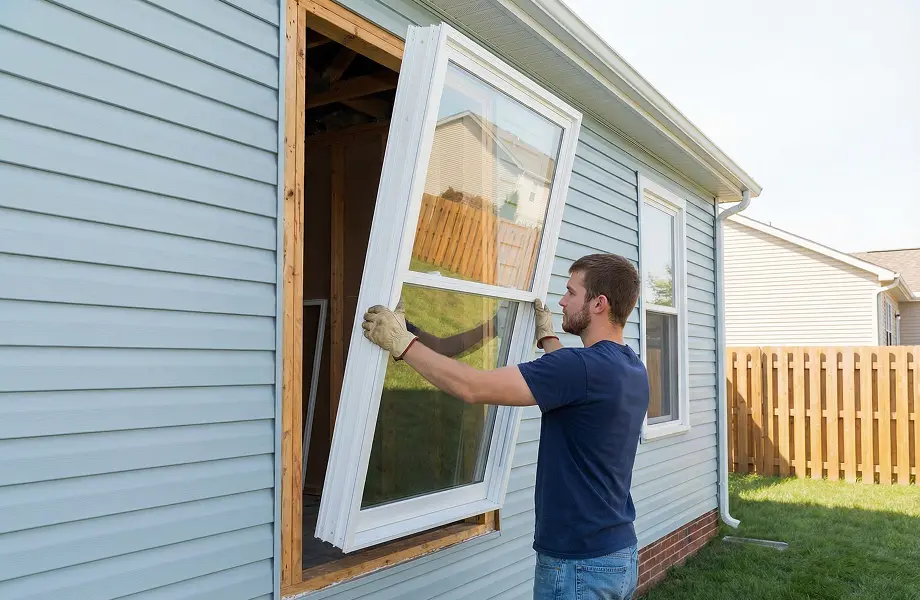


In 2026, the price to replace windows depends heavily on window type, materials, and installation complexity. The typical window replacement cost falls around $1,087, while projects can range from $562 up to $1,874, depending on your choices and overall scope.
This guide breaks down the major cost drivers (materials, labor, energy-efficiency upgrades, and permit or disposal fees), compares budget vs. premium options, and offers practical hiring tips so you can evaluate quotes and warranties before you commit. Keep reading for detailed cost breakdowns and step-by-step advice to help you make an informed decision[1].
Key takeaways
Expect an average project near $1,087, with low-end and high-end outcomes of $562 and $1,874 respectively.
Material choice (vinyl, wood, fiberglass, or composite) and glass type drive most of the price variation.
Labor, location, and job complexity (single vs. full-home replacement) can move a quote toward the low or high end.
Investing in higher-quality, energy-efficient windows may cost more up front but can deliver long-term savings.
Get multiple written estimates, verify installer credentials, and confirm warranty coverage to protect value.
Replacement Windows Prices by Type
Window replacement can mean anything from swapping a cracked pane to a full-frame install, and the price depends on the job scope, urgency, complexity, chosen materials, and your location. Energy-efficient features and certified products can change upfront cost and long-term savings, and many homeowners consider these trade-offs when planning projects[2].
| Type of Service | Cost | Features |
|---|---|---|
Remove Old Window | $181 - $468 | Demolition and disposal of the existing unit, often required before a full replacement or frame repair. |
Install Replacement Window | $684 - $1,982 | Full window installation prices include new frame and glazing; scope can range from sash-in-place swaps to complete rough opening work. |
Replace Broken Window Pane | $214 - $648 | Glass-only replacement for cracked or shattered panes, commonly faster and less disruptive than a complete window replacement. |
Repair Window Frame | $263 - $917 | Fixing rot, warping, or structural damage to the frame, sometimes combined with partial sash replacement. |
Upgrade Window Glass | $298 - $1,642 | Installing low-E, double-pane, or other high-performance glass to improve insulation and comfort. |
Seal Window Gap | $124 - $396 | Weatherstripping and caulking to stop drafts and improve energy performance in existing windows. |
Replace Window Screen | $82 - $318 | Screen replacement or repair for damaged insect screens is typically quick and low-cost, usually far below typical window screen replacement costs for full units. |
Inspect Window Installation | $187 - $641 | Professional assessment to verify flashing, seal integrity, and proper installation methods. |
Glass Upgrade Costs
Upgraded glass options include double- or triple-pane units, low-emissivity coatings, and inert gas fills. Homeowners typically choose these to improve insulation, reduce condensation, or lower energy bills.
Costs for window glass replacement generally run $298 to $1,642, with an average around $781, and prices depend on pane count, coatings, glass thickness, and fabrication complexity[3].
Frame Replacement Costs
Frame replacement covers materials such as vinyl, wood, aluminum, and composite, each chosen for durability, appearance, and maintenance needs. Full-frame replacement is selected when the existing frame is damaged or when homeowners want a complete performance upgrade.
Installed replacement windows typically cost $684 to $1,982, with an average near $1,087. The main price drivers include frame material, installation difficulty, custom sizing, and local labor rates, all of which affect the window's long-term energy performance and durability[4].
6 Key Factors That Affect the Cost to Replace Windows
Many elements change what homeowners actually pay for new windows. This short guide lists the primary drivers so you can compare bids more intelligently and estimate whether a project will fit your budget, since the cost of replacing windows depends on more than just the number of units.
- Window Type and Material: Vinyl, wood, fiberglass, and aluminum each have different product costs and lifespans. Custom shapes or specialty frames add material premiums and can require more skilled installers.
- Size and Configuration: Larger openings, picture windows, or multi-panel assemblies increase glass and framing costs. Bays, bows, and egress windows also require additional structural considerations and higher pricing.
- Existing Frame Condition and Structural Repairs: If the existing frame has rot, water damage, or signs of mold and trapped moisture, installers may need to repair or replace surrounding carpentry, which raises lab
- Glass and Energy-Efficiency Upgrades: Double- or triple-pane glass, low-emissivity coatings, and gas fills improve comfort and lower energy bills but raise upfront cost[5]. Soundproofing or impact-resistant glazing also adds to the price, which is why many homeowners research impact window prices in storm-prone regions.
- Installation Complexity and Labor: Installation difficulty affects labor hours. Second-story work, tight access, condensation remediation, or projects that require interior finish work will increase labor costs, so use an online window replacement cost estimator for a preliminary ballpark before scheduling in-person quotes.
- Local Market, Permits, and Disposal: Regional labor rates, local building permits, inspection fees, and disposal or recycling of old windows vary by location. Urban areas or places with strict codes typically see higher total project costs.
Each factor affects both product selection and labor estimates. When comparing contractors, ask for itemized bids that break these factors out so you can see what is driving price differences.
How Much Does It Cost to Replace a Window: Full-Frame vs. Pocket Installation
The chosen installation method can significantly impact the overall cost when replacing windows. Here's a breakdown of the two most common installation methods:
Full-Frame Replacement (Tear-Out to Studs)
A full-frame replacement involves removing the existing window, frame, and sometimes the surrounding trim, down to the studs of the wall. This approach allows for the installation of new framing, ensuring a complete overhaul of the window's structure. It's typically chosen when the existing frame is damaged, rotted, or when homeowners want to upgrade to a higher-performance window system.
Cost Range: $1,187 - $3,246
More labor-intensive, it requires additional framing and may involve trimming, drywall work, and possibly other structural changes. This is ideal for homes with damaged or outdated frames but can add a premium due to the extensive work involved.
Pocket/Insert Installation (Into Existing Frame)
Pocket or insert installation is a more affordable option that leaves the existing frame in place. The new window unit is installed directly into the old frame without needing to tear out the surrounding structure. This is often selected when the existing frame is still in good condition, and the homeowner only wants to update the window without disrupting the surrounding walls.
Cost Range: $823 - $2,387
This is generally quicker and less expensive because it requires less labor. However, it may not offer the same long-term durability as a full-frame replacement, especially if the frame shows any signs of wear or damage.
Replacement Windows Prices by Material Type
Material choice determines more than appearance. It affects longevity, maintenance, thermal performance, and labor time. Frame material and glazing packages set the baseline cost, while features such as low-e coatings, gas fills, and custom shapes raise both purchase price and long-term energy savings[6].
| Material Type | Cost | Details |
|---|---|---|
Vinyl | $537 - $1,486 | Durable, low-maintenance frames that resist rot and require minimal painting. Homeowners choose vinyl for affordability and solid thermal performance. |
Wood | $687 - $2,137 | Classic appearance and strong insulating value, but higher upkeep. Often selected for historic homes or premium interior finishes. |
Fiberglass | $742 - $2,286 | Very stable with low expansion and contraction, suitable for extreme climates. Offers a painted or factory-finished look with long service life. |
Aluminum | $612 - $1,724 | Lightweight and slim-profile frames that allow more glass area, but lower natural insulation. Common in modern or commercial-style homes. |
Composite | $768 - $2,368 | Engineered blends that mimic wood with less maintenance and improved durability. A mid-to-high cost option for balanced performance. |
Wood-Clad | $918 - $2,784 | Wood interior with durable exterior cladding, combining aesthetics with weather resistance. Chosen when interior wood is desired without exterior upkeep. |
Frame cost is only one factor. Custom sizes, installation difficulty, and required flashing or trim can multiply labor hours. Local climate and energy codes influence which glazing and coatings make financial sense over the life of the window, and whole-house efficiency measures affect the relative return on higher-performance options[7].
Average Price to Replace Windows by Size
Window opening dimensions and configuration drive most of the cost differences on a replacement job, because larger or more complex units require more materials, longer labor time, and sometimes framing or flashing work. If you are budgeting for the cost to replace a house window, start by measuring the rough opening and noting whether the frame will be reused or removed, as those choices change the estimate.
Larger glass areas need stronger frames and shipment handling, while unusual shapes or multi-pane assemblies add fabrication time and installation complexity. Accurate measurements and proper removal methods reduce risk and affect price[8].
Tiny Basement or Bathroom Window Projects (E.g., Single Small Hopper or Awning)
Work at this scale usually involves compact sash units that fit standard small rough openings and require minimal framing work.
Cost: $628 - $1,498
Average: $964
Smaller units typically use fewer materials and install faster, so labor is a smaller portion of the bill. Expect the final price to depend on glazing type, whether the existing trim is preserved, and how easy it is to access the opening from inside or outside.
Small Bedroom or Kitchen Window Swaps (E.g., Standard Single-Hung or Casement)
Projects in this category commonly replace one or two standard windows, often without structural modification.
Cost: $742 - $1,843
Average: $1,184
Installation time increases if the frame is rotted, if the sill requires repair, or if you upgrade to thicker, energy-efficient glass. Interior finish work, such as repainting or new trim, can add to labor and materials.
Medium Living Room or Paired Window Replacements (E.g., Two-Unit Bank or Larger Double-Hung)
These jobs cover paired windows or larger single units that require more glass and wider framing components.
Cost: $867 - $2,214
Average: $1,428
Complexity rises with unit width, the need for brickmolding or exterior flashing, and the presence of interior finishes that must be removed and replaced. Transport and handling costs increase for heavier sash, and installers may need additional helpers or equipment.
Large Picture, Bay, or Bow Window Projects (E.g., Wide Fixed Picture or Three-Part Bay)
Expect structural considerations for wide or projecting assemblies, which often require header work or support adjustments.
Cost: $1,087 - $2,834
Average: $1,792
Large units frequently involve custom framing, increased on-site labor for alignment, and more expensive glass packages. Weatherproofing and flashing details are critical, and attachment to siding or masonry can add time and specialty trades.
Extra-Large Custom Openings and Patio-Style Units (E.g., Sliding Door Conversions or Full-Height Assemblies)
Projects at this level generally require custom fabrication and may change the opening geometry, which raises both material and labor costs.
Cost: $1,382 - $3,682
Average: $2,247
Permits, structural engineering, and coordination with other trades are more likely, and installers often use cranes or scaffolds for safe handling. Final price depends heavily on the level of customization, hardware upgrades, and required site protection.
Window Replacement Cost by Region
This section compares regional price ranges and explains the factors that cause window replacement costs to vary across the United States, so you can interpret quotes and plan budgets around the average cost of window replacement.
| Region | Cost | Description |
|---|---|---|
Northeast | $748 - $2,146 | Higher labor and delivery costs in dense metro areas, plus stricter energy codes in older housing markets. |
Midwest | $528 - $1,673 | Seasonal installation windows and cold climate performance requirements influence material choices. |
South | $497 - $1,582 | Demand for impact-resistant glass and hurricane-rated frames raises prices in coastal zones. |
West | $713 - $2,084 | Higher material and permit costs in high-cost states, and a premium for energy-efficient glazing. |
Location affects more than sticker price. Homes exposed to frequent severe weather often require reinforced frames or impact glazing, which can increase project scope and cost because of specialized materials and certifications[9].
Local building codes, climate-related performance standards, and the regional supply chain shape long-term value as well. Investing in windows that improve the building enclosure can reduce heating and cooling loads and affect insulation and moisture control strategies[10]. These considerations help explain why two identical homes can receive very different estimates depending on where they are located.
DIY vs. Professional: How Much Does Window Replacement Cost?
This section explains typical DIY expenses, what professionals charge for comparable services, and the practical trade-offs so you can decide based on budget, skill level, and long-term value.
DIY Costs
DIY also has nonmonetary costs to consider: time, physical effort, and the risk of improper installation that can lead to drafts, water intrusion, or loss of energy efficiency. Following established repair and sealing guidance improves outcomes and can reduce long-term energy waste[11].
Professional Costs
A major advantage of a pro is familiarity with local code and permit requirements, which can be necessary for structural changes or full-frame replacements and helps avoid fines or rework[12]. Contractors also typically offer warranties, carry insurance, and can deliver better long-term energy performance through correct sealing and glazing.
Choosing DIY vs. Professional
- Simple Maintenance Projects: Replace broken panes and screens; these are good DIY candidates if you have basic tools and patience.
- Moderate Projects With Some Risk: Seal gaps, adjust hardware, or replace single units. DIY can save money, but expect longer timelines and possible rework.
- Complex or Structural Work: Full-frame replacement, major frame repair, or glass upgrades. Hire a professional for safety, permits, and warranty coverage.
- Time and Warranty Considerations: If speed, a clean worksite, and a warranty matter, professional service often delivers better long-term value.
The best choice depends on your budget, comfort with tools, and tolerance for risk. Use the cost breakdown above to compare the two approaches and make a confident decision that fits your home and priorities.
Add-Ons for Window Replacement
Add-ons are optional features or services you can add to a window replacement project to improve performance, appearance, or convenience. These extras increase the overall project cost in 2026 but can deliver better insulation, easier upkeep, improved security, or longer product life.
If you are curious about which add-ons are worth the additional investment, the table below summarizes common options and what they provide.
| Add-On | Cost | Details |
|---|---|---|
Impact-Resistant Glass | $468 - $1,284 | Thicker laminated glass and reinforced frames reduce storm damage and may lower insurance claims. |
Energy-Efficient Coatings | $178 - $438 | Low-emissivity coatings and gas fills improve thermal performance and reduce heating and cooling loads. |
Triple-Pane Upgrade | $327 - $918 | Adds another glass layer for better insulation and sound reduction compared with double-pane units. |
Custom Trim and Casing | $247 - $782 | Interior and exterior finishing work that matches your home style and covers larger opening adjustments. |
Extended Warranty | $126 - $412 | Longer manufacturer or installer coverage for glass, seals, and hardware beyond standard terms. |
Integrated Blinds or Shades | $314 - $874 | Built-in blinds between panes reduce dust and maintenance while offering a clean look. |
For blind installation prices and window shade replacements, price differences come from materials, brand, and the complexity of the add-on's installation. Custom sizes, heavy-duty frames, or factory-installed features require more labor and specialized parts, which raises cost, while standard upgrades for common window sizes tend to be less expensive.
Impact-resistant features can help protect a home from major damage and preserve it over time[13]. Certain energy-efficient window upgrades may also qualify for federal tax credits that reduce net cost, depending on program rules and eligibility[14].
ROI of Window Replacement
Return on investment for window replacement in 2026 depends on both measurable returns and less tangible benefits. Homeowners consider resale value, lower utility bills, and increased home equity when weighing window projects.
Federal incentives and tax credits for energy-efficient windows can improve ROI by lowering net project cost and speeding payback through reduced heating and cooling expenses.
Key ROI Drivers:
- Material Quality and Durability: Higher-quality frames and glass resist wear and retain their appearance longer, helping preserve resale value.
- Energy Efficiency: Low-emissivity coatings, double- or triple-pane glass, and proper sealing reduce energy use and may qualify for federal tax credits and incentives[15].
- Professional Installation: Correct installation prevents drafts, water intrusion, and premature failure, protecting both energy savings and resale appeal.
- Market Demand: In neighborhoods where buyers expect modern, efficient windows, replacements deliver stronger resale returns.
- Curb Appeal and Aesthetics: Visible improvements to the home exterior often influence buyer perception more than technical features.
| Service | Estimated ROI | Details |
|---|---|---|
Basic Repair | Around 40-50% | Addresses functionality but offers limited resale impact and modest energy savings. |
Full Replacement (Standard Vinyl) | Around 70-80% | Durable, cost-effective option with solid resale recoupment and measurable energy savings. |
Premium Upgrade (Wood Frames or Custom) | Around 60-75% | Higher upfront cost, strong aesthetic appeal, but slightly lower percentage return due to greater expense. |
Energy-Efficient Installation | Approximately 70-85% | Combines efficiency improvements and incentives for stronger long-term savings and buyer interest. |
Homeowners should interpret ROI as a guideline rather than a guarantee. Local real estate trends, the home's condition, and the quality of products and installation all affect actual returns. Personal comfort, reduced utility bills, and improved curb appeal are valid reasons to proceed even if the pure financial ROI is variable.
How Much Does It Cost to Replace vs. Repair a Window
Each path has its own cost ranges, advantages, and tradeoffs for you, so this comparison explains typical prices and practical factors to consider.
| Option | Cost | Considerations |
|---|---|---|
Replace | $571 - $1,356 | Replacement delivers full performance restoration, improved energy efficiency, and a longer service life, but it carries a higher upfront cost and may require trim, flashing, or permit work. |
Repair | $138 - $512 | Repair addresses isolated faults at a lower initial cost and is faster to complete, but it may offer only a temporary fix and lead to repeated service calls if the unit is older or extensively worn. |
When to Choose Replacement
Replacement usually makes sense when the window is old, the frame or sash is rotted or warped, the glazing and seals are failing across multiple units, or you are repeatedly calling for fixes. If you want measurable energy savings, modern materials and Low-E coatings can reduce heating and cooling waste and may pay back over time.
Also consider replacement when recurring window repair bills add up, or when a single repair would cost about 50% or more of a new unit, or when a new window warranty and expected lifespan provide better long-term value.
When to Choose Repair
Repair is the more practical option for minor, isolated issues such as a cracked pane, broken balance, failed weatherstripping, or a stuck sash that can be fixed quickly.
Choose repair when the window is relatively new and still under warranty, when budget constraints are tight, or when the component with the problem still has significant useful life left. Small fixes can restore functionality and appearance without the time and expense of full replacement.
5 Insider Tips to Save on Window Replacement
Check out some proactive steps you can take to make a window replacement project more affordable without sacrificing quality or safety. If you still have questions, these practical strategies focus on planning and choices that reduce hassle and unnecessary expense.
- Bundle Multiple Windows: Group installations to reduce labor time and qualify for volume pricing with the same contractor.
- Choose Standard Sizes: Select commonly available window dimensions to avoid custom fabrication lead times and markup.
- Prepare the Site: Clear furniture, remove window treatments, and ensure safe access to speed installation and avoid hourly delays.
- Get Multiple Written Bids: Compare scope, materials, and warranties to find the best value, not the lowest bid.
- Verify Contractor Credentials: Confirm licenses, insurance, and references to prevent costly rework from poor installations.
Smart planning reduces cost pressure, and hiring qualified professionals protects your investment long term. To guarantee that protection, connect today with qualified local contractors through homeyou to get tailored estimates and reliable service.
Frequently Asked Questions About Window Replacement
References
[1]U.S. Department of Housing and Urban Development, "Home Improvements", https://hud.gov/helping-americans/home-improvements.
[2]"Residential Windows, Doors, and Skylights", ENERGY STAR, https://energystar.gov/products/res\_windows\_doors\_skylights.
[3]U.S. Department of Energy, "Window Types and Technologies", 2025, https://www.energy.gov/energysaver/window-types-and-technologies.
[4]Vatin, Nikolay, and Olga Gamayunova, "Choosing the Right Type of Windows to Improve Energy Efficiency of Buildings", Applied Mechanics and Materials, Sept. 2014, pp. 972-76, doi.org/10.4028/www.scientific.net/amm.633-634.972, https://doi.org/10.4028/www.scientific.net/amm.633-634.972.
[5]U.S. Environmental Protection Agency, "A Brief Guide to Mold, Moisture and Your Home", 27 Mar. 2025, https://epa.gov/mold/brief-guide-mold-moisture-and-your-home.
[6]McCall, James D., et al, "Cost Modelling for Energy Efficient Window Replacements", 11 Apr. 2019, 10.2172/1507690, https://doi.org/10.2172/1507690.
[7]U.S. Department of Energy, "Efficient Home Design", https://energy.gov/energysaver/efficient-home-design.
[8]Baker, P., "Measure Guideline Window Repair, Rehabilitation, and Replacement", 1 Dec. 2012, 10.2172/1060622, https://doi.org/10.2172/1060622.
[9]"Protect Your Home From Severe Weather", NAHB, https://nahb.org/other/consumer-resources/protect-your-home-from-severe-weather.
[10]"Residential Building Enclosure", WBDG - Whole Building Design Guide, https://www.wbdg.org/resources/residential-building-enclosure.
[11]Goodfriend, Anne, "When Does a Repair Need a Permit", Home Repair Resource Center, http://hrrc-ch.org/?p=3795.
[12]U.S. Department of Energy, "Repairing Windows & Doors: How-To's for the Handy Homeowner", 2010, http://www1.eere.energy.gov/buildings/publications/pdfs/corporate/windows%5Fdoors.pdf.
[13]FORTIFIED - A Program of IBHS, "Build Resilience to Your Budget - FORTIFIED - a Program of IBHS", 11 Feb. 2025, https://fortifiedhome.org/article/build-resilience-to-your-budget.
[14]Internal Revenue Service, "Energy Efficient Home Improvement Credit", https://irs.gov/credits-deductions/energy-efficient-home-improvement-credit.
[15]U.S. Department of Energy, "Update or Replace Windows", Energy Saver, 2025, https://www.energy.gov/energysaver/update-or-replace-windows.