
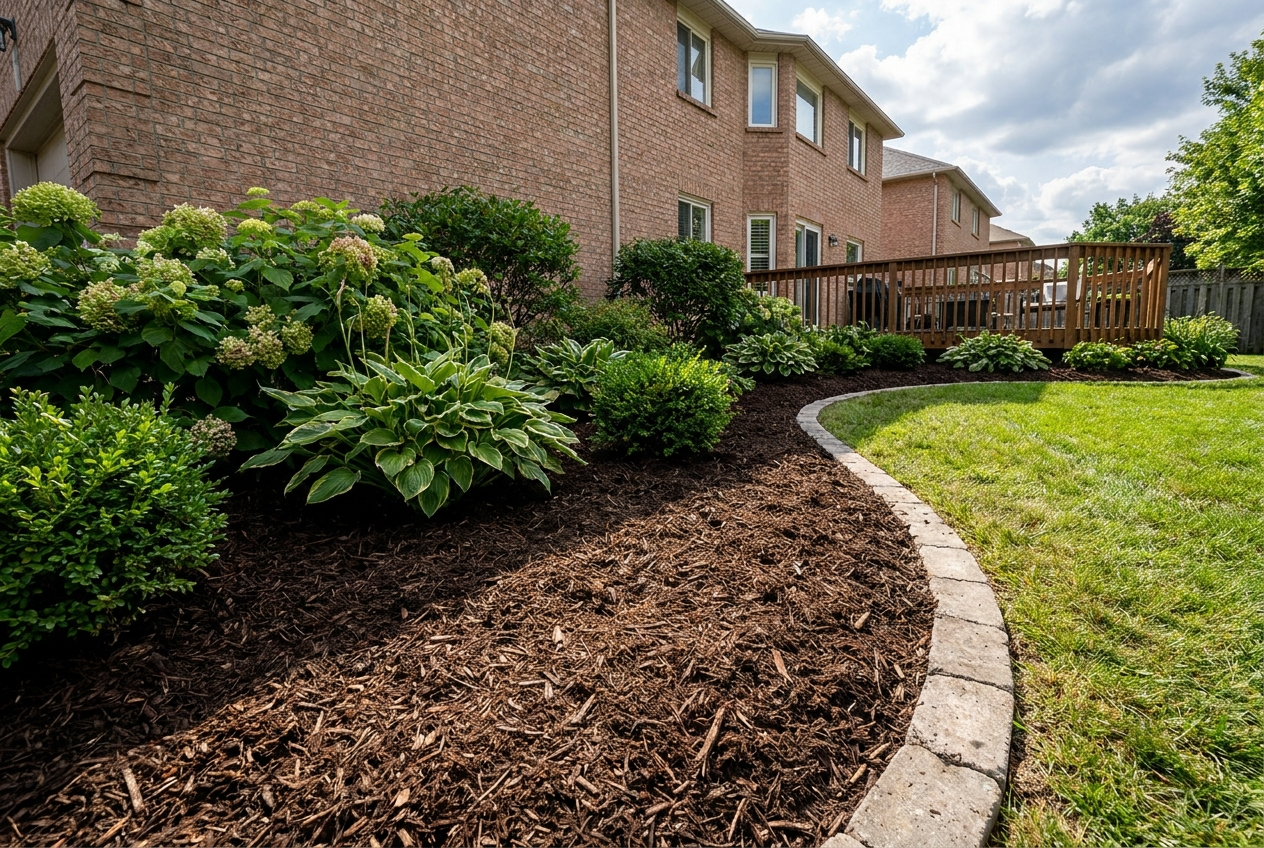


In 2026, typical mulch cost ranges from $338 on the low end to $612 on average and $948 for premium jobs.
These ranges reflect current market conditions and established landscape construction practices[1]. This guide walks through what drives mulch pricing, where upgrades make sense, and how to compare bids so you can hire confidently.
Key takeaways
Low-end projects can cost around $338, while premium installs can reach $948.
Most standard installations fall near $612.
Material type and mulch depth are major cost drivers that influence longevity and maintenance.
Larger areas often lower the per-unit price due to bulk delivery and labor efficiencies.
Professional installation raises cost but often improves coverage, bed prep, and cleanup.
Mulch Cost Per Hour
Some contractors bill mulch work by the hour. In that case, you are paying for crew time, equipment use, hauling, and on-site handling, not a simple per-bag rate. Hourly billing often tracks local landscaping wages and typical crew productivity[2]. Installation typically runs $84 to $168 per hour, with removal and spreading-only work often priced a bit lower.
Hourly work commonly includes bed prep, placement, and cleanup. Under typical conditions, a 2 to 3 person crew may spread about 2 to 4 cubic yards per hour (roughly 400 to 800 sq. ft. at 3 inches). Tight access, edging, heavy weed removal, or hauling out old mulch can slow progress.

The home services pricing hub lists cost guides for related landscaping tasks and other home projects. Strong hourly estimates account for material volume, site access, and disposal time, since those details can change how long the crew is on site[3].
Mulch Installation Cost by Type
Mulch pricing changes based on what you are actually hiring for. Delivery-only work is different from a full install that includes weeding, reshaping beds, or hauling away old material. Access, material choice, and local labor rates also affect the total.
When homeowners compare options for cost to install mulch, they are usually weighing three things:
- material cost per yard (or per bag)
- labor to spread at the right depth
- prep work, including removal and disposal when needed
| Type of Service | Cost | Features |
|---|---|---|
Install Mulch | $338 - $948 | Full placement of new mulch across beds or around trees, typically includes basic site prep and hauling of bagged or bulk material. |
Deliver Mulch | $96 - $248 | Transport of bulk or bagged mulch to the property, charged per delivery or per yard for large orders. |
Spread Mulch | $142 - $382 | Labor to spread mulch evenly to specified depth, important when delivery leaves material in piles. |
Replace Mulch | $462 - $1,268 | Removal of old mulch and installation of new material; often used when pests, rot, or heavy compaction are present. |
Remove Mulch | $186 - $546 | Full removal and hauling off-site of existing mulch, sometimes required before regrading or planting. |
Refresh Mulch | $224 - $628 | Light top-off of existing mulch to restore depth and appearance without full replacement. |
Apply Mulch Colorant | $148 - $364 | Application of dye or colorant to enhance or change mulch color; can extend visual life between refreshes. |
Install Mulch Costs
Install service covers placing new mulch to a specified depth, usually for new plantings, a seasonal refresh, or erosion control. Typical pricing ranges from $338 to $948, with an average of $612.
Most landscape beds are mulched to about 2 to 3 inches. New installs or heavy weed suppression sometimes use 3 to 4 inches. Going much deeper increases material needs and can create plant health issues.
What tends to move the price most:
- mulch type and grade
- depth
- total square footage
- access, including gates, slopes, and wheelbarrow distance
Higher-grade materials can cost more upfront, but they may offer better long-term value for landscaping investments.
Remove Mulch Costs
Removal covers pulling out existing mulch and hauling it off-site. It is commonly done before regrading, major planting changes, or full replacement. Costs typically run $186 to $546, with an average of $348.
Volume, disposal fees, and mixed debris are common cost drivers. Guidance around mulching near trees is often based on maintenance standards and best practices, including avoiding damage at the trunk and maintaining healthy conditions, not on formal permitting rules[4].
Replace Mulch Costs
Replacement combines removal plus fresh installation. It is a common choice when mulch is compacted, contaminated, or no longer performing well. Expect a range of $462 to $1,268, with an average cost of $824.
Costs can rise when the job includes soil amendments, longer haul distances to disposal, or extra protection for plants and landscape features.
Mulch Cost Per Cubic Yard by Material
Material choice affects how long mulch lasts, how it looks next to plants and hardscape, and how often it needs replenishing. Some options cost more at the start but require fewer refreshes.
Do not forget delivery and related materials. For example, if you are adding compost or underlayment, it can help to compare topsoil delivery costs alongside mulch quotes.
| Item | Cost | Description |
|---|---|---|
Wood Mulch | $76 - $148 | Shredded or chipped hardwood, commonly used around trees and beds. It offers a natural look and moderate longevity, with regular turning to limit compaction. |
Bark Mulch | $88 - $166 | Chunkier bark pieces that resist washing and compacting. Homeowners choose it for a tidy, textured appearance and slower decomposition. |
Rubber Mulch | $126 - $268 | Recycled rubber pieces that do not decompose and need minimal replacement. They are heavier and may require more labor to install, but they last longer and can be good for play areas. |
Rock Mulch | $138 - $284 | Stone and gravel options that eliminate many reapplication costs and improve drainage. Rock increases material and installation weight, which can raise labor. |
Compost Mulch | $81 - $154 | Rich organic material used to improve soil while suppressing weeds. It breaks down faster than wood, so plan for more frequent replenishment. |
Pine Needle Mulch | $86 - $158 | Lightweight, slow-to-compact needles that allow water through and provide an informal look. It is well suited for sloped beds and acid-loving plants. |
Black Mulch | $92 - $176 | Dyed wood or processed mulch chosen for strong contrast and curb appeal, color may fade over time and require refreshes; ask specifically about black mulch cost. |
Material price differences often come down to availability, processing (including dyeing), and transport weight. Labor can climb when crews need to move heavy rock, regrade beds, or install weed barrier, since those steps add time beyond spreading alone.
Durability matters for long-term cost. Faster-decomposing mulch usually means more frequent top-offs or replacement over time[5].
Rubber mulch can retain more heat than organic options and does not improve soil, so it may not be a fit for every planting area. Rock mulch tends to work best in stable, long-term beds, and it can be expensive to remove if you later redesign. If you are considering black mulch, ask what it is made from and whether the dye is labeled as safe for plants and pets, since product quality varies.
Mulch Cost Per Square Foot
Many contractors quote mulch work by the square foot because it ties directly to coverage area and labor. Per-square-foot pricing often bundles material, basic bed preparation, delivery within a standard radius, and spreading, which can make bids easier to compare.
Most per-square-foot quotes assume a standard depth, often 2 to 3 inches. Heavy removal, major edging, and deep weed control may be separate line items, so ask what is included before you compare bids.
| Service Type | Cost | Details |
|---|---|---|
Mulch Installation | $0.68 - $2 | Includes delivery, bed prep, and spreading to a standard depth; price rises with premium mulch types. |
Mulch Replacement | $0.96 - $2 | Removes old material and installs new mulch; disposal and extra labor increase costs. |
Mulch Removal | $0.36 - $1 | Labor and hauling dominate this cost, especially for deep beds or mixed debris. |
Mulch Refresh | $0.44 - $1 | Top-dressing only, less labor and material than a full install; effective for minor upkeep. |
Mulch Spread Only | $0.78 - $2 | Contractor spreads material you provide; price depends on access and number of delivery points. |
Colorant Application | $0.32 - $0.74 | Adding dye to refresh color adds material and labor; surface prep quality affects results. |
Accessibility, slope, and protection of nearby plants and hardscapes can push the per-square-foot total higher. Removal work and hauling debris are also common reasons a quote comes in above the base rate.
If you are comparing per-square-foot pricing to per-volume quotes, convert area to volume so you are comparing the same depth. Multiply area (sq. ft.) by mulch depth (in feet) and divide by 27 to estimate cubic yards. Example: 500 sq. ft. at 3 inches (0.25 ft.) needs about 500 Ã_x0097_ 0.25 ÷ 27 â_x0089__x0088_ 5 cubic yards. This helps you compare per-square-foot quotes with mulch cost per yard[6].
6 Factors That Affect the Mulching Cost
Mulch pricing in 2026 comes down to a handful of practical variables. Use the list below to spot what is driving a quote and what to clarify before scheduling.
- Material type: Hardwood, cedar, rubber, and composted mulch can vary in price and lifespan. Specialty options may cost more upfront but may last longer.
- Coverage area and depth: Square footage and depth determine how much material the job needs. Most landscapes do not benefit from more than about 3 to 4 inches of mulch.
- Delivery and haul distance: Bulk deliveries add transport fees, and heavy materials can cost more to move. Narrow gates and long wheelbarrow routes add handling time.
- Site preparation and cleanup: Pulling weeds, removing old mulch or fabric, regrading beds, and hauling debris add labor and disposal fees. Extensive prep can change the project budget significantly[7].
- Installation labor and complexity: Bed shape, obstacles, edging, and finishing details affect the time required. More detailed work usually means more labor hours.
- Color, treatment, and maintenance needs: Dyed or treated mulches can cost more. Options that resist fading or break down more slowly can reduce maintenance and weed control costs over time.
Avoid piling mulch directly against plant stems or tree trunks. This volcano-style buildup can trap moisture and contribute to rot or pest problems.
Average Mulch Cost by Region
Mulch costs vary by region due to local supply, freight distances, and seasonal demand. Use these ranges as a starting point, then compare local bids for the most accurate picture.
| Region | Cost | Description |
|---|---|---|
Northeast | $362 - $1,012 | Higher freight costs and seasonal demand can raise prices, especially near urban centers and coastal areas. |
Midwest | $314 - $884 | Abundant local timber lowers raw material costs, though long winter seasons can limit supply windows. |
South | $326 - $924 | Strong year-round landscaping demand and regional mulch varieties influence pricing and availability. |
West | $374 - $1,046 | Long distances from production sites and water-use restrictions can affect both product choice and cost. |
When you request quotes, ask for clear line items for material, delivery, and labor. If you shop by mulch price per yard, confirm whether delivery and spreading are included.
Mulch choice can also affect property fire risk, so follow local fire prevention and defensible-space recommendations[8]. In high-risk areas, guidance or local requirements may favor non-combustible zones close to structures, which can shift material choice and cost. Mulching itself rarely requires permits, but HOA rules and local ordinances can restrict mulch colors, placement, or acceptable materials.
DIY vs. Professional Mulch Costs
DIY mulching can look cheaper on paper, but the real comparison depends on time, hauling, and disposal. Hiring a crew costs more, but it can reduce physical strain and speed up the job, especially when you are refreshing multiple beds.
Use the chart below to compare typical ranges for common tasks.

DIY Risks and Practical Challenges
DIY mulch installation often runs $164 to $522, compared with $338 to $948 for a professional crew. DIY projects save on labor, but they take time and effort. Moving bulk mulch, lifting bags, and keeping an even depth is strenuous for many homeowners. Uneven coverage can create drainage problems or trap moisture against plants.
Small costs add up, including tools, disposal fees, and extra delivery handling if access is tight. If you plan to use dyed mulch or any treatments, follow product directions and use appropriate protective gear.
Professional Advantages and How to Choose
Pros work faster, hit a consistent depth, and know how to keep mulch back from trunks and stems. They can also spot drainage or bed-shaping issues before installing.
If trees are part of the job, some homeowners prefer contractors with relevant credentials, such as ISA certification for arboricultural training and standards of care[9].
A professional quote often includes cleanup and haul-away, which is a major benefit on replacement jobs.
DIY tends to fit small, simple beds when you have the time and the job does not require removal or long hauling distances. Professional service is usually a better fit for larger areas, steep slopes, or landscapes with many shrubs, trees, or hardscape edges.
Mulch Delivery Cost and Other Extras
Extras can improve results, but they also change the budget. Common add-ons include weed barriers, edging, soil improvements, and specialized application methods. The table below lists typical options and cost ranges.
| Add-On | Cost | Details |
|---|---|---|
Weed Barrier Installation | $148 - $486 | Fabric or membrane placed under mulch to reduce weeds and retain moisture, often best under rock or in specific areas; discuss pros and cons for planting beds. |
Landscape Edging | $214 - $786 | Metal, plastic, or stone edging that keeps mulch contained and sharpens bed lines for curb appeal. |
Pre-Emergent Treatment | $64 - $196 | Chemical application to prevent weed seeds from sprouting, typically scheduled in spring or fall. |
Soil Amendment | $124 - $412 | Compost or topsoil mixed into beds to improve plant health and drainage before mulching. |
Planting Beds Shaping | $182 - $612 | Grading and contouring beds for better drainage and visual flow; may require extra labor and equipment. |
Rock Border Installation | $286 - $984 | Stone or rock edging that stabilizes mulch and creates a durable lawn-to-bed transition. |
Mulch Blowing | $136 - $348 | Blown mulch application for fast, even coverage on slopes or large areas, reducing manual effort. |
Price differences come from material quality and the complexity of the work. Bed reshaping can involve excavation or equipment, and in high-termite regions it can be smart to consider a termite inspection if soil and mulch will end up directly against the foundation[10]. Local labor rates and whether extras are bundled with other services, such as yard cleanup charges, also affect the final total.
ROI of Mulch
Mulch can support curb appeal and plant health, and those improvements can contribute to home value as part of an overall landscaping presentation. Research has found that landscaping improvements, including tree and landscape enhancements, can be associated with higher residential property values[11].
Key ROI Drivers
- Material quality and durability: Longer-lasting mulches reduce how often you need refreshes.
- Professional installation: Good prep and consistent depth help beds look finished and perform better.
- Market demand: Buyer preferences for well-kept landscaping can influence resale impact[12].
- Maintenance requirements: Right-sizing depth and coverage can reduce weeding and watering time.
- Curb appeal: Fresh mulch is a visible upgrade, especially around entryways and front beds.
| Service | Estimated ROI | Details |
|---|---|---|
Basic Mulch Refresh | around 60-80% | Top-up of existing beds with standard bark or wood mulch; quick curb-appeal boost with low upfront cost. |
Full Bed Re-mulching | around 70-90% | Removal of old mulch and full replacement improves longevity and appearance, increasing perceived landscape quality. |
Premium Organic Mulch Installation | approximately 85-100% | Higher-end hardwood or composted mixes improve soil and plant health, yielding stronger long-term value for buyers. |
Low-Maintenance Synthetic Mulch | around 50-70% | Longer-lasting but higher-cost option; resale appeal varies by buyer taste and local norms. |
ROI percentages are broad, research-based or industry-estimate ranges. Treat them as directional, not guaranteed returns. Many homeowners also value the day-to-day benefit, including easier upkeep and healthier beds.
How Season Affects Mulch Cost
Season affects scheduling and pricing in 2026 because demand and weather change how efficiently crews can work. The ranges below show how timing can influence quotes.
| Season | Cost | Description |
|---|---|---|
Spring / Early Summer | $356 - $998 | Peak planting and garden prep increase demand. Expect fuller schedules and higher labor rates, but good material availability. |
Summer | $344 - $972 | Strong demand for curb appeal and irrigation coverage. Hot weather can slow installs and increase moisture management work. |
Autumn | $324 - $914 | Popular for post-season cleanup and erosion control. Contractors may offer moderate rates between spring and winter peaks. |
Winter | $318 - $934 | Lower demand in colder regions limits availability. Snow or frozen ground can delay projects and increase labor time. |
Rainy Season | $356 - $986 | Wet conditions restrict scheduling and can require extra site prep to prevent washout, raising labor and timing complexity. |
Peak seasons often mean tighter calendars and higher labor costs. Weather can also add time, such as when ground is frozen or saturated.
In periods of heavy rain or extreme heat, contractors may reschedule or phase work to reduce washout and stress on plants, which can extend timelines. Off-season scheduling can be easier, and timely mulch application can support better planting results[13].
How to Save on Mulch with Bulk Mulch Cost
You can keep a mulching project affordable by planning ahead and ordering the right amount. Smart material choices and efficient installation also support resource-conserving landscaping approaches that focus on soil moisture and reduced maintenance[14].
- Coordinate group orders: Share a delivery with neighbors to make bulk shipments more efficient.
- Choose durable mulch varieties: Slower-decomposing options may reduce how often you need to refresh.
- Prepare the site yourself: Weed and tidy beds before the crew arrives, and confirm whether fabric is appropriate for your planting areas.
- Right-size coverage and depth: Measure beds and agree on depth before placing a bulk order to avoid paying for extra material.
- Schedule off-peak installation: Weekdays and slower seasons can be easier to book and may lead to better pricing.
With homeyou's trusted landscaping contractors, you'll be able to compare qualified pros and line up an installation that fits your budget and schedule.
Frequently Asked Questions About Mulch
References
[1] Sorvig, Kim, and J. William Thompson, "Sustainable Landscape Construction", https://doi.org/10.5822/978-1-61091-811-4.
[2] Bureau of Labor Statistics, "Landscaping and Groundskeeping Workers", https://bls.gov/oes/2022/may/oes373011.htm.
[3] Abbott, Richard, and Kenneth Miller, "Estimating and Pricing Tree Care Jobs", Arboriculture & Urban Forestry, https://doi.org/10.48044/jauf.1987.025.
[4] O'Brien, Patrick, et al, "Performance Standards for Municipal Tree Maintenance", Arboriculture & Urban Forestry, https://doi.org/10.48044/jauf.1992.059.
[5] U.S. Department of Housing and Urban Development, "Durability by Design A Guide for Residential Builders and Designers", https://huduser.gov/portal/sites/default/files/pdf/Guide-Durability-by-Design.pdf.
[6] Hansen, Gail, et al, "Landscape Design Software: Evaluation and Recommendations for Homeowners", EDIS, https://doi.org/10.32473/edis-ep526-2015.
[7] U.S. Department of Housing and Urban Development, "The Rehab Guide Foundations", https://huduser.gov/publications/pdf/foundations.pdf.
[8] U.S. Fire Administration, "Fire Prevention and Community Risk Reduction", https://usfa.fema.gov/prevention/.
[9] International Society of Arboriculture, "ISA Certified Arborist", https://isa-arbor.com/credentials/types-of-credentials/isa-certified-arborist.
[10] PestWorld, "What Is a Termite Inspection and Why Do You Need One", https://pestworld.org/news-hub/pest-articles/what-is-a-termite-inspection.
[11] Anderson, L. M. and H. K. Cordell, "Residential Property Values Improved by Landscaping With Trees", Southern Journal of Applied Forestry, https://doi.org/10.1093/sjaf/9.3.162.
[12] Rosiers, François D., et al, "Landscaping Attributes and Property Buyers' Profiles Their Joint Effect on House Prices", Housing Studies, https://doi.org/10.1080/02673030701608183.
[13] Brancalion, Pedro H. S. and Karen D. Holl, "Guidance for Successful Tree Planting Initiatives", Journal of Applied Ecology, https://doi.org/10.1111/1365-2664.13725.
[14] United States Environmental Protection Agency, "Resource Conserving Landscaping", https://archive.epa.gov/.
[15] Stop Pests, "What Exclusion Techniques Work for Rodents", https://stoppests.org/frequently-asked-questions/what-exclusion-techniques-work-for-rodents/?keywords=rats.


