
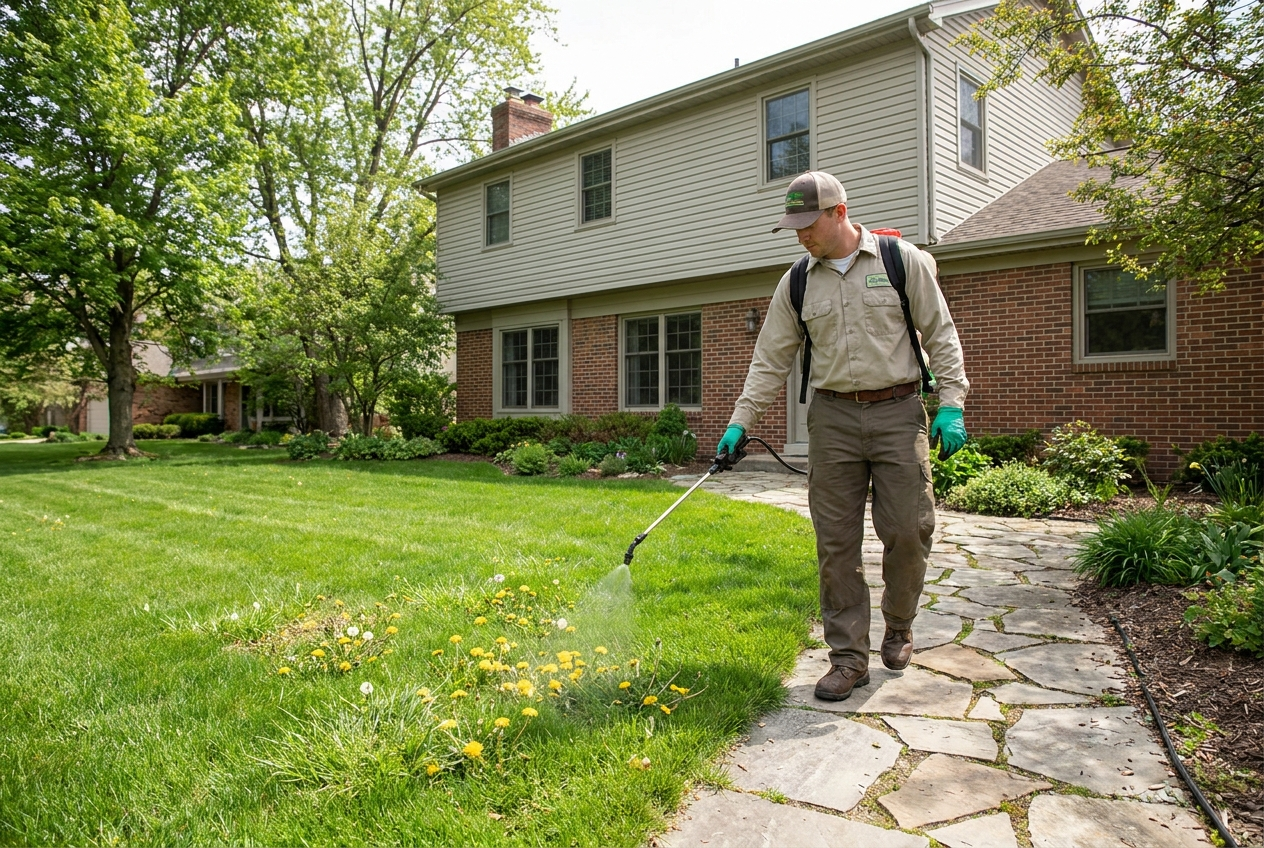


In 2026, homeowners typically pay for weed control cost from $78 to $169, with an average around $117 for standard treatments.
This guide breaks down what drives pricing, when DIY makes sense, and how to compare quotes so you can hire the right service for your yard[1].
Key takeaways
Low-cost spot treatments can be near $78.
Routine or mid-range services often average about $117.
Large properties or premium organic programs can approach $169.
Compare one-time visits, seasonal plans, and warranties to judge value, not just the initial price.
Weed Control Cost by Material
The weed-control material you choose affects speed of results, risk to nearby plants, and how often you may need follow-up service. If you are weighing environmental preferences and long-term upkeep, it can help to compare organic options with synthetic products, similar to evaluating an organic lawn care investment.
| Item | Cost | Description |
|---|---|---|
Organic Herbicide | $72 - $158 | Plant-based or biodegradable formulas that often work as contact sprays, burning back top growth but not always killing roots. Results may require repeat visits, and "organic" products still need careful handling and PPE. |
Synthetic Herbicide | $68 - $149 | Conventional chemical herbicides that often act faster and may require fewer repeat applications. Some products are regulated or restricted-use and must be applied strictly per label, sometimes by a licensed applicator. |
Pre-Emergent Herbicide (Spray) | $78 - $176 | Applied before weed seeds sprout to prevent germination. When timed correctly, chemical pre-emergents have predictable performance and can greatly reduce future weed pressure. |
Post-Emergent Herbicide (Spray) | $72 - $162 | Targets actively growing weeds for spot treatment or broadcast spraying. Available in selective formulas that spare turf and non-selective options that kill most vegetation. |
Granular Weed Control | $70 - $158 | Solid granules spread over turf that release active ingredients over time. Often easier for homeowners to apply and good for even coverage. |
Liquid Weed Control | $68 - $156 | Ready-to-spray liquids that penetrate foliage quickly for fast knockdown. Preferred for targeted treatments and rapid results. |
Corn Gluten Meal | $88 - $204 | Natural, granular pre-emergent alternative that may reduce seed germination, but real-world effectiveness is variable and often weaker than chemical pre-emergents, so it may need more frequent application. |
Material pricing can reflect formulation strength, concentration, and whether a product is typically applied by a professional or a homeowner. Application method matters too. Sprays often require calibrated equipment and careful coverage, while granular products are usually faster to broadcast.
Regional restrictions, seasonal timing, and ecological goals also influence what is used and how often. Herbicides can be selective or non-selective, and systemic or contact-only. Those differences affect risk to nearby plants and how deeply weeds are controlled, so pros match products to the site. Resource-conserving landscaping approaches also emphasize reducing unnecessary chemical inputs and water use where possible[2].
Weed Control Service Cost by Type
Weed control can mean anything from a quick inspection to repeated treatments and full lawn recovery. The biggest price differences usually come from the size of the problem, the treatment method, and how many return visits are expected. Weed control also overlaps with broader lawn care costs, especially when the lawn needs recovery afterward.
| Type of Service | Cost | Features |
|---|---|---|
Lawn Weed Inspection | $48 - $112 | A technician assesses weed types, infestation extent, and treatment options. Useful before scheduling chemical or mechanical work. |
Herbicide Spray Application | $76 - $172 | Professional application of selective or nonselective herbicides, usually scheduled as one or multiple visits depending on severity. |
Targeted Weed Control Treatment | $74 - $174 | Spot treatments for isolated patches, often combining hand removal and localized chemicals to limit collateral damage. |
Remove Intrusive Weed | $118 - $284 | Mechanical or chemical removal of aggressive or invasive species that damage lawns, beds, or hardscape, sometimes requiring repeated visits. |
Preventive Weed Control | $82 - $184 | Preemergent treatments, mulching, and cultural changes designed to reduce future germination and spread. |
Restore Overgrown Lawn | $286 - $724 | Intensive cleanup, dethatching, reseeding, and soil work to recover lawns that are heavily overrun by weeds. |
Maintain Weed-Free Garden | $86 - $198 | Regular maintenance packages combining weeding, edging, and minor spot treatments to keep beds and borders tidy. |
Remove Intrusive Weed Costs
This service targets aggressive or invasive species that spread into lawns, beds, and paved areas. It is often needed when weeds are damaging hardscape, crowding out desirable plants, or returning quickly after basic removal.
Costs range from $118 to $284, with an average of $186. Pricing usually depends on the species, root depth, area size, access, and whether removal is primarily chemical, mechanical, or a mix of both.
Preventive Weed Control Costs
Preventive work includes preemergent applications, mulching, and cultural changes that make it harder for weeds to germinate and reestablish. Typical pricing falls between $82 and $184, with an average of $124. Integrated approaches that combine cultural practices with targeted treatments can reduce long-term reliance on chemicals[3].
Restore Overgrown Lawn Costs
Restoration fits lawns that have been neglected long enough to need mowing, dethatching, aeration, soil improvement, and reseeding. Expect costs from $286 to $724, with an average of $468.
Price is shaped by the total area, how dense the overgrowth is, seed or sod choices, and how much soil work is needed. Larger projects may also overlap with other landscaping investments.
Seasonal Trends in Weed Control Prices
Weed control pricing in 2026 depends heavily on timing. During peak growing months, contractors book up faster and the same work can cost more due to demand. Weather can also cause delays. Rain, wind, and temperature swings may push treatment dates back and add return visits.
| Season | Cost | Description |
|---|---|---|
Spring / Early Summer | $86 - $184 | High demand as weeds emerge, so availability may be limited and same-week appointments are rarer. Treatments are timed for pre-emergent and early post-emergent control. |
Summer | $82 - $178 | Warm-weather growth can require more follow-up visits, and heat or drought can limit herbicide effectiveness, creating variable scheduling. |
Autumn / Fall | $74 - $161 | Cooler temperatures reduce active weed growth, which can lower demand but also focus treatments on perennial root control and overseeding coordination. |
Winter / Off-Season | $71 - $156 | Many contractors offer reduced rates or limited services due to slow demand, but freezing conditions can halt chemical applications in some regions. |
Peak demand can raise labor rates and reduce appointment flexibility during active growth periods. Some contractors also charge more for weekend or holiday work, especially when schedules are tight.
Weather determines when herbicides can be applied safely and can affect runoff risk. Rainy stretches or frozen ground can increase prep work and rescheduling. Research on application conditions and runoff highlights how control technology and timing can influence efficacy[4]. Wind speed, label temperature limits, and rain forecasts matter as well, since contractors may postpone applications to reduce drift and avoid poor results.
6 Factors That Affect the Weed Treatment Cost
Weed control estimates are built around a few consistent cost drivers. Knowing what contractors look at will help you compare bids and spot missing line items.
- Size of Treatment Area: Larger yards require more product, more time, and sometimes additional equipment.
- Vegetation Type and Density: Dense groundcover, shrubs, or work near tree roots often requires slower, more careful work[5].
- Weed Species and Infestation Severity: Different weeds respond differently. Heavy infestations often need multiple passes.
- Treatment Method and Product Choice: Hand removal, spot treatments, pre-emergents, and pro-grade chemicals all price differently.
- Access, Terrain, and Site Conditions: Slopes, tight planting beds, and poor access increase labor time and may require specialty tools.
- Frequency and Service Plan: One-time service costs less upfront, while seasonal plans add visits and monitoring but can reduce repeated outbreaks.
Local ordinances, HOA rules, and buffer requirements near water or storm drains can restrict certain products or methods. That can shift a bid toward hand weeding or mechanical control, which is labor-heavy. Contractor qualifications, insurance, permits, and compliance with applicable safety or building codes can also affect bids, since meeting standards may require documentation, training, or specific equipment[6].
Lawn Weed Control Cost by Size
Size and layout influence how weed control is priced. Larger areas use more product and take longer, but the cost per square foot may drop on big jobs once minimum trip charges are covered.
Layout matters just as much as total square footage. A simple open lawn is faster to treat than beds with dense plantings and tight edges. Larger-scale work may also involve planning and follow-up, which can affect the overall estimate[7].
Small Garden Patch (Under 100 sq ft)
This is usually a single raised bed or compact vegetable plot. Work is typically targeted and may be handled with hand weeding or spot spraying, sometimes with a short follow-up visit.
- Cost Range: $44 - $106
- Average Cost: $71
Weed density and access affect time on site. Delicate plantings often require more selective products and careful labor, which can raise the price. Many contractors also have a minimum service charge, so even a small bed may price close to that minimum.
Flower Bed or Border (100-300 sq ft)
Ornamental borders usually include mixed plantings and edging. Service often combines careful weed removal with steps that help prevent regrowth.
- Cost Range: $58 - $138
- Average Cost: $92
Costs rise when beds are crowded, narrow, or lined with hard-to-reach edges. Protective measures for desirable plants can add time and materials. Minimum service fees may still apply.
Small Lawn Area (Up to 1,000 sq ft)
A compact lawn is often treated with a broadcast application, either as a one-time visit or as part of routine maintenance.
- Cost Range: $84 - $198
- Average Cost: $132
Square footage drives product quantity and time. Uneven terrain, heavy thatch, and dense weeds can require additional passes. Because of setup and travel, contractors may price this close to a minimum charge.
Multiple Areas (Lawns Plus Beds)
This category covers properties with separate lawn and planting zones handled in one visit. The crew may switch tools and products between zones to protect ornamentals.
- Cost Range: $124 - $278
- Average Cost: $188
Switching between areas adds time and complexity. Containment measures and extra cleanup can increase the total. Bundling zones into one visit is often less expensive than booking separate service days.
Entire Property (Full Yard Treatment)
Whole-yard service treats turf, beds, and perimeter areas as one coordinated project. It often includes a recommended follow-up visit.
- Cost Range: $168 - $364
- Average Cost: $246
Total area and access determine labor hours and product volume. Some larger properties qualify for volume pricing, but steep slopes, poor access, and heavy infestations can push costs higher.
Weed Control Cost Per Square Foot
Many contractors price weed control by the square foot because it tracks directly with coverage, labor time, and product use. It also makes comparing bids easier when properties are different sizes or have different planting layouts.
Per-square-foot quotes often include the technician's time, the product, and application across the defined area. Extra work, such as deep-root removal or full lawn restoration, is usually priced separately. Ask for line-item estimates so you can see what is included. Some providers only use per-square-foot pricing above a minimum area and may otherwise offer flat-rate packages for small jobs[8].
| Service Type | Cost | Details |
|---|---|---|
Apply Weed Control Treatment | $0.16 - $0.36 | Typically includes a scheduled application of pre- or post-emergent products; cost varies with product strength and labor intensity. |
Spray Lawn Herbicide | $0.15 - $0.34 | Focused on turf-safe herbicides and spot treatments; pricing shifts with the herbicide type and number of passes required. |
Remove Intrusive Weeds | $0.28 - $0.64 | Hand pulling or mechanical removal of deep-rooted species; root depth and density drive labor costs. |
Prevent Weed Growth | $0.14 - $0.34 | Preventive measures such as pre-emergents and mulching; timing and materials influence total price. |
Restore Overgrown Lawn | $0.38 - $0.86 | Includes mowing, dethatching, and initial weed clearing; extensive restoration will increase labor and disposal fees. |
Maintain Weed-Free Garden | $0.18 - $0.44 | Recurring maintenance visits with targeted treatments; frequency of visits and garden complexity affect the rate. |
Soil type, dominant weeds, and how established the infestation is can change per-square-foot pricing because they influence both product choice and time on site. Steep slopes, tight access, and lots of landscape beds also require more careful application.
If your property is large, compare per-square-foot quotes to a per-acre approach such as weed control cost per acre to see which structure is more economical. Ask whether the rate is subject to a minimum charge, and whether bundled services are priced differently than itemized add-ons.
Weed Control Cost Per Hour
Hourly pricing is common for inspections, small areas, or complicated yards where the scope is hard to pin down in advance. The hourly rate may include equipment use, but materials are not always included unless your agreement says so.
Hourly charges typically reflect crew experience, travel expectations, and local labor costs[9].

General weed control typically bills at $52 to $88 per hour, with targeted treatments, herbicide spraying, invasive weed removal, and inspections falling in similar ranges depending on the task.
Hourly billing can work well when you need multiple short visits or want to start with an assessment and a small first treatment. Before scheduling, confirm minimum billable time and ask how chemicals, disposal, and follow-up visits are handled.
Ask for the hourly rate in writing, what supplies are included, and whether there are any guarantees. Also clarify how travel or mobilization is billed, including whether there are separate trip charges.
DIY vs. Professional: Weed Spraying Cost Compared
Choosing DIY or a professional usually comes down to the size of the infestation, how quickly you need results, and how much risk you are willing to take with nearby plants. Use the comparison below to weigh cost against time, equipment, and potential rework.

Common DIY Risks And Limitations
DIY weed control often breaks down on timing and product choice. Misapplied herbicide can injure turf, damage ornamentals, or leave bare patches that need repair. If you do it yourself, you still need to use appropriate PPE, mix and store products correctly, follow label directions, and keep kids and pets off treated areas until the label re-entry time passes. General weed control on your own typically runs $22 to $84, against $72 to $168 for a pro, with similar gaps on herbicide spraying, individual weed removal, prevention, and lawn restoration.
How To Choose Between DIY And Pro
A professional brings diagnosis, calibrated application, and product knowledge. For tough infestations or large properties, that often means fewer missteps and less rework. Some products, including restricted-use herbicides, may require a licensed applicator. Pros also tend to offer follow-up visits or service guarantees, which can matter when weeds are persistent or when weather disrupts treatment schedules.
DIY can be a good fit for small, occasional weeds if you are comfortable reading and following the label and applying at the right time of year. A pro is often the better value for recurring outbreaks, large properties, invasive species, or projects like restoring an overgrown lawn.
Herbicide labels are legally enforceable documents and must be followed for mixing, PPE, application rates, and re-entry timing. To compare bundled services across projects, review the home services pricing hub and align your budget with the scope of work.
Make the choice that fits your budget, schedule, and your lawn's long-term health.
Add-Ons for Weed Control
Add-ons are optional services that can improve results, reduce future maintenance, or combine weed control with broader yard care. They increase the total project price, so it helps to decide which upgrades solve a specific problem in your yard.
| Add-On | Cost | Details |
|---|---|---|
Organic Treatment | $48 - $121 | Uses natural herbicides and lower-toxicity formulas for sensitive yards and gardens, preferred by homeowners seeking reduced synthetic chemical exposure. |
Soil Conditioning | $64 - $154 | Adds amendments to improve soil structure and nutrient retention, helping treatments work more effectively over time. |
Mulch Application | $118 - $286 | Installation of organic or inorganic mulch to suppress weeds and conserve moisture, often paired with planting or bed cleanup. |
Fertilizer Application | $42 - $104 | Targeted feeding to strengthen turf after weed removal, available in slow-release or quick-acting formulas. |
Insecticide Application | $48 - $118 | Treats pests that damage turf or plants, coordinated with weed control for comprehensive landscape health. |
Garden Edging Installation | $138 - $348 | Adds physical borders to prevent grass and weeds from encroaching on beds, improving long-term separation and aesthetics. |
Irrigation System Check | $54 - $126 | Inspection and minor adjustments to sprinklers to ensure even watering, which can reduce weed pressure and water waste. |
Mulch and irrigation add-ons often pair well with bigger landscape projects, and contractors may bundle them with yard cleanup costs to reduce repeat scheduling.
Not every weed barrier fits every bed. Landscape fabric or plastic under mulch can affect drainage and roots, so it is worth asking what the contractor recommends for your plantings.
Pricing reflects material quality, installation difficulty, labor time, and local availability. Irrigation tuning and mulch placement can also support broader community efforts to reduce yard fire risk by limiting dry debris buildup[10].
ROI of Weed Control
ROI for weed control in 2026 describes the value you may get back from weed management, both through avoided replacement costs and improved curb appeal at resale. In markets where buyers expect a well-kept yard, visible weed pressure can make a property feel neglected.
Key ROI Drivers
- Material Quality and Durability: Higher-quality mulch, landscape fabric, and spot treatments last longer and reduce repeat costs.
- Professional Installation: Accurate application reduces missed areas and the need for corrective treatments.
- Market Demand: In neighborhoods where yard appearance influences buyer interest, weed control can help a home show better.
- Maintenance Requirements: Lower-maintenance approaches can reduce ongoing spending across seasons.
- Curb Appeal and Aesthetics: A tidy yard can influence buyer perception and, in some studies, correlates with home price effects tied to landscaping attributes[11].
The table below summarizes broad ROI ranges for common projects. These are illustrative estimates based on general landscaping and real estate trends, and actual returns vary by market and results.
| Service | Estimated ROI | Details |
|---|---|---|
Routine Spot Treatment | around 60-75% | Targets visible problem areas, offers good short-term curb appeal with modest ongoing maintenance needs. |
Seasonal Preventive Program | approximately 70-85% | Regular treatments reduce overall weed pressure and preserve landscape investment, improving resale appeal. |
Hardscape Weed-Barrier Installation | around 65-75% | Durable solution for walkways and beds, lowers future maintenance but higher upfront cost affects short-term ROI. |
Full Lawn Renovation with Weed Control | approximately 50-70% | Major improvement that can transform curb appeal but has higher material and labor costs, so ROI depends on home value and buyer preferences. |
ROI is only one planning tool. Your local market, the condition of the property, and the quality of the finished results all change what you get back. Use it alongside practical benefits, like time saved and easier maintenance.
How Much Does Weed Control Cost by State
Weed control pricing varies across states due to labor rates, contractor availability, material costs, seasonal demand, and state or local regulations that affect product selection and compliance[12].
| State | Cost | Details |
|---|---|---|
California | $92 - $201 | Higher labor and living costs in many metro areas raise service rates. Water restrictions and climate-driven treatment schedules also influence frequency and material choices. |
Texas | $76 - $169 | Large state with varied climates, producing variable seasonal demand. Competitive markets in suburbs can lower prices, while rural travel increases costs. |
Florida | $84 - $182 | Warm climate creates year-round weed pressure, which increases service frequency. Coastal access and storm season can affect scheduling and materials. |
New York | $91 - $208 | Urban labor costs push prices higher in cities, while upstate areas have lower rates. Local permit and zoning rules can affect certain treatments. |
Washington | $83 - $186 | Pacific Northwest rainfall creates persistent weed issues, increasing application frequency. Regional labor rates and environmental rules affect product choice. |
Illinois | $79 - $176 | Cold winters reduce active seasons, which can lower annual cost, but urban Chicago rates are higher due to labor and demand. |
Arizona | $74 - $166 | Arid climate and irrigation practices change which weeds dominate and which materials work best, influencing both treatment plans and costs. |
Some states and cities restrict or ban specific lawn herbicides or application methods, which can shift bids toward alternative products or more manual labor. Use statewide ranges as a starting point, then request local quotes for an estimate based on your lot size, weed type, and access.
How to Save on Weed Control
Saving money on weed control usually comes from reducing labor time, avoiding repeat treatments, and choosing the right level of service for the problem. Clear planning and a defined scope also help contractors price the job accurately[13].
- Prepare the Site: Clear debris, mark problem areas, and mow before the contractor arrives to reduce labor time.
- Bundle Services: Combine weed control with mulching, edging, or cleanup to cut down on repeat travel and setup.
- Choose Targeted Treatments: Ask about spot treatment for problem patches instead of blanket applications when appropriate.
- Upgrade Planting and Mulch: Refresh mulch, define bed edges, or add low-maintenance groundcover to reduce future weeding.
- Follow Label Directions: Do not over-apply herbicides. More than the label rate can damage turf, violate rules, and lead to extra repair costs.
- Check Local Assistance Programs: Review government home repair or landscaping assistance options if you might qualify for support[14].
Talk to home improvement professionals through homeyou to schedule assessments, compare services, and choose reliable professionals who deliver lasting results and peace of mind.
Frequently Asked Questions About Weed Control
References
[1] Sorvig, Kim, and J. William Thompson, "Sustainable Landscape Construction", https://doi.org/10.5822/978-1-61091-811-4.
[2] United States Environmental Protection Agency, "Resource Conserving Landscaping", https://archive.epa.gov/.
[3] Larramendy, Marcelo L., and Sonia Soloneski, "Integrated Pest Management and Pest Control - Current and Future Tactics", https://doi.org/10.5772/1383.
[4] "Research Report Impact of Ant Control Technologies on Insecticide Runoff and Efficacy", NPMA PestWorld, https://npmapestworld.org/content-pages/technical-resources/pmf-research-reports/research-report-impact-of-ant-control-technologies-on-insecticide-runoff-and-efficacy.
[5] O'Brien, Patrick, et al, "Performance Standards for Municipal Tree Maintenance", Arboriculture & Urban Forestry, https://doi.org/10.48044/jauf.1992.059.
[6] National Fire Protection Association, "List of 300+ Codes and Standards", NFPA, https://nfpa.org/for-professionals/codes-and-standards/list-of-codes-and-standards.
[7] Brancalion, Pedro H. S. and Karen D. Holl, "Guidance for Successful Tree Planting Initiatives", Journal of Applied Ecology, https://doi.org/10.1111/1365-2664.13725.
[8] Abbott, Richard, and Kenneth Miller, "Estimating and Pricing Tree Care Jobs", Arboriculture & Urban Forestry, https://doi.org/10.48044/jauf.1987.025.
[9] Bureau of Labor Statistics, "Landscaping and Groundskeeping Workers", https://bls.gov/oes/2022/may/oes373011.htm.
[10] U.S. Fire Administration, "Fire Prevention and Community Risk Reduction", https://usfa.fema.gov/prevention/.
[11] Rosiers, François D., et al, "Landscaping Attributes and Property Buyers' Profiles Their Joint Effect on House Prices", Housing Studies, https://doi.org/10.1080/02673030701608183.
[12] Association of American Pesticide Control Officials, "Documents 2002 to Present", http://aapco.org/documents.
[13] Hansen, Gail, et al, "Landscape Design Software: Evaluation and Recommendations for Homeowners", EDIS, https://doi.org/10.32473/edis-ep526-2015.
[14] "Government Home Repair Assistance Programs", USAGov, https://usa.gov/home-repair-programs.


