
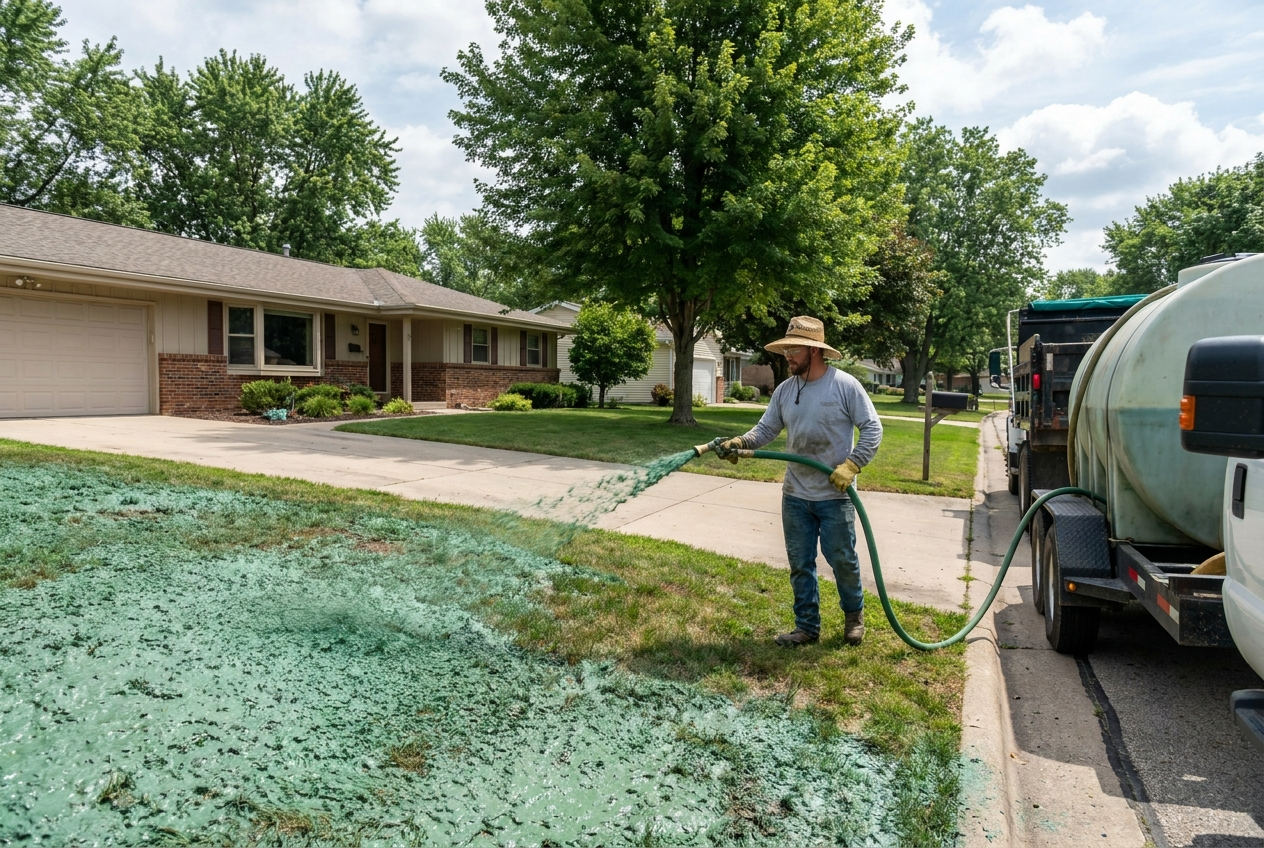


In 2026, the typical hydroseeding cost runs from $692 to $2,148, with the average project near $1,284. This guide breaks down what drives pricing, what to expect from DIY vs. professional work, and how to compare quotes so you can plan the job with fewer surprises[1].
Most hydroseeded lawns show some green in 5-10 days under good conditions, take several weeks to thicken up, and often need 2-3 months or more before they can handle regular foot traffic. Budget time along with money, especially if you need the yard usable by a certain date.
Key takeaways
Expect a low-end price around $692 for small, straightforward jobs.
Many standard residential projects land near $1,284.
Large areas, steep slopes, or premium seed mixes can push costs toward $2,148.
When comparing bids, confirm the seed mix, slope work, and what any warranty covers.
A solid contractor can save you time and reduce the risk of patchy germination.
6 Factors That Affect the Hydroseeding Price
Hydroseeding costs are shaped by site conditions that change materials, labor, and how well the lawn establishes. Use the factors below to compare bids with confidence, and visit home services pricing for other project cost benchmarks.
- Project Size: Bigger areas require more seed, mulch, and crew time, so totals rise with square footage or acreage. This is one of the biggest drivers of the cost to hydroseed.
- Soil Condition and Preparation: Compacted, rocky, or nutrient-poor soil may need testing, amendments, grading, or tilling to support a durable lawn. That extra prep time can raise the price[2].
- Slope and Erosion Risk: Steeper areas often need tackifiers, erosion blankets, or special application methods, plus additional labor for stabilization[3]. In some locations, slopes or areas near waterways can trigger erosion-control or stormwater requirements that add permitting or compliance steps.
- Seed Mix and Additives: Specialty blends for shade, drought tolerance, or native planting typically cost more than basic turf seed. Additives like fertilizer, mulch, and tackifier also affect material totals and performance expectations.
- Accessibility and Equipment Needs: Tight access, long hose runs, limited water supply, or the need for larger trucks and pumps can increase mobilization and labor time. If water must be hauled in, logistics can shift quickly and so can the cost.
- Irrigation and Follow-Up Care: Planting outside ideal windows, adding temporary irrigation, or scheduling contractor watering and check-ins can increase upfront costs. Early care matters, hydroseed typically needs light, frequent watering at first, then a gradual taper over a few weeks to keep the surface moist without saturating it.
When you request quotes, ask for an itemized breakdown of prep, materials, application, and follow-up care. It makes it easier to compare bids and understand what is included in any germination guarantee.
Types Of Hydroseeding
Hydroseeding can include inspection, soil prep, slurry application, erosion control, and follow-up care. Each piece affects the total. Many homeowners also compare hydroseeding vs sod cost when choosing an approach, especially when weighing speed vs. budget, and hydroseeding can be a cost-effective landscaping investment.
| Type of Service | Cost | Features |
|---|---|---|
Install Hydroseeding | $692 - $2,148 | Full application of seed, mulch, fertilizer, and tackifier across the lawn; pricing varies by acreage and seed mix. |
Prepare Soil for Hydroseeding | $428 - $1,496 | Grading, tilling, debris removal, and amendments to create a seedbed suitable for hydroseeding. |
Inspect Soil Condition | $132 - $364 | Site evaluation and soil testing for pH, nutrient levels, and compaction before seeding; additional testing may be used for higher-risk sites[4]. |
Apply Erosion Control Matting | $482 - $1,546 | Biodegradable or synthetic matting installed on slopes to prevent washout, and this element affects costs for erosion control. |
Water Hydroseeded Area | $146 - $596 | Initial irrigation scheduling and setup to maintain moisture for germination; frequency and duration drive costs. |
Fertilize Hydroseeded Lawn | $118 - $356 | Starter fertilizer application tailored to seed type and soil test results to promote early growth. |
Repair Hydroseeded Area | $182 - $562 | Reseeding, spot repair, or erosion remediation for areas that failed to establish, often after heavy rain or traffic. |
Install Hydroseeding Costs
This is the main service, seed, mulch, tackifier, and sometimes starter fertilizer are mixed and sprayed over the area. It is commonly used for new lawns or large reseeding projects. Typical pricing runs $692 to $2,148 and averages $1,284, with acreage, seed mix, and access doing most of the heavy lifting on price.
Prepare Soil for Hydroseeding Costs
Preparation can include grading, debris removal, soil amendments, and compaction correction before the slurry goes down. Expect $428 to $1,496 with an average of $842. Soil condition, slope, and heavy equipment needs are the most common cost drivers.
Repair Hydroseeded Area Costs
Repairs can mean spot reseeding, fixing eroded sections, or reapplying hydroseed after a failed install. Costs range from $182 to $562, averaging $338. Pricing depends on how much area needs attention and why it failed in the first place.
Hydroseeding Cost by Material
Material selection affects how fast the lawn comes in, how it looks once established, and how much maintenance it needs. Specialty mixes can cost more upfront, but they may be a better fit for slopes, shade, drought conditions, or high-traffic use.
Before you sign off on a quote, confirm the mix matches your yard conditions and goals. Also ask about water. Contractors typically need reliable on-site water to mix and apply slurry. If water access is limited, hauling water can add time and cost.
| Item | Cost | Description |
|---|---|---|
Premium Grass Mix | $586 - $1,456 | High-quality turf seeds blended for quick germination and dense coverage, best for manicured lawns with regular irrigation. |
Native Grass Mix | $484 - $1,248 | Local-adapted species that require less water and fertilizer, favored for ecological landscaping and lower long-term upkeep. |
Erosion Control Mix | $562 - $1,414 | Contains fast-growing grasses and mulch binders to stabilize slopes and prevent soil loss after grading or heavy rain. |
Clover Seed Mix | $418 - $1,036 | Low-growing, nitrogen-fixing groundcover that stays green with less fertilizer; often used in informal lawns and pollinator areas. |
Wildflower Seed Mix | $548 - $1,462 | Diverse flowering species for meadows and pollinator habitat, chosen for color and biodiversity rather than a formal turf look. |
Athletic Field Mix | $624 - $1,492 | Durable, wear-tolerant grasses and higher seed rates to withstand heavy foot traffic on sports fields and play areas. |
Shade-Tolerant Grass Mix | $522 - $1,288 | Formulated for low-light zones beneath trees or near structures, selected for leaf texture and slower moisture loss. |
Material costs also change with seed rate, soil prep requirements, and additives like mulch and tackifiers, since they affect both product quantities and labor time. If your project needs imported topsoil, include nearby topsoil, sand and fill dirt delivery costs in your planning.
Choosing drought-tolerant or regionally adapted blends can reduce long-term irrigation and upkeep, which aligns with horticultural guidance on xeric plant selection[5].
Hydroseeding Cost Per Acre by Project Size
Project size and layout play a major role in hydroseeding pricing. Larger areas require more material and crew time, while layout affects setup, access, and erosion-control needs.
A wide, open yard often costs less per square foot because crews can work efficiently with fewer stops and less waste. Steep grades, irregular shapes, or many small patches typically push costs higher.
Hydroseeded areas can look thin at first. You may see green in 5-10 days, but it often takes weeks to fill in, and a couple of months or more before the turf holds up to routine traffic.
Full-New Lawn Installation
A full-new lawn installation covers a continuous area prepared from bare soil or rough grade to a finished, turf-ready surface. This is common for new construction and whole-yard renovations.
- Cost Range: $512 - $1,264
- Average Cost: $846
Soil preparation, irrigation planning, and higher material volumes tend to drive costs here. Large, contiguous areas may cost less per square foot than smaller or segmented jobs because setup is concentrated.
Repairing a Small Bare Area
Small bare-area projects typically involve spot prep, light raking, and applying hydroseed to a limited area, often under 500 square feet. This is common for pet spots, utility repairs, or localized die-off.
- Cost Range: $268 - $642
- Average Cost: $414
These jobs are often more sensitive to prep needs than homeowners expect. If the soil needs amendment or compaction correction, labor goes up. Many contractors also have minimum service charges, which can make small projects look expensive on a per-square-foot basis.
Spot Seeding in an Existing Lawn
Spot seeding addresses thinning areas without renovating the whole yard. It may include light dethatching, compaction fixes where needed, and a hydroseed blend meant to match the existing turf.
- Cost Range: $236 - $584
- Average Cost: $382
Matching the seed type and getting good seed-to-soil contact matter most. Hydroseeding is usually a better fit for larger or widespread thinning areas. Tiny patches are often handled more cheaply with other seeding methods.
Multiple Discrete Areas
Multiple-area projects cover several separate patches across one property, such as front and back sections or scattered utility cuts. Each section takes setup time during the same visit.
- Cost Range: $348 - $884
- Average Cost: $586
More moving, repeated setup, and different prep needs across patches can raise labor time. If access differs from one area to the next, unit costs often climb further.
Sloped or Erosion-Prone Sections
Sloped and erosion-prone areas often need mixes and methods designed to establish quickly and hold soil in place. Tackifiers and erosion blankets are common add-ons.
- Cost Range: $598 - $1,518
- Average Cost: $986
Steepness and safety requirements increase labor. Native mixes and soil amendments can support long-term stability, which can change upfront scope and pricing[6]. Near waterways or in regulated areas, additional erosion controls or permits may also apply.
Hydroseeding Cost Per Square Foot
Many contractors price hydroseeding per square foot for typical residential yards because it tracks materials and labor closely to the area being treated. Larger tracts and commercial sites are more often quoted per acre, so check the unit before you compare bids.
If you are searching for hydroseed lawn cost, you will often see per-square-foot pricing that bundles seed, mulch or fiber, tackifier, and application labor into one figure.
| Service Type | Cost | Details |
|---|---|---|
Hydroseeding Installation | $0.11 - $0.23 | Includes seed, mulch/fiber, tackifier, and machine application; terrain and seed mix affect rates. |
Soil Preparation for Hydroseeding | $0.08 - $0.31 | Tasks such as grading, debris removal, and topsoil amendment increase labor and equipment time. |
Erosion Control Matting | $0.68 - $2 | Installed on slopes or disturbed areas to hold seed and soil; product type and steepness change cost. |
Fertilizing Hydroseeded Lawn | $0.02 - $0.07 | Initial starter fertilizer is often applied to promote germination; fertilizer grade and quantity matter. |
Watering Hydroseeded Area | $0.03 - $0.11 | Temporary irrigation setup or scheduled visits affect price, especially in dry climates. |
Repair of Hydroseeded Area | $0.12 - $0.32 | Covers spot re-seeding, soil prep, and labor after washouts or poor germination. |
Rates shift with seed quality and application rates, since specialty mixes can require more product and higher costs. Slope, access, and obstacles also raise labor time and equipment needs, which can show up in the per-square-foot number.
Soil prep is another major swing factor. Compacted or low-quality soil often needs additional grading and amendments. If you want a tighter measurement before requesting quotes, basic landscape design tools can help you map and calculate areas more accurately[7].
Average Hydroseeding Cost by Region
Regional pricing varies based on labor, material availability, climate, and seasonal demand. The ranges below reflect common patterns across the U.S., plus the factors that often push bids higher.
| Region | Cost | Description |
|---|---|---|
Northeast | $782 - $2,368 | Higher labor and transportation costs in urban areas increase bids, and short planting seasons can raise peak-season pricing. |
Midwest | $628 - $1,928 | Lower material transport costs offset variable weather risks, with contractors adjusting prices for spring and fall windows. |
South | $596 - $1,796 | Long growing seasons lower some timing constraints, but higher demand for erosion control can increase material use and cost. |
West | $764 - $2,386 | Water restrictions, rugged terrain, and association with larger grading or stormwater projects in some areas lead to higher logistical and compliance expenses. |
Local labor rates feed directly into hydroseeding bids, since crews and site prep are a large part of the work[8].
Use the table as a starting point, then pressure-test it against your property details. Long driveways, steep yards, limited water access, required irrigation changes, and HOA or municipal erosion-control requirements can all raise real-world quotes.
Add-Ons for Hydroseeding
Add-ons are optional upgrades that can improve establishment, appearance, or ease of maintenance. They increase the total price, but the right add-on can reduce washouts, cut down on weeds, or limit rework. This is similar to how extras affect budgeting for sprinkler installation costs.
| Add-On | Cost | Details |
|---|---|---|
Premium Seed Blend | $164 - $514 | Higher-quality or specialty seed mixes for faster germination, drought tolerance, or improved turf characteristics. Homeowners choose this for long-term performance. |
Organic Mulch | $148 - $446 | Organic hydromulch products (cellulose or wood-fiber) compatible with hydroseeding equipment; in some cases, separate straw or blanket products may be applied afterward for added erosion control. |
Soil Amendment | $214 - $764 | Adds nutrients or texture improvements like compost or sand to support seed growth and root development. |
Weed-Control Application | $136 - $404 | Any pre- or post-emergent must be labeled safe for newly seeded lawns; many herbicides are delayed until grass is established, following label and contractor guidance[9]. |
Lawn Rolling | $126 - $396 | Light rolling to improve seed-to-soil contact and smooth uneven ground, useful on small lawns or sloped areas. |
Compost Topdressing | $182 - $588 | Thin layer of compost applied after seeding to add organic matter and retain moisture. |
pH Testing | $58 - $184 | Soil pH analysis to guide lime or sulfur applications for optimal nutrient availability. |
Add-on pricing depends on product choice and how much material your site needs. Labor can rise too, especially if access is tight or grading and remediation are required.
In some cases, contractors recommend specific products or application methods to reduce runoff and help treatments stay effective. Application technology can influence how chemicals move across a site, which is one reason pros may steer you toward certain approaches[10].
Hydroseeding Return on Investment
Hydroseeding can be a practical way to establish grass faster than hand seeding, improve curb appeal, and reduce erosion on disturbed soil. ROI usually comes down to how the finished lawn affects buyer perception and how much maintenance and rework you avoid over time. Federal tax credits rarely apply to lawn projects, so value is typically tied to market appeal and installation quality.
Key ROI Drivers
- Material Quality and Durability: Higher-grade mixes, tackifiers, and mulch can establish more reliably and reduce reseeding needs.
- Professional Installation: Good prep, correct application rates, and better timing lower the risk of failure and costly repairs.
- Market Demand and Buyer Preferences: In areas where buyers value outdoor presentation, an established lawn can support perceived home value. Local buyer preferences play a role[11].
- Maintenance Requirements: High watering and mowing needs can reduce short-term payoff, while lower-maintenance mixes may look better on a longer timeline.
- Curb Appeal and Aesthetics: A consistent, healthy lawn can make a home feel more move-in ready and appealing.
Results still depend on climate, timing, and soil prep. If your property has erosion issues, the stabilization benefit can be part of the value equation.
| Service | Estimated ROI | Details |
|---|---|---|
Spot Repair | around 50-60% | Small spot repairs improve curb appeal quickly but have limited resale impact; maintenance costs remain similar. |
Whole-Yard Installation | 60-75% | Whole-yard installation often delivers noticeable curb appeal and neighborhood parity, improving buyer interest. |
Drought-Tolerant or Native Blend | 70-85% | Drought-tolerant or native blends lower water needs and ongoing costs, appealing in water-conscious markets. |
Erosion Stabilization | 65-80% | Stabilization reduces future repair expenses and may protect landscaping investments on vulnerable sites. |
These percentages are rough, illustrative estimates, not guaranteed financial returns. Your local market, your home value, and the quality of prep and aftercare can move results in either direction. For broader context on how landscaping can influence property value, see the supporting research in the next section reference[12].
DIY vs. Professional: How Much Does Hydroseeding Cost
Choosing DIY or professional hydroseeding often comes down to your timeline, the size and slope of the yard, and how much risk you can tolerate if the first attempt comes in patchy.
DIY can reduce labor costs, but true hydroseeding requires specialized spray equipment, often with minimum rental periods. There is also a learning curve. Uneven application, clogged equipment, or poor mixing can waste seed and mulch. Pros typically bring calibrated equipment, mix knowledge, and routines for early care that can make results more consistent.

DIY Risks and Common Challenges
DIY projects often run into trouble during prep and early watering. Poor grading, leftover debris, and weak seed-to-soil contact can reduce germination. Overwatering can cause washouts, while underwatering can crust the surface and block sprouts. Soil prep alone often runs $142 to $518 on your own versus $446 to $1,528 for a pro, and the gap shows up again on the actual application and watering setup.
You also need to limit foot traffic, pets, and mowing until roots are established. Otherwise, you may end up paying for patch repairs that are not covered by a contractor warranty.
How to Choose Between DIY and Hiring a Pro
A professional crew can adjust the mix for soil type, shade, and slope, then apply it evenly at the right rate. They can also explain early watering and fertilization steps, plus when it is safe to walk on the lawn and resume normal use.
DIY can make sense if the area is small, level, and you have time for daily watering and monitoring. Hiring a pro is often the better call for larger areas, sloped sites, tight schedules, or when you want more uniform results.
Early aftercare matters. Consistent light watering multiple times per day at first, then gradually reducing frequency, has a real impact on establishment. Homeowner follow-through is a major factor in outcomes[13].
How Season Affects Hydroseeding Cost
Season affects both price and scheduling in 2026. Demand rises during popular planting windows, while weather limits how many workable days contractors have.
| Season | Cost | Description |
|---|---|---|
Spring / Early Summer | $714 - $2,216 | High demand for planting and ideal soil temperatures increase scheduling pressure, but germination rates are generally strong, reducing rework. |
Summer | $736 - $2,326 | Hot, dry conditions can require extra irrigation or mulch, raising labor and material needs and sometimes limiting available windows. |
Autumn | $676 - $2,098 | Cooler evenings and steady moisture often make this a preferred time for seeding, with moderate contractor availability and good establishment. |
Winter | $642 - $1,982 | In cold climates, frozen ground may make hydroseeding impractical for weeks or months, while milder regions may still allow limited, higher-risk winter work at varying prices. |
Rainy Season | $748 - $2,294 | Heavy rainfall can delay work, increase erosion control measures, and extend project timelines, which raises costs and scheduling unpredictability. |
Spring and fall often book up first. When calendars fill, some contractors price higher for rush scheduling or weekend work.
Weather also changes the scope. Extra stabilization, erosion control, or irrigation can add labor and materials. If you can plan around local conditions, timing can reduce the risk of poor establishment and follow-up repairs[14].
How to Save on Hydroseeding
You can often reduce hydroseeding costs by tightening the scope and preventing rework. Focus on steps that make the job faster to install and easier to establish.
- Prepare the Site Yourself: Clear rocks, debris, and weeds, rake soil evenly, and mark irrigation lines so the crew can start immediately. Follow contractor guidance on final grade and drainage, since incorrect DIY grading can create expensive drainage problems.
- Bundle Services: Combine soil tests, irrigation checks, and grading with the hydroseeding visit to reduce repeat mobilization.
- Schedule for Optimal Conditions: Aim for mild weather and keep your schedule flexible to avoid delay charges and rushed work.
- Provide Clear Access and Communication: Unlock gates, confirm utility locations, and keep one point of contact to reduce confusion and change orders.
- Explore Local Assistance Programs: Check for home repair or sustainability programs that may help with eligible property improvements[15].
To compare real pricing for your yard, connect with hydroseeding professionals through homeyou. You can review scopes, timelines, and care plans before you choose a contractor.
Frequently Asked Questions About Hydroseeding
References
[1] United States Environmental Protection Agency, "Resource Conserving Landscaping", https://archive.epa.gov/.
[2] U.S. Department of Housing and Urban Development, "Durability by Design A Guide for Residential Builders and Designers", https://huduser.gov/portal/sites/default/files/pdf/Guide-Durability-by-Design.pdf.
[3] U.S. Department of Housing and Urban Development, "The Rehab Guide Foundations", https://huduser.gov/publications/pdf/foundations.pdf.
[4] O'Brien, Patrick, et al, "Performance Standards for Municipal Tree Maintenance", Arboriculture & Urban Forestry, https://doi.org/10.48044/jauf.1992.059.
[5] Irish, Mary, and Gary Irish, "Agaves, Yuccas, and Related Plants A Gardener's Guide", Choice Reviews Online, https://doi.org/10.5860/choice.38-1563.
[6] Sorvig, Kim, and J. William Thompson, "Sustainable Landscape Construction", https://doi.org/10.5822/978-1-61091-811-4.
[7] Hansen, Gail, et al, "Landscape Design Software: Evaluation and Recommendations for Homeowners", EDIS, https://doi.org/10.32473/edis-ep526-2015.
[8] Bureau of Labor Statistics, "Landscaping and Groundskeeping Workers", https://bls.gov/oes/2022/may/oes373011.htm.
[9] Larramendy, Marcelo L., and Sonia Soloneski, "Integrated Pest Management and Pest Control - Current and Future Tactics", https://doi.org/10.5772/1383.
[10] "Research Report Impact of Ant Control Technologies on Insecticide Runoff and Efficacy", NPMA PestWorld, https://npmapestworld.org/content-pages/technical-resources/pmf-research-reports/research-report-impact-of-ant-control-technologies-on-insecticide-runoff-and-efficacy.
[11] Rosiers, François D., et al, "Landscaping Attributes and Property Buyers' Profiles Their Joint Effect on House Prices", Housing Studies, https://doi.org/10.1080/02673030701608183.
[12] Anderson, L. M. and H. K. Cordell, "Residential Property Values Improved by Landscaping With Trees", Southern Journal of Applied Forestry, https://doi.org/10.1093/sjaf/9.3.162.
[13] Summit, Joshua and E. Gregory McPherson, "Residential Tree Planting and Care A Study of Attitudes and Behavior in Sacramento, California", Arboriculture & Urban Forestry, https://doi.org/10.48044/jauf.1998.012.
[14] Brancalion, Pedro H. S. and Karen D. Holl, "Guidance for Successful Tree Planting Initiatives", Journal of Applied Ecology, https://doi.org/10.1111/1365-2664.13725.
[15] "Government Home Repair Assistance Programs", USAGov, https://usa.gov/home-repair-programs.


