
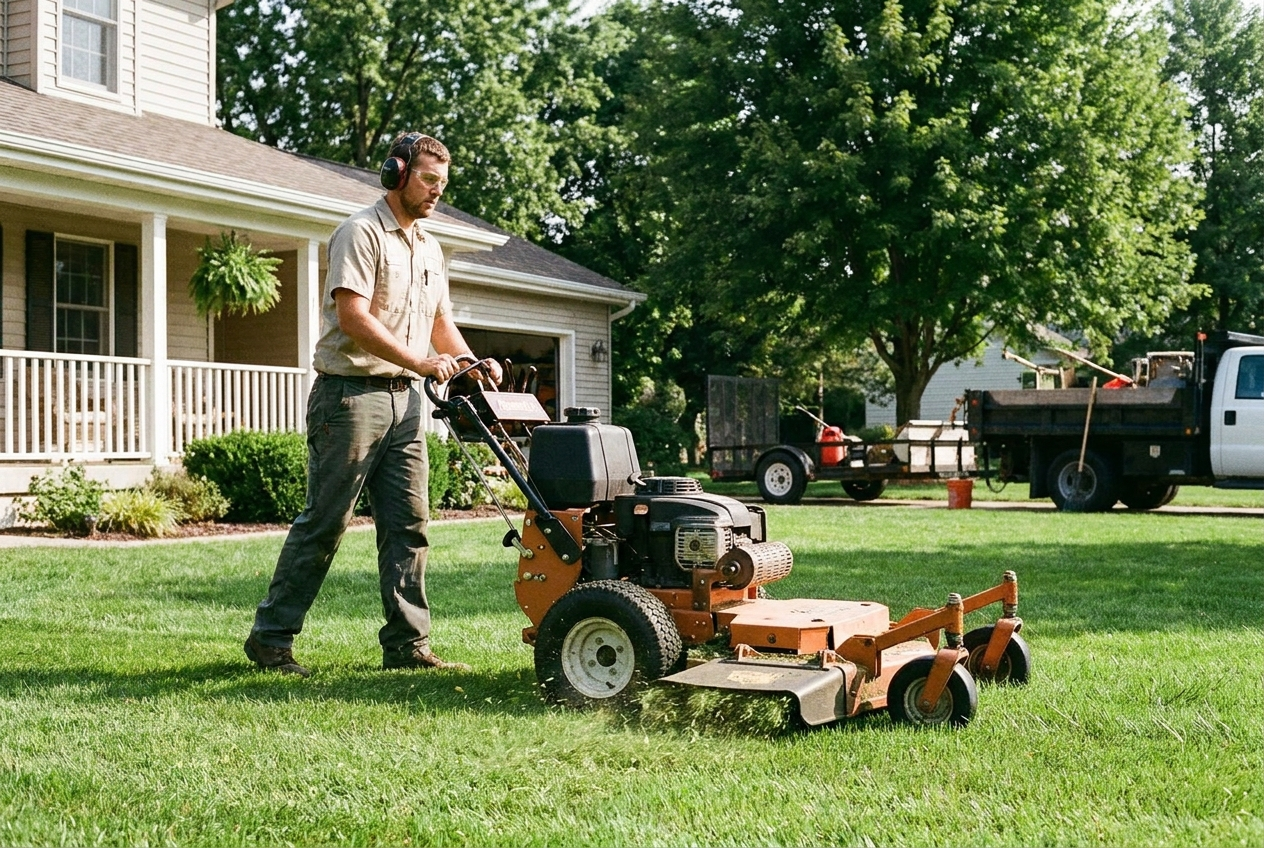


In 2026, the average lawn maintenance cost typically falls between $129 and $268, with many routine service plans landing near $187.
Below, you will find the biggest cost drivers, how pricing changes by service type and billing method, and what to ask when comparing quotes, so you can choose a plan that fits your yard and your schedule.
Key takeaways
Low-end services can start near $129, which is typical for basic mowing and trimming.
Many homeowners pay around $187 for standard recurring maintenance.
Premium packages that add fertilization, aeration, or pest control can approach $268.
Comparing local quotes and checking references helps you balance cost, service quality, and ongoing results.
How Much Does Lawn Maintenance Cost Per Hour
Hourly billing is usually based on crew time for tasks like mowing, trimming, edging, debris hauling, and minor troubleshooting, such as simple irrigation issues. Your total depends on how long the visit takes and whether the contractor adds separate charges for equipment, fuel, or disposal.
For routine mowing, many companies prefer flat per-visit or per-square-foot pricing. Hourly rates are more common for one-off work, heavy cleanups, or situations where the scope is hard to predict upfront.

Labor rates vary by location, demand, and experience, and they generally track prevailing wages for landscaping and groundskeeping workers.[1] Many contractors also set a minimum service charge, so very small jobs may be billed at a set amount instead of the exact time used.
- Ask for a time estimate: Request expected hours so you can compare bids on the same basis.
- Confirm equipment and disposal fees: Ask whether gas, special tools, dump fees, or hauling are billed separately.
- Compare hourly versus flat pricing: Regular visits are often priced as packages, while irregular work may be hourly.
If the job starts to expand beyond the original scope, ask the contractor to pause and provide a revised estimate before continuing.
Average Lawn Maintenance Cost by Type
Lawn maintenance can mean anything from basic mowing to targeted seasonal care. Costs vary based on the exact tasks included, timing, lawn condition, and local labor rates. Many homeowners also bundle lawn care into larger landscaping project costs.
| Type of Service | Cost | Features |
|---|---|---|
Mow Lawn | $36 - $78 | Regular cutting to maintain height and curb appeal. Frequency, lawn size, and terrain affect time and price. |
Trim Lawn Edge | $29 - $66 | Precision trimming along sidewalks, driveways, and beds to give a finished look; tight areas or steep slopes raise labor time. |
Fertilize Lawn | $78 - $184 | Seasonal nutrient applications to promote growth and color; product type and number of treatments determine cost. |
Aerate Lawn | $118 - $264 | Core aeration relieves compaction and improves root growth, typically done annually or biannually for high-traffic yards. |
Control Lawn Weed | $84 - $198 | Spot or whole-lawn weed control to remove broadleaf and grassy weeds; timing and extent of infestation affect pricing. |
Apply Lawn Pesticide | $96 - $224 | Targeted pest treatments for insects or disease, often scheduled as part of a seasonal plan; safety protocols add to labor time. |
Repair Lawn Irrigation | $138 - $428 | Diagnosis and repair of leaks, broken heads, and controller issues; system complexity and part costs drive final price. |
Aerate Lawn Costs
Aeration removes small plugs of soil to help reduce compaction and improve how water and nutrients move into the root zone. It is often recommended for compacted or high-traffic lawns. Costs typically range from $118 to $264, with an average of $176.
What usually moves the price:
- Lawn size and layout
- How compacted the soil is
- Whether aeration is paired with overseeding or other seasonal work
Some providers bundle aeration with routine mowing plans. If you are comparing bundles, it can help to review related benchmarks like average lawn mowing costs.
Apply Lawn Pesticide Costs
Pesticide applications address insect infestations or fungal disease when symptoms or monitoring point to a problem. Typical costs run $96 to $224, with an average of $148.
Many professionals use integrated pest management approaches to reduce unnecessary chemical use and focus treatments where they are most effective.[2] In many areas, pesticide applications offered for hire must be performed or supervised by a licensed applicator, so verify licensing and insurance before anyone sprays your lawn.
Repair Lawn Irrigation Costs
Irrigation repair can include finding leaks, replacing broken heads, fixing valves, and adjusting or programming controllers when coverage is uneven. Expect costs between $138 and $428, with an average of $246.
Common cost drivers include system size, access to lines, the depth of repairs, and replacement parts. Work involving backflow preventers, tie-ins to main water lines, or adding new zones can require permits and a licensed plumber or certified irrigation professional, which may affect price and scheduling.
Many lawn care companies offer seasonal or annual plans that bundle several services. These can reduce per-visit pricing, but they may include auto-renewal terms. Review cancellation policies and how prices can change with contract length before signing.
6 Factors That Affect Lawn Maintenance Prices
Estimates can look different even when two companies are offering similar work. These are the most common reasons, along with what to clarify during quoting.
- Property Size: Larger yards take more time, fuel, and often more crew capacity.
- Lawn Condition: Overgrown or stressed turf can require extra passes, cleanup, or corrective steps.
- Service Frequency: Weekly and biweekly plans change how heavy each visit is. More frequent service can reduce per-visit workload, but it increases annual spending.
- Turf and Plant Types: Some grasses and beds require different mowing heights, fertilization schedules, or weed-control approaches.
- Landscape Complexity: Slopes, rock beds, irrigation hardware, and large trees slow down routine work. If pruning or tree-related work is involved, additional equipment and safety measures can add cost.[3]
- Local Labor and Seasonality: Labor rates and seasonal demand affect pricing, with spring cleanups and fall leaf work often priced higher.
Ask for an itemized estimate that lists tasks, materials, and visit frequency. If you want consistent billing, request a clear quote for monthly lawn maintenance cost and confirm what is included each visit.
Lawn Maintenance Cost Per Acre by Size
Lawn maintenance costs change with size and layout because larger or irregular areas take more labor, fuel, and materials. Property configuration also affects equipment choice, travel time between zones, and how easy it is to keep a consistent schedule.
Square footage, slope, planting beds, and access points influence mowing time, irrigation needs, and how much seed or fertilizer is used. Larger lawns can also benefit from sustainable practices that reduce water use and chemical inputs.[4][5]
Small Front Yard (Urban Lot)
A compact front yard often needs careful edging and frequent touch-ups around sidewalks and beds, especially because it is highly visible from the street.
Cost Range: $33 - $71
Average Cost: $48
Small yards can be priced higher per square foot because travel, setup, and cleanup still take time. Tight turns and detail work also increase labor.
Compact Back Yard (Private Rear Garden)
Back yards on smaller lots often include patios, play areas, shade trees, or garden features that make mowing less straightforward.
Cost Range: $41 - $88
Average Cost: $59
Obstacles like beds, planters, and slopes can mean more string trimming and more manual work, which can increase the total.
Whole-Property Lawn (Typical Suburban Lot)
This option combines front and back yard maintenance into one visit, often including mowing, edging, and basic cleanup.
Cost Range: $64 - $136
Average Cost: $92
Total area drives mower time and fuel use. Pricing can also change based on service frequency and whether extras like shrub trimming or leaf removal are bundled.
Multiple-Zone or Large Yard (Split Landscapes)
Properties with distinct lawn zones, such as front, back, side yards, or separate lawn areas, may require more coordination and different equipment.
Cost Range: $96 - $226
Average Cost: $148
Switching equipment, moving between zones, and maintaining different schedules for different areas can increase labor time and logistics.
Shared Community Lawn (Common Areas and Medians)
Common areas, medians, and shared turf serve multiple homes or the public and are often maintained on association or municipal schedules.
Cost Range: $286 - $748
Average Cost: $462
These jobs may use commercial equipment and bulk materials. Access, irrigation controls, and permits for public-facing work can also affect pricing.
Lawn Maintenance Cost Per Square Foot
Many lawn care companies price routine work by the square foot because it ties pricing to the area being serviced. Some per-square-foot quotes cover labor only, which is common for mowing. Others include materials like fertilizer or seed, so confirm exactly what is included.
This table shows common per-square-foot services and the main factors that influence each price.
| Service Type | Cost | Details |
|---|---|---|
Lawn Mowing | $0.02 - $0.05 | Frequency, yard accessibility, and grass height affect labor time and pricing. |
Lawn Fertilization | $0.03 - $0.08 | Product type, application rate, and number of seasonal visits drive costs. |
Lawn Aeration | $0.05 - $0.12 | Soil compaction, lawn size, and whether cores are removed influence price. |
Lawn Dethatching | $0.09 - $0.21 | Thatch depth and required clean-up determine labor and disposal needs. |
Weed Control | $0.03 - $0.08 | Type of weeds, treatment frequency, and selective versus broad-spectrum products matter. |
Pesticide Application | $0.04 - $0.11 | Product potency, targeted pests, and any required safety measures affect cost. |
Accurate measurements and a clearly defined scope make per-square-foot bids easier to compare. Some homeowners use measurement or planning tools to help create more reliable estimates.[6]
Keep in mind that slope, gates, narrow side yards, and other access issues can add time and change pricing. Many companies also have minimum visit charges, which can make per-square-foot pricing less attractive on very small lawns.
Lawn Maintenance Cost Per Month by Region
Monthly lawn maintenance costs in 2026 vary by region due to climate, growth rate, labor costs, and local demand. Use the ranges below as a starting point, then confirm pricing based on your specific service frequency and lawn conditions.
| Region | Cost | Description |
|---|---|---|
Northeast | $136 - $286 | Cooler climate and shorter growing season reduce mowing frequency, but higher labor and living costs can raise prices. |
Midwest | $121 - $254 | Wide seasonal swings require spring and fall services; snow removal is usually a separate winter contract, though often offered by the same companies. |
South | $128 - $273 | Warm climate drives year-round growth and more frequent visits; irrigation needs and pest control can add cost. |
West | $134 - $284 | Drier regions may require irrigation management and drought-tolerant plant care, influencing service scope. |
Plant choices and landscape styles can change how often a crew needs to visit and what work is included, which affects total cost.[7] Local rules and standards can also require specific practices or safety measures, and compliance can add time or permit-related steps.[8]
Cost of Lawn Maintenance by State
State-to-state pricing can look very different due to labor rates, contractor availability, material logistics, demand, and local regulations. The ranges below offer a baseline for planning, but your final price still depends on lawn size, condition, and service schedule.
| State | Cost | Details |
|---|---|---|
California | $152 - $319 | Higher labor and living costs in many metro areas raise prices. Water restrictions and drought-resistant landscaping needs can add to maintenance complexity. |
Texas | $122 - $259 | Large service market and seasonal peaks influence pricing. Long growing seasons increase routine visits but competition can moderate rates. |
Florida | $139 - $296 | Warm climate supports year-round growth, driving frequent mowing and pest control needs. Hurricane preparedness and storm cleanup affect occasional costs. |
New York | $149 - $312 | Urban labor costs and short but intense growing seasons in some areas raise per-visit prices. Snow and freeze cycles add spring and fall cleanup work. |
Illinois | $126 - $264 | Cold winters shorten active seasons while spring and summer demand concentrates services. Regional differences between city and rural rates are common. |
Washington | $137 - $291 | Wet climate and moss control needs change service profiles. Higher costs in some coastal metro areas reflect labor and real estate markets. |
Colorado | $131 - $276 | Arid climate and irrigation needs drive specialized maintenance. Elevation and shorter growing windows create seasonal service spikes. |
State-level ranges are useful for budgeting, but local quotes are the best way to confirm what you will actually pay. Your property conditions, visit frequency, and state pesticide rules can all affect the final number.[9]
DIY vs. Professional Lawn Maintenance Costs
Doing lawn work yourself can reduce cash outlay, but it can also add time, tool costs, and a learning curve. Hiring a professional typically costs more, but it often includes commercial equipment, experience with timing and application rates, and a consistent service schedule.

DIY Risks and Practical Challenges
DIY lawn care can save money, but it takes time, the right tools, and basic know-how. Poor timing, over-application, or using the wrong product can damage turf and lead to extra work later.
If you use corded electric tools, follow electrical safety guidance to reduce the risk of shock or fire.[10] Physical strain, uneven aeration, and unsafe pesticide handling are also common issues. Follow product label directions, use appropriate protective gear, check local rules on chemical use or runoff, and consider leaving large-scale pesticide work to licensed professionals.
Advantages of Hiring a Professional
A professional crew can usually complete work faster with commercial equipment and a set process for cleanup and disposal. Experienced providers also tend to be better at selecting products and scheduling treatments. Some companies offer guarantees and seasonal programs that make budgeting more predictable.
How to Decide Between DIY and Pro
DIY is often a good fit for small, well-maintained lawns and straightforward tasks when you can keep a consistent schedule. Professional help can make more sense for larger yards, persistent weed or pest problems, or if you want a higher-end result with less trial and error.
To compare costs across service categories, browse the home services cost guide. If you are unsure, get one or two quotes and compare what each includes, such as materials, number of visits, and service terms.
Add-Ons for Lawn Maintenance
Add-ons are optional services that go beyond routine mowing and edging. They can improve results or solve specific problems, but they also raise the total price. The add-ons below are commonly offered with recurring lawn care.
| Add-On | Cost | Details |
|---|---|---|
Pet Waste Removal | $19 - $49 | Regular pickup and disposal of pet waste from the yard, reducing odors, parasites, and spotting on turf. |
Mulch Application | $182 - $622 | Delivery and spreading of mulch in garden beds to conserve moisture, suppress weeds, and improve curb appeal. |
Sod Installation | $986 - $3,826 | Removal of old turf, grading, and laying new sod for instant lawn cover; often a larger one-time renovation scheduled separately from routine visits. |
Topdressing | $164 - $372 | Thin application of compost or soil mix to level turf, improve soil structure, and aid recovery after aeration. |
Garden Bed Weeding | $62 - $166 | Manual or targeted chemical weed removal in beds and borders to prevent spread into the lawn. |
Organic Treatment | $96 - $218 | Use of organic fertilizers and pest controls for slower-release nutrients and reduced synthetic inputs; still requires proper handling and realistic expectations. |
Fungus Control | $112 - $258 | Diagnosis and treatment for turf diseases, combining cultural fixes and fungicide applications when needed. |
Price differences usually come down to materials and labor. Premium mulch, certified organic inputs, manual weeding, and any work that requires grading or hauling typically increases the total. Sod installation often has the biggest impact because materials and labor add up quickly compared with smaller add-ons.
If you are planning combined services, aeration can affect how topdressing and some treatments perform. It can help to review the cost of lawn aeration as you build a seasonal plan. For disease issues or treatments involving trees and large shrubs, a certified arborist may be a better fit for the work.[11]
ROI of Lawn Maintenance
Regular lawn care can protect the money you have already put into your yard and improve curb appeal. Homeowners may see value in fewer repair projects, better usability, and stronger buyer interest.
Routine lawn care rarely qualifies for federal tax credits. Some water-efficient irrigation upgrades or conservation-focused landscaping projects may qualify for local rebates, which can improve the overall payoff.
Key ROI Drivers
- Material Quality and Durability: Better seed, sod, and soil amendments can reduce repeat work.
- Energy Efficiency: Smart irrigation and drought-tolerant plantings can lower water use and may qualify for local incentives.
- Professional Installation: Good timing and correct installation can prevent failures that reduce value.
- Market Demand: Buyer preferences for low-maintenance, well-kept yards can influence sale price and time on market.[12]
- Maintenance Requirements: Lower-maintenance choices can cut ongoing costs.
- Curb Appeal and Aesthetics: Trees and landscaping can increase perceived value and measurable property value impacts.[13]
| Service | Estimated ROI | Details |
|---|---|---|
Routine Lawn Maintenance | around 60-80% | Regular mowing, fertilization, and weed control protect existing value and are cost-effective to maintain. |
Lawn Renovation (Aeration & Overseeding) | approximately 70-90% | Improves turf health and longevity, boosting curb appeal and reducing future repair needs. |
Sod Installation / Full Replacement | around 50-75% | Immediate visual impact and usability, but higher upfront cost lowers short-term ROI. |
Premium Landscaping With Trees & Irrigation | approximately 75-95% | Adds strong curb appeal and functional value; mature trees and efficient irrigation influence buyer appeal and property value[13]. |
Treat these ROI figures as broad guidelines, not guarantees. Results depend on local market conditions, your home's overall value, and the quality of the work. Personal enjoyment and reduced upkeep are also valid reasons to invest, even when ROI is not the primary goal.
How Season Affects Lawn Maintenance Cost
Lawn maintenance pricing in 2026 shifts throughout the year as growth patterns and demand change. During high-growth periods, lawns may need more frequent mowing and seasonal treatments. Severe heat, storms, or frozen ground can also affect schedules and labor needs.
Seasonal trends can also affect related work. For example, peak growth and timing can overlap with weed control work costs.
| Season | Cost | Description |
|---|---|---|
Spring / Early Summer | $141 - $297 | Growth accelerates, creating high demand for mowing, fertilization, and aeration; contractors may book weeks ahead. |
Peak Season | $144 - $304 | Typically mid- to late-spring through mid-summer in many regions, this is the busiest time for weekly services, with premium labor rates and limited weekend availability. |
Summer Season | $124 - $263 | Heat and drought can reduce mowing frequency but increase irrigation checks and stress treatments, causing variable service needs. |
Autumn Season | $138 - $292 | Leaf cleanup and overseeding create demand spikes; many contractors offer bundled fall packages that affect hourly availability. |
Winter Season | $72 - $169 | In colder regions routine mowing drops sharply, lowering prices and freeing up contractor schedules for other work. |
Peak demand can raise prices as crews fill schedules and overtime becomes more common. Weather-related delays can add cost when work must be rescheduled or when conditions require extra prep and cleanup. Peak timing varies by climate zone, so ask local providers which months book out fastest.
In dry seasons, extra debris and increased fire risk can also lead to more cleanup work, especially in areas focused on prevention and risk reduction.[14]
How to Save on Lawn Maintenance
Lowering lawn care costs usually comes down to reducing the amount of corrective work needed and getting clear about what you want each visit to include. These strategies can help you control spending without cutting corners on safety or results.
- Establish a seasonal maintenance plan: Schedule mowing, fertilizing, aeration, and cleanups so your lawn stays manageable and problems get addressed early.
- Do routine small tasks yourself: If you can keep up with it, mowing, edging, and debris pickup can reduce paid visits. In areas with HOA rules or local ordinances, missed maintenance can lead to fines or more expensive recovery work.
- Rent specialized equipment when needed: Renting an aerator or dethatcher for occasional heavy work can cost less than buying tools you rarely use.
- Bundle related services: One provider handling mowing, fertilization, pest checks, and irrigation tuneups can simplify scheduling and reduce repeat trip charges.
- Address pest entry points: Sealing gaps, removing brush near foundations, and securing sheds can help limit rodent access and reduce lawn damage.[15]
Connect with vetted lawn care professionals through homeyou to compare services, verify credentials, and choose a reliable team that protects your lawn and your home's long term value.
Frequently Asked Questions About Lawn Maintenance
References
[1] Bureau of Labor Statistics, "Landscaping and Groundskeeping Workers", https://bls.gov/oes/2022/may/oes373011.htm.
[2] Larramendy, Marcelo L., and Sonia Soloneski, "Integrated Pest Management and Pest Control - Current and Future Tactics", https://doi.org/10.5772/1383.
[3] Abbott, Richard, and Kenneth Miller, "Estimating and Pricing Tree Care Jobs", Arboriculture & Urban Forestry, https://doi.org/10.48044/jauf.1987.025.
[4] United States Environmental Protection Agency, "Resource Conserving Landscaping", https://archive.epa.gov/.
[5] Sorvig, Kim, and J. William Thompson, "Sustainable Landscape Construction", https://doi.org/10.5822/978-1-61091-811-4.
[6] Hansen, Gail, et al, "Landscape Design Software: Evaluation and Recommendations for Homeowners", EDIS, https://doi.org/10.32473/edis-ep526-2015.
[7] Irish, Mary, and Gary Irish, "Agaves, Yuccas, and Related Plants A Gardener's Guide", Choice Reviews Online, https://doi.org/10.5860/choice.38-1563.
[8] National Fire Protection Association, "List of 300+ Codes and Standards", NFPA, https://nfpa.org/for-professionals/codes-and-standards/list-of-codes-and-standards.
[9] Association of American Pesticide Control Officials, "Documents 2002 to Present", http://aapco.org/documents.
[10] Electrical Safety Foundation International, "Home Electrical Safety", https://www.esfi.org/home-electrical-safety/.
[11] International Society of Arboriculture, "ISA Certified Arborist", https://isa-arbor.com/credentials/types-of-credentials/isa-certified-arborist.
[12] Rosiers, François D., et al, "Landscaping Attributes and Property Buyers' Profiles Their Joint Effect on House Prices", Housing Studies, https://doi.org/10.1080/02673030701608183.
[13] Anderson, L. M. and H. K. Cordell, "Residential Property Values Improved by Landscaping With Trees", Southern Journal of Applied Forestry, https://doi.org/10.1093/sjaf/9.3.162.
[14] U.S. Fire Administration, "Fire Prevention and Community Risk Reduction", https://usfa.fema.gov/prevention/.
[15] Stop Pests, "What Exclusion Techniques Work for Rodents", https://stoppests.org/frequently-asked-questions/what-exclusion-techniques-work-for-rodents/?keywords=rats.


