
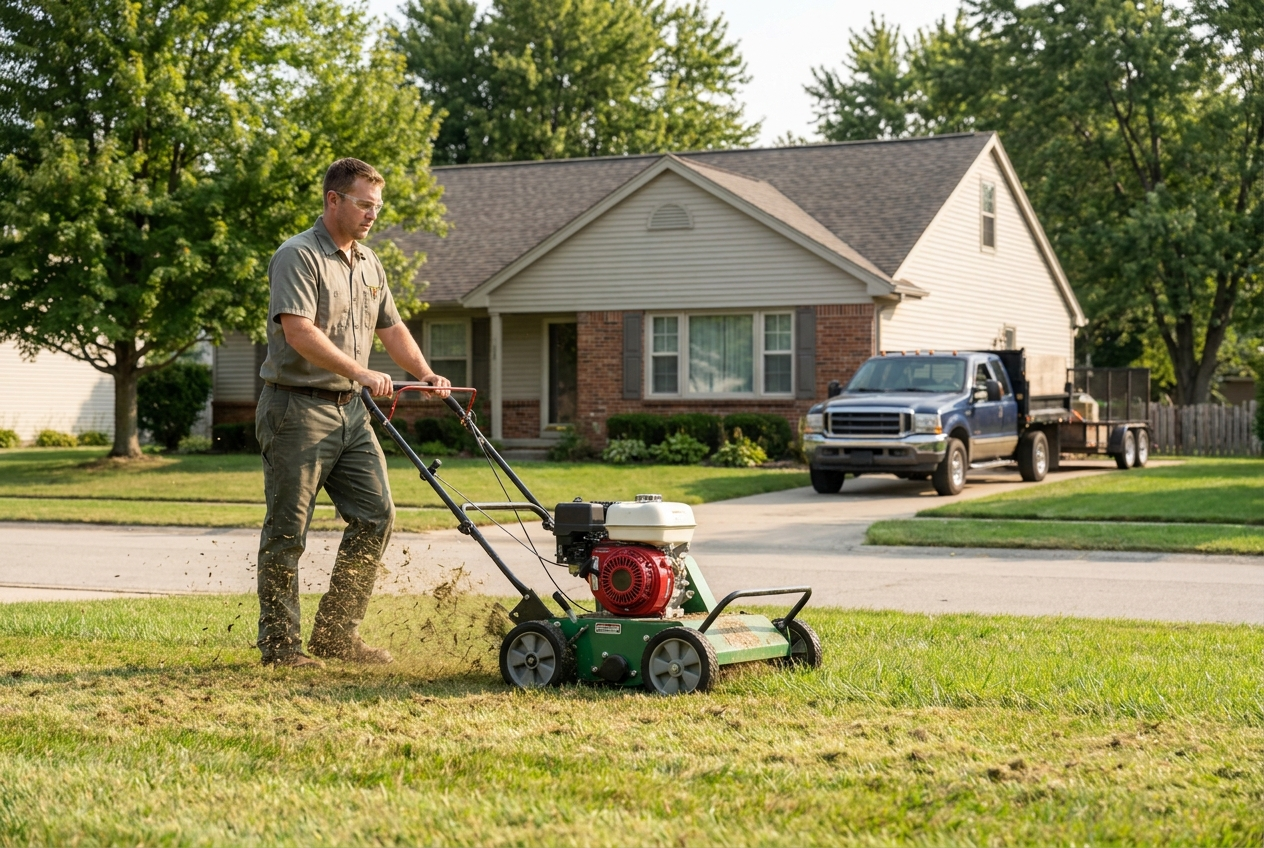


In 2026, lawn dethatching service cost is largely driven by yard size, thatch buildup, and how much cleanup is needed. Most residential projects fall between $148 and $334, with many homeowners landing near $228.
Dethatching is usually an as-needed service, not a task every lawn needs on a fixed yearly schedule. Some lawns may rarely build up heavy thatch. If you dethatch too aggressively or too often, you can thin the turf and slow recovery, so it helps to do a quick inspection before booking.
This guide walks through what affects pricing, what is typically included, and how to compare quotes so you can choose the right approach for your yard.
Key takeaways
Expect low-end services near $148 for small or straightforward jobs.
Most homeowners pay around $228 for standard dethatching services.
Larger or complex jobs can reach $334 due to extra labor or disposal fees.
Budget options save money but may sacrifice thoroughness or cleanup.
Hiring a pro often provides better results and convenience for the price.
Dethatching Cost Per Hour
Some contractors bill dethatching by the hour, especially when the work is hard to predict. Hourly pricing is common for small areas, spot treatments, limited access, or yards that need inspection and troubleshooting before a full pass.

Hourly billing can make sense when a crew cannot quote confidently by size alone. For routine upkeep, it is worth comparing how dethatching fits into your broader lawn maintenance charges, since consistent mowing and watering habits can reduce how often heavy thatch builds up.
Labor is a major part of hourly pricing, and industry wage data helps explain why rates change from market to market[1].
Lawn Dethatching Cost by Type
Dethatching quotes often include several related tasks, from a quick inspection to hauling away debris. The right service level depends on thatch thickness, turf strength, and what you want the lawn to look like when the crew leaves. If you are planning other upgrades, bundling with broader landscaping investment costs can also affect pricing.
| Type of Service | Cost | Features |
|---|---|---|
Inspect Lawn Thatch Level | $49 - $136 | A visual and manual check to gauge thatch depth and confirm whether dethatching is needed. |
Lawn Dethatching | $148 - $334 | Mechanical removal of excess thatch to improve airflow and water penetration. Often scheduled during active growth. |
Power Rake Lawn | $154 - $402 | More aggressive raking for heavier buildup; can be hard on weak turf if overused. |
Remove Lawn Thatch | $96 - $264 | Collection and disposal of pulled thatch and organic debris, sometimes priced separately when volume is high. |
Clean Lawn Debris | $72 - $224 | Removing leaves and sticks so machines work effectively and cleanup is easier. |
Aerate Lawn | $118 - $264 | Core aeration to reduce compaction and improve air and water flow, often paired with dethatching. |
Overseed Lawn | $168 - $564 | Seeding after dethatching or aeration to help fill thin areas; timing affects results. |
Lawn Dethatching Costs
Dethatching removes a dense layer of living and dead plant material that can build up faster than it breaks down. When that layer gets too thick, it can limit water and nutrient movement into the soil. Typical projects range from $148 to $334, with an average near $228. Pricing usually comes down to yard size, turf condition, equipment choice, and how much debris must be removed.
Removing excess thatch can support healthier soil function and aligns with broader sustainable landscaping goals[2][3].
Power Rake Lawn Costs
Power raking is a heavier approach used for thick or matted thatch. Pricing typically falls between $154 and $402, with an average of $258. Costs tend to rise with longer labor time, more intensive cleanup, and any turf repair needed afterward.
Some providers use the terms "dethatching" and "power raking" for the same equipment. Instead of relying on the name alone, ask how aggressive the pass will be and what cleanup is included.
Lawn Aeration Costs
Core aeration removes small plugs of soil to ease compaction. It is often scheduled after dethatching or before overseeding. Typical pricing ranges from $118 to $264, with an average of $176. Many quotes land close to published average lawn aeration costs, with lawn size, soil hardness, and plug handling affecting totals.
Lawn Overseeding Costs
Overseeding helps thicken a lawn after dethatching or aeration, especially where turf is thin. Costs usually run from $168 to $564, with an average of $312. Seed quality, application rate, preparation, and any added soil work can move the price up or down.
6 Factors That Affect the Cost to Dethatch a Lawn
Dethatching estimates can look very different from one property to the next. Contractors are pricing the time to run equipment, the effort needed to clean up, and the risk of working around obstacles.
- Lawn Size and Shape: More square footage generally means more machine time. Curves, tight edges, and landscaped beds also slow down the work.
- Thatch Thickness and Condition: Light thatch may come up in a single pass. Heavy, compacted layers often require extra passes and more hauling.
- Grass Type and Density: Denser turf can take longer to dethatch cleanly. Some grasses also recover faster than others, which can influence how aggressively a contractor is willing to work.
- Access and Terrain: Narrow gates, steep slopes, and obstacles can limit machine choice and increase labor. In some yards, smaller equipment or more hand work is the only practical option.
- Chemical and Regulatory Requirements: Basic dethatching is typically mechanical. If your quote includes fertilizer, weed control, grub treatment, or other products, contractors may need to follow local rules for storage, application, and disposal, which can add cost[4]. In many states, applying certain products for hire requires a state license, which can also affect availability and pricing.
- Environmental and Runoff Concerns: When chemical add-ons are included, contractors may adjust timing, rates, or equipment to reduce runoff and improve effectiveness. Those steps can add costs compared with mechanical dethatching alone[5].
When you collect bids, ask what machine will be used, what cleanup is included, how debris is handled, and whether any follow-up treatment is part of the price. Clear scopes make it much easier to compare estimates on an apples-to-apples basis.
How Much Does Dethatching Cost by Size
Size is one of the biggest pricing factors because it drives labor time, machine coverage, and cleanup volume. Layout matters too, since gates, slopes, and obstacles can slow down even a smaller lawn.
Pros commonly rely on established outdoor work estimating approaches when measuring time, labor, and scope[6]. When you compare quotes, pay attention to the per-square-foot effort and the cost to dethatch a lawn, not just the headline total.
Small Front Lawn (Up to 1,000 sq ft)
A compact front yard with flat turf and easy access fits this range. Many jobs involve a single pass and basic cleanup.
- Cost Range: $96 - $242
- Average Cost: $158
Because the work is quick, minimum service fees and travel time can influence the final price. Fewer obstacles and straightforward access typically keep costs down.
Medium Back Lawn (1,000 to 3,000 sq ft)
Backyards often see more foot traffic, which can contribute to thicker thatch and tougher conditions. Multiple passes or larger equipment may be needed.
- Cost Range: $148 - $364
- Average Cost: $236
Costs may increase with narrow gates, stairs, or steep grades. More debris removed also means more loading and hauling.
Large Whole-Lawn Dethatch (3,000 to 7,000 sq ft)
At this size, contractors often use commercial equipment and may send a crew to manage both dethatching and cleanup efficiently.
- Cost Range: $198 - $438
- Average Cost: $287
Bigger lawns can be more efficient per square foot, but total labor, fuel, and disposal usually climb. Irrigation systems, lawn complexity, and turf condition can also extend the job.
Dethatching With Leaf Removal
Leaf removal paired with dethatching can prevent clogging and speed up the finish work. Some crews rake or blow first, others dethatch and then collect everything at once.
- Cost Range: $174 - $426
- Average Cost: $268
Wet leaves, heavy debris, or mixed yard waste typically add time and disposal volume. Cleanup can meaningfully extend the visit, especially on larger lots.
Dethatching Plus Fertilizer Application
A post-dethatch fertilizer application can support recovery by feeding stressed turf. Product choice and timing play a role in cost.
- Cost Range: $186 - $418
- Average Cost: $274
Price changes with fertilizer type, application rate, and whether any testing or extra prep is included. Bundling can reduce repeat trip costs, even though materials add to the total.
Lawn Dethatching Cost Per Square Foot
Many contractors quote dethatching per square foot to keep pricing consistent across different yard sizes. This format also makes it easier to compare bids, as long as the scope is the same.
Per-square-foot quotes often include machine time, operator labor, and basic cleanup. Basic cleanup usually means collecting a manageable amount of loosened thatch and leaving the lawn presentable. If your lawn produces large piles, or if there are leaves, branches, or bulky debris, those items may show up as separate line items. Ask what "cleanup" includes before you sign off.
| Service Type | Cost | Details |
|---|---|---|
Lawn Dethatching | $0.09 - $0.21 | Mechanical removal of excess thatch, usually with light raking and on-site collection of loose material. |
Power Raking | $0.10 - $0.24 | More aggressive surface raking for thicker debris; may disturb shallow roots. |
Thatch Removal | $0.04 - $0.11 | Removing compacted layers; price depends on thatch depth and effort required. |
Lawn Debris Cleanup | $0.04 - $0.12 | Clearing leaves and sticks before dethatching; cost depends on debris volume and access. |
Lawn Fertilizer Application | $0.03 - $0.08 | Fertilizer spread after dethatching to support recovery; varies by product and rate. |
Overseeding | $0.08 - $0.31 | Seeding to fill thin areas; pricing depends on seed quality and recommended application rate. |
Per-square-foot rates often rise when thatch is thick, soil is compacted, or access is difficult. Flat lawns with open access usually cost less because the work moves faster.
Labor rates, seasonal demand, and add-ons like hauling or topdressing also influence pricing. Some contractors also use digital tools to document measurements and scope, which can help keep estimates consistent[7].
Power Raking Cost by Region
Regional pricing changes with labor markets, season length, grass types, and local demand. The ranges below broadly reflect both dethatching and power raking, unless a contractor quotes them separately.
| Region | Cost | Description |
|---|---|---|
Northeast | $168 - $372 | Higher operating costs in many metro areas, plus cool-season turf that often drives spring scheduling. |
Midwest | $142 - $318 | Seasonal swings and mixed grass types can shift timing and demand. |
South | $134 - $296 | Longer growing seasons can widen service windows; labor costs may be lower in some areas. |
West | $156 - $348 | Varied climates, water restrictions, and equipment transport in rural regions can affect pricing. |
Local preferences and municipal rules can influence how often dethatching is recommended and how contractors build packages. Homeowner behavior and broader landscaping priorities also shape which services are offered and how frequently they are used[8]. When you price the job, ask about seasonal timing, disposal fees, and what is recommended for your grass type.
Comparing DIY and Professional Lawn Dethatching Costs
DIY dethatching can look cheaper on paper, but the real cost includes your time, tool handling, and the risk of damaging turf or irrigation. Hiring a pro costs more upfront, but you are paying for speed, equipment, and experience.

Common DIY Risks and Practical Limitations
DIY projects often take longer than expected, especially if the thatch is heavier than it looks. Too many passes, or the wrong height setting, can stress grass crowns and create bare spots that need reseeding.
Power equipment also increases the chance of hitting irrigation heads, shallow sprinkler lines, invisible dog fences, or low-voltage landscape lighting. Mark what you can, and consider calling 811 if you are unsure about buried lines before you run heavy equipment. If you use corded electric dethatchers or power rakes, follow basic electrical safety guidance to reduce the risk of shock or fire.[9]
Advantages of Hiring a Professional
A pro typically shows up with calibrated equipment, knows how aggressive to be based on turf condition, and has a plan for debris removal. That experience can reduce the odds of scalping the lawn or damaging landscaping features, especially on larger properties.
How to Decide Between DIY and Pro
DIY is usually the best fit for small lawns, light thatch, and homeowners who have time and comfort with equipment. A professional is often a better choice for larger lawns, thick buildup, tight schedules, or yards with complex irrigation.
If you want to compare costs across multiple outdoor projects, you can also review the contractor cost overview.
Add-Ons for Lawn Dethatching
Add-ons can improve results or speed recovery, but they increase the total cost. If a quote seems high, ask which add-ons are included and which are optional.
| Add-On | Cost | Details |
|---|---|---|
Soil Testing | $42 - $136 | pH and nutrient testing to guide fertilizer and amendment choices. |
Weed Control | $64 - $212 | Spot treatment or broadcast control while turf recovers. |
Grub Treatment | $82 - $248 | Root protection using insecticide or biological options. |
Moss Removal | $96 - $326 | Removal and treatment to reduce moss regrowth in shaded areas. |
Topdressing | $128 - $386 | Thin layer of sand or soil to improve grade, drainage, or seed contact. |
Compost Application | $118 - $428 | Compost added to support soil structure and microbial activity. |
Sod Patch Repair | $128 - $526 | Removing damaged turf and installing sod patches to restore coverage. |
Integrated pest management approaches can affect product choice and timing for grub and insect work, which can change labor and material costs[10]. Scheduling matters for weed control too. Some products need watering in, and aggressive mechanical work can interfere with certain treatments. Coordinating the sequence with your pro helps avoid paying for results you do not get.
Material quality, application rates, and site access also influence pricing. If large volumes of soil or compost are needed, hauling can make topsoil delivery costs part of your budget. Soil needs also vary by plant type, so testing and targeted amendments can help avoid unnecessary expense[11].
ROI of Lawn Dethatching
Lawn dethatching is usually a maintenance decision, not a remodel-style investment. Any return in 2026 is more likely to come from curb appeal and keeping the lawn in good condition, rather than from tax credits or direct payback.
A well-kept yard can influence buyer impressions, and landscaping attributes can play a role in home prices[12]. Dethatching can support turf density and long-term performance, which may reduce the need for larger repairs later.
Key ROI Drivers
- Material Quality and Durability: Higher-quality seed, topsoil, and amendments can extend the benefits and reduce repeat work.
- Professional Installation: Experienced contractors can remove thatch without excessive turf damage, which supports faster recovery.
- Market Demand: A clean, healthy lawn can strengthen first impressions and curb appeal[12].
- Maintenance Requirements: Watering, mowing, and follow-up care help preserve results.
- Curb Appeal and Aesthetics: Visible improvement can matter more in neighborhoods where landscaping is a selling point.
| Service | Estimated ROI | Details |
|---|---|---|
Light Surface Dethatching | roughly 50-70% (illustrative) | Quick surface cleanup with minimal seed; lower cost, usually smaller resale impact. |
Core Dethatching with Overseeding | roughly 65-85% (illustrative) | Dethatch plus overseed can improve appearance and turf density. |
Full Lawn Renovation (dethatch, aerate, reseed) | roughly 75-95% (illustrative) | Higher scope can deliver the strongest visual change and long-term improvement. |
Use these ROI ranges as planning examples, not guarantees. Market conditions, overall property condition, and workmanship quality have a much bigger impact on resale outcomes. Landscaping can influence property values, but results vary by home and location[13].
How Season Affects Lawn Dethatching Cost
Timing affects both price and availability. In 2026, costs often rise when schedules fill up, and they can dip when demand is lower. Weather matters too, since rain or drought can change how and when contractors can work.
| Season | Cost | Description |
|---|---|---|
Spring Season | $136 - $356 | High demand as growth starts; rainy stretches can delay work. |
Peak Season | $164 - $372 | Full calendars can raise rates and limit scheduling flexibility. |
Summer Season | $130 - $342 | Heat can restrict timing and increase recovery needs in some regions. |
Autumn Season | $122 - $326 | Cooler weather can improve scheduling, and many homeowners pair work with overseeding. |
Off Season | $126 - $302 | Lower demand may reduce prices, but frozen or wet conditions can limit service. |
Busy periods can raise costs because labor is harder to book and crews prioritize higher-volume routes. Weather can also add steps, such as waiting for soil to dry or returning after storms.
Climate influences the best window for dethatching. In dry regions, extra debris cleanup may be prioritized to reduce fire concerns, which can affect scope and scheduling[14]. Even if off-season pricing looks better, try to schedule around your grass's active growth period so the turf can recover well.
How to Save on Lawn Dethatching
You can often reduce the final bill by making the job faster and more predictable for the crew.
Planning ahead, doing simple prep, and using a homeowner checklist can help you stay organized and avoid last-minute add-ons[15].
- Prep the Yard Yourself: Clear sticks, toys, and pet waste. Mark irrigation heads and mow before the crew arrives.
- Rent Equipment for Small Lawns: For compact yards, renting a dethatcher can be practical. Match the machine to your turf type, follow height settings, and test a small area first.
- Schedule in Shoulder Season: Book during slower weeks when possible, while still staying within the best recovery window for your grass.
- Bundle Related Services: Pair dethatching with aeration or overseeding in one visit to reduce repeat setup and travel charges.
- Get Multiple Written Estimates: Ask for itemized scope, cleanup details, and a clear timeline so you can compare quotes fairly.
- Verify Credentials and References: Request proof of insurance and recent local references, especially if the job involves equipment near irrigation or hardscaping.
Connect with vetted lawn dethatching contractors through homeyou to compare services, verify credentials, and schedule reliable work that protects your turf for the long term.
Frequently Asked Questions About Lawn Dethatching
References
[1] Bureau of Labor Statistics, "Landscaping and Groundskeeping Workers", https://bls.gov/oes/2022/may/oes373011.htm.
[2] Sorvig, Kim, and J. William Thompson, "Sustainable Landscape Construction", https://doi.org/10.5822/978-1-61091-811-4.
[3] United States Environmental Protection Agency, "Resource Conserving Landscaping", https://archive.epa.gov/.
[4] Association of American Pesticide Control Officials, "Documents 2002 to Present", http://aapco.org/documents.
[5] "Research Report Impact of Ant Control Technologies on Insecticide Runoff and Efficacy", NPMA PestWorld, https://npmapestworld.org/content-pages/technical-resources/pmf-research-reports/research-report-impact-of-ant-control-technologies-on-insecticide-runoff-and-efficacy.
[6] Abbott, Richard, and Kenneth Miller, "Estimating and Pricing Tree Care Jobs", Arboriculture & Urban Forestry, https://doi.org/10.48044/jauf.1987.025.
[7] Hansen, Gail, et al, "Landscape Design Software: Evaluation and Recommendations for Homeowners", EDIS, https://doi.org/10.32473/edis-ep526-2015.
[8] Summit, Joshua and E. Gregory McPherson, "Residential Tree Planting and Care A Study of Attitudes and Behavior in Sacramento, California", Arboriculture & Urban Forestry, https://doi.org/10.48044/jauf.1998.012.
[9] Electrical Safety Foundation International, "Home Electrical Safety", https://www.esfi.org/home-electrical-safety/.
[10] Larramendy, Marcelo L., and Sonia Soloneski, "Integrated Pest Management and Pest Control - Current and Future Tactics", https://doi.org/10.5772/1383.
[11] Irish, Mary, and Gary Irish, "Agaves, Yuccas, and Related Plants A Gardener's Guide", Choice Reviews Online, https://doi.org/10.5860/choice.38-1563.
[12] Rosiers, François D., et al, "Landscaping Attributes and Property Buyers' Profiles Their Joint Effect on House Prices", Housing Studies, https://doi.org/10.1080/02673030701608183.
[13] Anderson, L. M. and H. K. Cordell, "Residential Property Values Improved by Landscaping With Trees", Southern Journal of Applied Forestry, https://doi.org/10.1093/sjaf/9.3.162.
[14] U.S. Fire Administration, "Fire Prevention and Community Risk Reduction", https://usfa.fema.gov/prevention/.
[15] "Home Improvement ExpertTM Checklists", Building America Solution Center, http://basc.pnnl.gov/home-improvement-expert/checklists.


