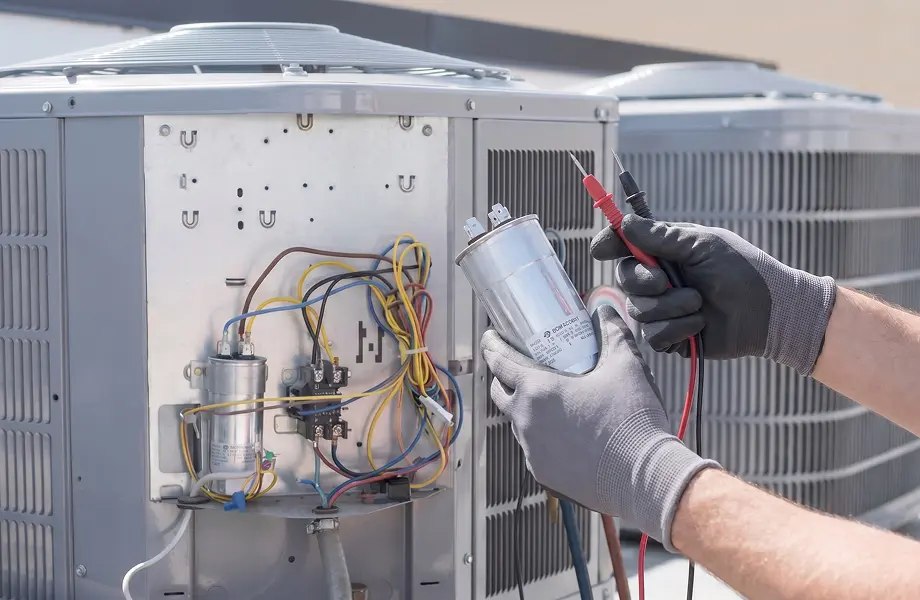


In 2026, AC capacitor replacement cost typically falls between $190 and $521, with many jobs landing close to $331.
Capacitors are small components, but when they fail, the entire system can stop starting or running properly. Because of that, pricing is often less about the part itself and more about diagnosis, access, and whether other electrical issues are found at the same time.
This guide walks through how pricing actually builds, what affects your final bill, and how to recognize when a quick fix is enough versus when a deeper repair may be needed[1].
HVAC Capacitor Replacement Cost Per Hour
In many cases, the capacitor itself is inexpensive, but the total cost comes from the time it takes to confirm the failure and safely complete the replacement.
That means hourly pricing is less about the swap and more about how quickly the technician can isolate the issue. A straightforward diagnosis keeps costs low, while unclear symptoms or multiple faults can extend time on site.

On invoices, capacitor repair often refers to addressing related issues, like loose terminals, corroded lugs, or damaged wiring and controls, rather than rebuilding a capacitor. Hourly rates often include travel and basic diagnostic time, but they may exclude parts and any fees tied to local requirements.
If the technician recommends cleaning or servicing related components, factor that in. For example, you may want to add AC coil cleaning fees to your budget if airflow or heat transfer issues are also in play.
When comparing bids, look at hourly labor versus a flat quote for the full AC capacitor cost and installation. Broader technician wage trends can influence labor portions of hourly rates, which is one reason rates differ by market[2]. In many cases, once a capacitor tests weak or fails, replacement is more common than attempting to prolong its life with minor fixes.
AC Unit Capacitor Replacement by Type
Not every capacitor issue looks the same during diagnosis. Some failures are isolated to a single component, while others reveal broader electrical wear that affects multiple parts.
Capacitors support the starting and running of motors, so a failing capacitor can affect overall system performance[3]. When you compare quotes, it can also help to see where this work fits alongside other HVAC work costs.
| Type of Service | Cost | Features |
|---|---|---|
Start Capacitor Replacement | $145 - $305 | Replaces the capacitor that gives the compressor or fan an initial boost; common when the unit fails to start or hums. |
Run Capacitor Replacement | $153 - $319 | Replaces the capacitor that helps motors run efficiently; symptoms include reduced cooling and higher energy use. |
Condenser Fan Capacitor Replacement | $139 - $297 | Targets the capacitor dedicated to the outdoor fan motor; typically a quick swap but may require extra diagnostic time. |
Compressor Capacitor Replacement | $167 - $364 | Involves the capacitor tied to the compressor motor; may be slightly more involved due to tight compartments and careful wiring access. |
Central Air Capacitor Replacement | $159 - $346 | Service for whole-home central systems where one or more capacitors on the outdoor unit need replacement. |
Multiple Capacitor Replacement | $239 - $514 | Replaces two or more capacitors in a single service call, often done when both start and run capacitors fail. |
Emergency Capacitor Replacement | $249 - $551 | After-hours or rapid-response replacement for systems that have stopped cooling, with higher labor or trip fees. |
Many residential condensers use a dual run capacitor, which serves both the compressor and condenser fan in one canister. Some units do not use a separate start capacitor at all. Labeling can also vary by brand and model, so the technician may describe the same part in slightly different terms.
Start Capacitor Replacement Costs
Start capacitor replacement usually comes up when the system attempts to turn on but cannot complete the startup cycle. This often shows as clicking sounds or a unit that hums without engaging.
Typical pricing runs $145 - $305, with an average of $215. Cost usually depends on access to the unit, the capacitor's specifications, and whether diagnosis points to related electrical issues.
The service known as AC start capacitor replacement is commonly requested when units click but do not spin.
Run Capacitor Replacement Costs
Run capacitors support continuous motor operation. When they weaken, systems can run poorly and place extra strain on motor components, which can affect efficiency and longevity[4].
Replacement costs range from $153 - $319, average $229. The microfarad rating and voltage requirements matter, and labor can increase if panels are difficult to remove or wiring access is tight.
Multiple Capacitor Replacement Costs
In older systems, it is not unusual for more than one capacitor to show signs of wear at the same time. Replacing them together can reduce repeat service visits and avoid paying for multiple diagnostics.
Costs are $239 - $514, average $360. Your final bill typically reflects the number of parts replaced, the total time on site, and whether the call happens after hours. If other issues are discovered during diagnosis, some work may fall under standard AC repair prices.
6 Factors That Affect the AC Capacitor Replacement Estimate
Even though capacitor replacement is considered a small repair, the final price can shift depending on how the system is set up and what the technician finds during inspection.
- Capacitor Type and Microfarad Rating: The correct part depends on whether you need a run, start, or dual capacitor. For many jobs, the microfarad rating and voltage determine whether it is a simple swap or a more specific match for central air capacitor replacement.
- Local Codes and Permit Requirements: Local rules can affect who is allowed to perform HVAC and electrical work, plus the safety standards a contractor must follow. Like-for-like capacitor swaps and similar component repairs often do not require a standalone permit, but larger electrical upgrades and full system replacements may. Confirm what applies in your area[5].
- System Age and Overall Condition: Older units can have corroded terminals, brittle wiring, or multiple worn components. That can add diagnostic time and increase labor.
- Technician Experience and Certification: Experienced, credentialed technicians typically follow established sizing and safety practices, and that expertise can come with higher labor rates[6]. It also reduces the chances of miswiring and repeat callbacks.
- AC Access, Location, and Labor Complexity: Easy access to the condenser usually keeps labor time lower. Rooftop units, tight attic spaces, or heavy obstructions can add time and may require special equipment.
- Moisture, Corrosion, and Environmental Exposure: Humidity, condensation, and salt air can accelerate corrosion and contribute to electrical connection problems. Addressing corroded terminals or moisture-related damage can expand the scope beyond a simple part swap[7].
Different Costs for DIY vs. Professional AC Capacitor Replacement
Capacitor replacement is often seen as a quick fix, but it involves direct contact with stored electrical energy and sensitive components.
The decision between DIY and professional service usually comes down to whether you can safely verify power conditions and handle electrical components without creating additional damage.

DIY Risks and Practical Challenges
Capacitors can store dangerous charge even after power is shut off, so safe isolation and discharge procedures matter[8]. Anyone attempting DIY work must shut off power at the breaker and outdoor disconnect, verify with a meter that power is off, and follow proper discharge methods before touching components. Mistakes can cause shock, damage the compressor or controls, or turn a small fix into a much larger repair.
Advantages of Hiring a Professional
A licensed technician can confirm the diagnosis, match the correct part, and test the system after installation. Professionals also follow safety practices intended to reduce the risk of electrical faults that can contribute to home structure fires[9]. In many cases, professional service also helps you stay aligned with manufacturer requirements tied to parts and labor warranties.
How to Decide Between DIY and Pro
Choose DIY only if you can fully disconnect power, use a meter confidently, and understand safe procedures around high voltage components. Even a capacitor swap can be risky if panels are opened without proper shutdown and verification.
For anything involving complex wiring or the compressor circuit, a compressor capacitor replacement is usually better handled by a professional. If you are budgeting across multiple projects, the contractor pricing guide is a helpful place to compare costs by service category. For general precautions, follow basic home electrical safety recommendations[10].
Add-ons: Emergency AC Capacitor Replacement Costs
When a capacitor fails, it is sometimes a symptom rather than the root problem. For that reason, technicians may suggest additional work to address conditions that caused the failure in the first place.
| Add-On | Cost | Details |
|---|---|---|
Surge Protector Installation | $219 - $615 | Protects the outdoor unit from voltage spikes and helps prevent capacitor damage during storms. |
Thermostat Upgrade | $183 - $571 | Replaces an older thermostat with a programmable or smart model for better control and efficiency. |
Electrical Panel Inspection | $96 - $237 | Checks breakers and connections to ensure safe power delivery to the AC and identifies panel issues. |
Wiring Repair | $147 - $420 | Replaces frayed or undersized wiring that can cause overheating or repeated capacitor failures. |
Contact/Relay Replacement | $139 - $340 | Swaps worn relays or contactors that strain the capacitor, improving start-up reliability. |
Refrigerant Level Check | $88 - $215 | Verifies refrigerant charge and, if needed, pairs naturally with standard home AC recharge expenses for recharging. Only EPA-certified HVAC pros may handle refrigerant, and any leaks should be repaired, not just topped off. |
Evaporator Coil Cleaning | $129 - $360 | Removes buildup that reduces airflow and efficiency, helping the compressor and capacitor run under less stress. |
Add-on pricing depends on the equipment selected and how involved the work is. AC cess difficulty and any additional electrical safety steps can also change the final number.
For some homeowners, add-ons are about preventing the next breakdown and keeping the system running efficiently[11]. The best choices usually depend on the unit's age, current condition, and warranty status.
ROI of AC Capacitor Replacement
Replacing a failing capacitor is often one of the less expensive AC repairs, and it can restore cooling quickly. It may also help you avoid further damage if the system is struggling to start or run properly.
Rebates and incentives can sometimes improve your overall return, but they are more commonly tied to higher-efficiency equipment upgrades or broader HVAC improvements, rather than a simple capacitor replacement[12]. Federal tax credits can also apply to qualifying energy efficient home improvements, so it is worth confirming what is eligible if you are combining this repair with a larger upgrade[13].
Key ROI Drivers
- Material Quality And Durability: Higher-quality parts tend to last longer and can reduce repeat service calls.
- Energy Efficiency: A properly functioning capacitor supports efficient motor operation, which can help keep operating costs in check.
- Professional Installation: Correct wiring and post-repair testing reduce the risk of premature failure.
- Maintenance Requirements: Pairing replacement with seasonal maintenance can help limit future breakdowns.
- Market Demand: Buyers often value dependable heating and cooling, so service documentation can be reassuring during a sale.
| Service | Estimated ROI | Details |
|---|---|---|
Basic Capacitor Replacement | around 80-90% | Low-cost part that restores operation and delays major replacements, yielding strong cost recovery. |
Capacitor Replacement With System Tune-Up | approximately 85-95% | Combined service improves efficiency and reliability, increasing both savings and perceived value. |
Premium Run Capacitor Upgrade With Warranty | around 70-85% | Higher upfront cost but longer lifespan and warranty reduce future expenses and add buyer assurance. |
ROI is one input, not the only one. Comfort, safety, and the value of avoiding a no-cooling situation can matter just as much as the numbers. Review the manufacturer and installer warranty terms before you approve work, since non-approved parts or DIY repairs can sometimes affect coverage. Compare the average AC capacitor replacement options in the next section to weigh cost versus longevity.
AC Capacitor Replacement: Repair vs. Replacement Costs
With capacitors, the decision is usually less about repairing the part itself and more about identifying whether the failure comes from the component or from surrounding electrical issues.
| Option | Cost | Considerations |
|---|---|---|
Replace | $190 - $521 | Full replacement restores original capacity and longevity, often improves efficiency and includes warranty coverage; higher upfront cost but better long-term value. |
Repair | $109 - $249 | Repair addresses minor faults quickly and costs less up front, but it usually has a shorter expected lifespan and may be a temporary solution. |
When to Choose Replacement
Replacement is usually the better pick when the capacitor tests weak, the part is visibly failing, or you have had repeat no-start problems. It also makes sense when there is significant wear, corrosion, or multiple aging components that point to more than a one-time connection issue.
Older homes often come with higher maintenance demands, which can make replacing worn components the more cost-effective path over time[14]. In practice, technicians commonly replace failed capacitors rather than trying to recondition them internally.
When to Choose Repair
Repair can be a good option when the problem is clearly limited to a small, correctable issue, especially if the equipment is newer or still under warranty. If a technician finds a simple fix, like tightening a connection or correcting a control issue instead of replacing the part, repair may restore operation with less upfront cost.
If the diagnosis points to a simple fault rather than a failed component, repair instead of a full AC run capacitor replacement, may be reasonable.
How to Save on AC Capacitor Replacement
Keeping capacitor replacement costs under control is mostly about timing and avoiding emergency situations where diagnosis and labor costs increase.
- Regular System Inspections: Schedule annual HVAC checks to catch weak capacitors before they trigger an emergency call.
- Bundle Related Repairs: Combine capacitor replacement with other maintenance so you pay for fewer trips and less repeated setup time.
- Choose Quality, Compatible Parts: Ask for capacitors that match the unit's specifications. Better quality parts can reduce repeat labor and may help with warranty compliance.
- Document and Compare Estimates: Get written scopes and warranty details, and verify credentials before you hire[15].
- Coordinate Larger Jobs: If you need the replacement of multiple AC capacitors, doing them in one visit can reduce return trips and downtime.
Your capacitor can only be replaced or repaired properly and at a fair price if you reach out to the right house maintenance contractors through homeyou. Get clear scopes, warranty details, and comparable quotes.
Frequently Asked Questions About AC Capacitor Replacement
Typically, the technician diagnoses the problem, safely disconnects power, removes the old capacitor, installs and wires the new one, then tests the system under normal operation. Many pros also inspect connections, look for corrosion or burnt wiring, and explain any recommended add-on repairs or maintenance.
For an easily accessible outdoor unit, the actual swap often takes under an hour, including basic testing. Time can increase if the technician must troubleshoot additional electrical issues, work in a hard-to-reach location, or perform add-on tasks such as coil cleaning or wiring repairs during the same visit.
Ask if they are licensed and insured, what warranty they offer on parts and labor, whether the quote is flat or hourly, and what is included in their diagnostic. Clarify brand and specs of the capacitor, possible extra costs, emergency or trip fees, and how soon they can schedule service.
Additional costs can appear if the technician finds burnt wiring, a failing contactor or relay, corroded terminals, or evidence of moisture damage. After-hours emergency calls, difficult access, or recommended add-ons like surge protection, coil cleaning, or thermostat upgrades can also increase the final bill.
AC capacitors can hold a dangerous charge even when power is off, so there is real shock and equipment damage risk. DIY is best left to those with electrical experience, proper tools, and safety knowledge. Most homeowners are safer and better protected using a licensed HVAC technician.
Common symptoms include the outdoor unit humming but not starting, a fan that will only start when manually pushed, frequent breaker trips, weak airflow, reduced cooling, or the system shutting off shortly after starting. A bulging, leaking, or rusted capacitor can also indicate impending failure.
Replacing a weak or failed capacitor can reduce strain on motors and help your system start and run correctly, which supports longer equipment life. It does not reset the age of the unit, but it can prevent motor burnout and delay more expensive repairs or early replacement.
Schedule regular HVAC maintenance, keep coils clean, maintain good airflow around the outdoor unit, and address overheating or frequent hard starts quickly. In some areas, installing a surge protector and correcting any wiring or voltage issues can also reduce stress on capacitors and improve reliability.
References
[1] U.S. Department of Energy, "Consumer Guide to Home Heating and Cooling Fact Sheet", https://energy.gov/energysaver/consumer-guide-home-heating-and-cooling-fact-sheet.
[2] U.S. Bureau of Labor Statistics, "Occupational Employment and Wages Tables", https://www.bls.gov/oes/tables.htm.
[3] U.S. Department of Energy, "Principles of Heating and Cooling", https://energy.gov/energysaver/principles-heating-and-cooling.
[4] U.S. Department of Energy, "Motor Systems", Energy Efficiency & Renewable Energy, https://www.energy.gov/eere/iedo/motor-systems?nrg\_redirect=457977.
[5] National Fire Protection Association, "List of 300+ Codes and Standards", NFPA, https://nfpa.org/for-professionals/codes-and-standards/list-of-codes-and-standards.
[6] Air Conditioning Contractors of America, "HVAC Industry Standards", https://acca.org/standards.
[7] U.S. Environmental Protection Agency, "Moisture Control Guidance for Building Design, Construction and Maintenance", https://www.epa.gov/sites/default/files/2014-08/documents/moisture-control.pdf.
[8] Occupational Safety and Health Administration, "Electrical Safety", https://www.osha.gov/electrical.
[9] National Fire Protection Association, "Home Structure Fires", https://www.nfpa.org/education-and-research/research/nfpa-research/fire-statistical-reports/home-structure-fires.
[10] Electrical Safety Foundation International, "Home Electrical Safety", https://www.esfi.org/home-electrical-safety/.
[11] U.S. Department of Energy, "Heating and Cooling Systems", https://energy.gov/energysaver/heat-and-cool.
[12] Database of State Incentives for Renewables & Efficiency (DSIRE), "Utility Rebates for HVAC Systems", https://dsireusa.org.
[13] Internal Revenue Service, "Energy Efficient Home Improvement Credit", https://irs.gov/credits-deductions/energy-efficient-home-improvement-credit.
[14] U.S. Census Bureau, "Cost of Improving and Maintaining Older Homes Higher for New Owners", Census Library Stories, https://census.gov/library/stories/2023/10/older-home-costs.html.
[15] Federal Trade Commission, "How To Avoid a Home Improvement Scam", FTC Consumer Advice, https://consumer.ftc.gov/how-avoid-home-improvement-scam.