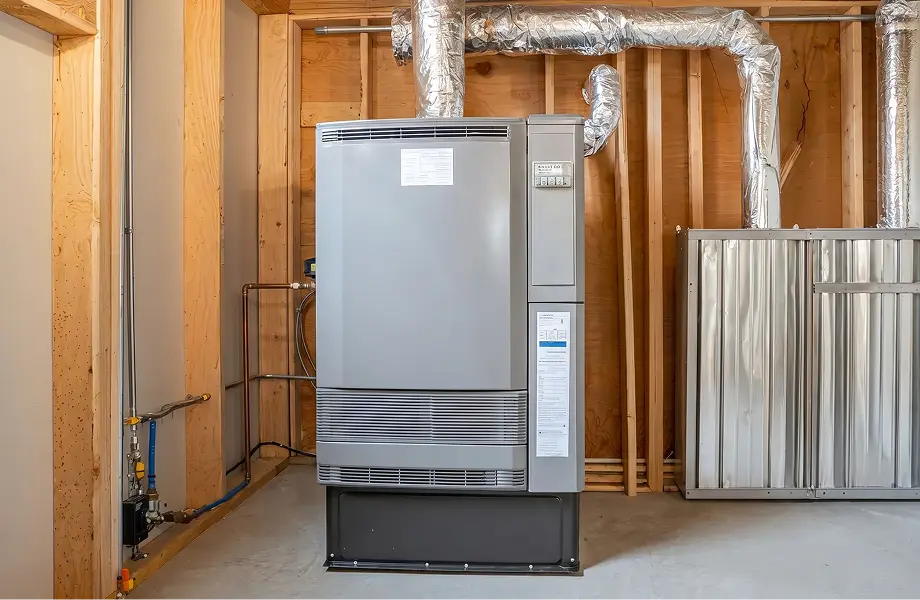


In 2026, the average furnace installation cost for a home furnace replacement or new system can vary widely depending on efficiency level and the complexity of the work required, typically ranging from $3,493 to $11,329. Many standard projects fall around $5,904 for a typical mid-efficiency system. Factors such as proper system sizing, existing ductwork condition, and local labor or permitting requirements often cause estimates to vary, and heating continues to represent a significant portion of residential energy use[1].
Some projects are simple replacements that reuse existing ducts and vents and can often be completed in most of a day. Others involve new duct runs, vent changes, or utility upgrades and may take one to several days.
This guide breaks down what drives pricing, how basic and premium options compare, and what to look for when reviewing bids so you can avoid common surprises[1].
Furnace Installation Cost by Type
Below are common furnace installation services and the main reasons pricing changes, such as scope, urgency, and site conditions. If your project may involve related system work, plan for potential HVAC costs as part of your overall budget.
| Type of Service | Cost | Features |
|---|---|---|
New Furnace Installation | $3,493 - $11,329 | Full installation of a new furnace and supporting infrastructure in a home that does not already have a furnace and compatible duct system, including unit placement, basic hookups, and startup testing. |
Furnace Replacement | $3,292 - $10,023 | Remove old unit and install a replacement of similar capacity while reusing most existing ducts, vents, and utilities; may include minor ductwork updates. |
Gas Furnace Installation | $3,995 - $12,534 | Installation of a natural-gas furnace with gas-line connection, pressure testing, and safety checks. |
High-Efficiency Furnace Installation | $5,402 - $15,548 | Premium, high-AFUE units often needing upgraded venting, condensate drains, or electrical tweaks; older homes may require new PVC vent runs and a condensate drain connection, which increases labor and material cost. |
Forced-Air Furnace Installation | $3,794 - $11,831 | Ducted, forced-air systems that use blowers and supply/return ducts (as opposed to boilers or radiant heaters); includes basic balancing and system testing. |
Inspection of Furnace Installation | $148 - $590 | Professional inspection or code compliance check to verify safe, correct installation. |
Emergency Furnace Installation | $4,899 - $12,534 | Expedited or after-hours installation to restore heat quickly, often with premium labor costs. |
New Furnace Installation Costs
New furnace installation typically means adding a furnace where one did not exist, or where the home does not have compatible ductwork, venting, or utility connections. Pricing commonly falls in the $3,493 - $11,329 range, with an average of $5,904.
What tends to move the price most:
- Furnace capacity needed for the home
- Whether new ductwork, venting, or utility hookups are required
- Access to the mechanical space (tight closets, crawlspaces, attics)
- Local labor rates and permitting requirements
High-Efficiency Furnace Costs
A high-efficiency furnace can make sense if you are prioritizing lower fuel use and updated performance, but it often comes with added installation steps for venting and condensate handling. Prices generally fall between $5,402 - $15,548, with an average of $8,215. Federal guidance on furnace types and efficiency can also shape what homeowners and contractors consider when selecting equipment[2].
Many high-efficiency gas furnaces use sealed PVC venting and need a condensate drain. If your home has an older metal flue or no practical drain location, the added venting and drainage work can push the estimate higher than a standard-efficiency replacement.
Forced-Air Furnace Installation Costs
A forced air furnace installation covers ducted systems that distribute heated air through supply and return ducts. This category focuses on forced-air setups rather than boilers, radiant systems, or space heaters.
Installation commonly costs $3,794 - $11,831, with an average of $6,306. Costs often hinge on:
- Ductwork condition and layout complexity
- Access to the blower cabinet and connections
- Zoning needs and balancing requirements
- Any vent or grille modifications needed for airflow
6 Factors That Affect the Cost to Install a Furnace
These are the biggest drivers that explain why one quote can look very different from another. Use them as a checklist when you review estimates.
- Equipment Type: The make, model, and efficiency rating affect equipment cost and expected operating costs. High-efficiency units and those meeting Energy Star criteria typically cost more upfront but can reduce fuel use over time[3].
- Furnace Size and Capacity: Proper sizing matches the home's heating load. Units that are too large or too small can reduce comfort and raise operating costs. Improvements like insulation and air sealing can reduce heating load, which may change the capacity you need[4].
- Ductwork Condition: Ducts that leak, lack insulation, or are undersized may need repair or replacement. If ductwork is part of the scope, include air duct replacement costs in your planning because resizing and replacing ducts adds materials and labor.
- Labor Complexity: Difficulty depends on access, furnace location, and what needs to change in gas piping, venting, or electrical connections. Tight mechanical spaces and complex hookups can increase furnace installation labor cost. Commissioning steps, like verifying temperature rise and checking pressures, also add time, but they support safe operation and proper performance.
- Permits and Code Requirements: Permits, inspections, and code updates can add fees and extra work. Venting changes, combustion-air requirements, and related safety items can also affect the estimate. In many areas, gas, venting, and high-voltage electrical connections require licensed professionals and permits, and skipping them can create inspection or insurance problems.
- Site Conditions and Additional Work: Multi-story layouts, difficult access, and weather delays can change the work plan. Homes in flood-prone areas may require elevated equipment or other protective measures, which can increase material and installation needs[5]. Some projects also need new platforms, structural supports, or code-required bracing. These same conditions can change furnace installation time because crews may need additional prep work before installation can begin.
Furnace Installation Cost by Material
Fuel source and furnace design affect both installation complexity and long-term operating costs. Contractors typically size the unit to your home and recommend options based on existing ductwork and fuel availability.
| Item | Cost | Description |
|---|---|---|
Gas Furnace | $3,995 - $12,534 | Common for cold climates, runs on natural gas, requires a gas line and venting. Homeowners choose it for lower fuel cost where gas is available. |
Electric Furnace | $3,192 - $8,817 | Uses electric heating elements, simpler to install with no combustion venting. Often chosen where gas is not available or for smaller homes, but adequate electrical service and breaker capacity are required, and upgrading the panel or running new high-amperage circuits can increase project cost. |
Oil Furnace | $5,502 - $14,544 | Burns heating oil stored on-site, requires tank maintenance and periodic cleaning. Typical in areas without gas service, and projects may also need tanks, pads, fuel lines, and any required containment or safety equipment if those are not already in place. |
Propane Furnace | $4,498 - $13,539 | Similar performance to gas systems, needs a propane tank and refill logistics. Good for rural homes without natural gas; the cost of the tank, pad, fuel lines, and required safety measures is additional if existing infrastructure is missing or outdated. |
Dual-Fuel System | $9,219 - $18,863 | Combines electric heat pump with a fossil-fuel furnace for backup. Offers efficiency across seasons but increases system complexity. |
Modulating Furnace | $6,708 - $17,859 | Adjusts output incrementally for steady indoor temperatures and higher efficiency. Preferred for comfort and energy savings, with higher upfront cost. |
Single-Stage Furnace | $3,192 - $9,922 | Simple on/off operation, lower initial price and simpler controls. May cycle more and produce wider indoor temperature swings. |
Installation pricing also depends on capacity, local labor rates, and any required duct or venting changes. High-efficiency and modulating models may need more advanced controls and tighter combustion sealing, which can add labor time and material costs.
Infrastructure and code requirements can shift the total. Extending a gas line, adding a propane tank, or upgrading a flue all increase cost. Improving home thermal performance can also reduce the size of unit needed and lower operating expenses[6]. In practice, gas furnace installation cost often includes more than the furnace itself, such as gas-line work, venting, permitting, and post-installation checks for safe operation.
How Much Does Furnace Installation Cost by Size
Furnace size and installation setup influence the final total because they affect equipment capacity, materials, and crew time. Larger systems may require more venting work, larger duct transitions, or more extensive layout changes.
Matching equipment to the home's heating load is a core part of a residential furnace installation. A furnace that is oversized or undersized can reduce efficiency and increase operating costs[7].
Your home's layout also matters. A basement install, a closet install, and an attic or rooftop placement each come with different access and ventilation requirements, and those realities show up in labor and permit costs.
Compact Systems for Small Homes and Apartments
Smaller spaces usually need lower capacity equipment and fewer duct changes, which often keeps labor and materials lighter.
Cost: $3,493 - $11,329, average $5,904
Tight-access installs can still be labor-intensive because technicians may have limited room to work. If clearances or combustion-air needs are not met, the project may require changes to the mechanical space, which can increase both time and cost.
Standard Single-Story Home Installations
Single-story homes often have simpler access to an attic, basement, or utility area, and many projects are straightforward replacements that reconnect to existing ducts and venting.
Cost: $3,292 - $10,023, average $5,502
Common add-ons include removal of the old unit, small duct repairs, and basic venting adjustments. If the crew finds damaged or noncompliant venting, or other hazards that require remediation, the estimate can increase, and the timeline may extend. Permit fees and standard safety testing are typically part of the total.
Large Multi-Story Home Installations
Multi-story homes and large floor plans may require higher-capacity equipment and more balancing work to deliver even heating. Some projects include zoning dampers or more extensive duct changes.
Cost: $3,995 - $12,534, average $6,708
Additional duct modifications and multi-level vent routing can raise labor and materials. Some large homes use multiple systems, and multi-system configurations often trend toward the higher end of typical ranges. Rooftop or exterior installs can add structural, weatherproofing, and permitting complexity.
High-Capacity or Older-Duct-System Retrofits
If the existing ductwork is undersized or deteriorated, the project may involve system-level updates rather than a simple swap. That can include resizing plenums, replacing duct sections, and improving intake or venting components.
Cost: $3,794 - $11,831, average $6,306
Costs rise when duct runs are hard to reach, or when walls or ceilings must be opened to make corrections. Extensive sealing and insulating can also add labor. Installing a higher-capacity furnace onto failing ductwork can create comfort issues and equipment strain, so contractors often recommend addressing duct problems alongside the furnace.
High Efficiency Units and Specialty Configurations
High efficiency furnaces and specialty configurations, such as modulating systems, typically cost more and may require upgraded venting, control wiring, and condensate management.
Cost: $5,402 - $15,548, average $8,215
These systems often benefit from careful sizing and thorough commissioning. Insulation levels can influence both the recommended capacity and how much efficiency you gain, so insulation upgrades can change the equipment recommendation and overall cost[8].
Comparing DIY and Professional Furnace Installation Costs
DIY work can affect safety, warranty coverage, and your final cost. The chart below compares tasks homeowners sometimes take on versus the same work handled by a professional.

These DIY ranges mainly reflect limited tasks an experienced homeowner might handle, such as removing an old unit, installing a thermostat, or sealing minor duct leaks, sometimes alongside a licensed contractor. Full installations involving gas or oil lines, combustion venting, or major electrical work are generally not good DIY candidates due to safety and code requirements.
Risks and Limitations of DIY Furnace Work
Furnaces involve fuel connections, venting, and electrical components, and mistakes can be dangerous. Improper venting or combustion-air setup can create carbon monoxide risk, and incorrect fuel connections can lead to leaks or fire. Permits and inspections are often required, and work that does not meet HVAC standards may need to be redone; professionals follow industry standards during installation[9]. Unlicensed work may also affect manufacturer warranties and homeowners insurance coverage if an incident occurs.
Benefits of Hiring a Professional
A licensed installer handles sizing, hookups, and code-compliant installation, which helps protect warranties and reduces liability. Professionals also typically manage permits and post-install testing. Commissioning, such as airflow checks and safety control testing, is commonly part of professional installation and supports long-term performance.
How to Decide Between DIY and Pro
DIY may make sense for limited work like thermostat swaps or minor duct sealing if you have the tools and permit knowledge. For new installations, full replacements, and any work involving fuel lines or major duct changes, professional installation usually lowers safety and compliance risk.
When you compare bids, ask what is included, what warranties apply, and what documentation you will receive. You can also budget for ongoing upkeep by reviewing average furnace maintenance costs. If you are gathering local pricing, search for furnace installation contractor cost so you can compare real quotes from qualified tradespeople.
Furnace Installation Add-Ons
Add-ons are optional upgrades that can improve comfort, control, or air quality. They increase the project total, so it helps to compare what you get for the added cost.
| Add-On | Cost | Details |
|---|---|---|
Smart Thermostat | $278 - $901 | A connected thermostat offers scheduling, remote control, and efficiency features; see cost of thermostat installation for related pricing. |
Zone Control System | $1,886 - $7,913 | Allows different temperatures in separate parts of the home, improving comfort and targeting heating to occupied areas. |
Whole-House Humidifier | $580 - $1,886 | Integrates with furnace ducting to add moisture during dry months, easing respiratory symptoms and protecting woodwork. |
Air Purifier Installation | $690 - $3,694 | Adds advanced filtration or UV cleaning to reduce allergens and contaminants circulating through the system. |
High-Efficiency Air Filter Upgrade | $158 - $620 | Upgrades to denser or pleated filters for better particle capture; because higher-efficiency filters can increase airflow resistance, they should be selected and sized by a professional to avoid stressing the furnace or reducing performance. |
Ductwork Cleaning | $349 - $1,203 | Removes dust and debris from ducts to improve airflow and indoor air quality; meaningful efficiency gains are most likely when ducts are heavily clogged or blocked rather than in relatively clean systems[10]. |
Extended Warranty | $389 - $2,488 | Extends parts and labor coverage beyond the factory warranty for added long-term protection, typically with conditions such as proof of regular professional maintenance and specific coverage exclusions that homeowners should review carefully. |
Add-on pricing depends on the component, the brand, and the installation details. For example, zoning can require additional ductwork access and damper installation, while humidifiers need proper duct integration and drainage.
Controls and scheduling can also affect ongoing energy use. Programmable and smart thermostats can reduce energy use when set up and used correctly[11]. In some cases, homeowners choose certain upgrades during emergency furnace installation to avoid a second service visit later.
ROI of Furnace Installation
In 2026, return on investment for a furnace upgrade depends on the equipment you choose, how long you plan to stay in the home, and local energy costs. Energy-efficient installations may qualify for federal tax credits, which can improve the overall payback[12].
Key ROI Drivers
- Material Quality and Durability: Higher-quality equipment often needs fewer repairs over time.
- Energy Efficiency: Higher-efficiency models can reduce fuel use, and incentives may improve net cost; compare high efficiency furnace installation cost against expected savings.
- Professional Installation: Correct sizing and installation help the system perform as intended.
- Market Demand: In some markets, efficient HVAC can improve buyer appeal.
- Maintenance Requirements: Systems with manageable upkeep tend to retain value better.
| Service | Estimated ROI | Details |
|---|---|---|
Basic Repair | around 30-40% | Short-term fixes extend life but usually do not add significant resale value. |
Standard Full Replacement | 60-70% | New standard-efficiency furnace improves reliability and resale appeal. |
Energy-Efficient Installation | approximately 70-85% | High-efficiency units yield stronger energy savings and may qualify for incentives. |
Premium High-End System | around 65-75% | Advanced features and longer warranties add comfort and value, but higher upfront cost moderates ROI. |
Treat these ROI figures as broad examples, not a guarantee. Your results can differ based on the current condition of your system, local utility rates, and installation quality. Comfort, safety, and fewer breakdowns can also be meaningful benefits even when the payoff is hard to quantify.
Furnace Replacement vs Installation: Cost and Considerations
Here, â_x0080__x009c_replaceâ_x0080__x009d_ means removing an existing furnace and installing a new one. â_x0080__x009c_Repairâ_x0080__x009d_ means fixing specific parts of the current unit. The right choice depends on total cost, reliability, and how long you need the system to last. Comparing these options alongside the new furnace installation cost can help you choose a practical path. Installing a furnace where no system exists, or where ducts and venting are not compatible, usually involves higher infrastructure costs than a straightforward replacement.
| Option | Cost | Considerations |
|---|---|---|
Replace | $3,292 - $10,023 | A full replacement installs a new furnace and related components, which raises upfront costs but extends service life and often improves efficiency. New units typically come with fresh warranties and reduce the need for frequent fixes. |
Repair | $145 - $496 | Repair addresses specific faults at a lower initial cost, making it a good choice for isolated or minor problems. Repeated repairs shorten remaining useful life and may become less economical over time. |
When to Choose Replacement
Replacement is often the better fit when a furnace is older, has multiple failing components, or needs frequent service calls. If repair bills start to approach half the cost of a new unit, many homeowners shift to replacement for better long-term value. Some households also consider switching to modern systems, including heat pumps, for efficiency improvements[13]. Furnaces near or past a typical 15-20 year service life are common candidates when a major repair comes up.
When to Choose Repair
Repair can make sense when the furnace is relatively new, the problem is limited to a single part, or the unit is still under warranty. If you are deciding on a short-term fix, compare the repair cost with the system's remaining useful life and review typical furnace repair costs.
How to Save on Your Furnace Installation Price
A few planning steps can lower your total without cutting corners on safety or workmanship. Start by checking local utility rebates and incentive programs through the state incentives database[14]. You can also confirm eligibility for federal energy tax credits for qualifying efficiency upgrades[15].
- Schedule During Mild Seasons: Non-peak scheduling can be easier to book and may reduce the chances of emergency fees.
- Get Multiple Written Quotes: Request a detailed furnace installation estimate from multiple licensed installers, then compare scope, equipment, and warranty terms.
- Bundle Related Tasks: If you already plan to add a thermostat, seal ducts, or do small sheet-metal work, bundling can reduce repeat labor visits.
- Verify Permits and Warranties: Make sure permits are filed and warranties are documented in writing, including any maintenance requirements tied to coverage.
- Prepare the Work Area: Clear access to the furnace area so the crew can work efficiently.
- Ask for Proper Load Calculations: Ask for Manual J or an equivalent load calculation instead of rule-of-thumb sizing, which can help avoid oversizing and reduce long-term operating costs.
For broader budgeting help across home projects, visit homeyou for project cost estimates.
Frequently Asked Questions About Furnace Installation
Furnace installation is the process of sizing, placing, and connecting a new heating unit to your home's ductwork, fuel or power source, and venting. It also includes safety checks, system testing, and usually permits and inspections to ensure the system operates safely and efficiently.
Most installations include removing the old unit (if present), setting the new furnace, connecting it to existing ducts, gas or electrical lines, and venting, plus installing basic controls and performing start-up tests. Some quotes also cover permits, hauling away debris, and a short warranty on labor.
A straightforward replacement that reuses existing ducts and venting often takes most of one workday. More complex projects that add new duct runs, upgrade venting, or adjust gas and electrical lines may take one to three days, especially if inspections or additional code updates are required.
The best choice depends on your fuel availability, climate, and budget. Natural gas furnaces are common where gas service exists. Electric or heat pump-based systems suit milder climates or homes without gas. high-_x0080__x0091_efficiency or modulating gas furnaces offer better comfort and lower fuel use if installed correctly.
The lowest cost option is usually a standard-efficiency, single-stage furnace that can reuse existing ductwork, venting, and fuel lines. Keeping the layout the same and avoiding electrical or gas line upgrades helps control labor. However, it may have higher monthly energy costs than high-_x0080__x0091_efficiency models.
Unexpected costs often come from hidden issues discovered during the job, such as unsafe or undersized ductwork, noncompliant venting, corroded gas lines, or outdated electrical service. Additional permits, required code upgrades, or adding drains for high-_x0080__x0091_efficiency units can also increase the final project price.
Ask if they are licensed and insured, what permits they handle, and whether they perform a Manual J load calculation. Request a written scope listing equipment model, efficiency rating, warranties, included duct or vent work, and post-installation testing. Clarify cleanup, timeline, and how change orders are handled.
Clear a path to the furnace and main electrical panel, move stored items away from the work area, and secure pets and children. Confirm where installers can park and dispose of debris. Have questions ready about thermostat settings, filter changes, and maintenance before the crew leaves.
References
[1] International Energy Agency, "Heating", https://iea.org/energy-system/.
[2] U.S. Department of Energy, "Furnaces and Boilers", https://energy.gov/energysaver/furnaces-and-boilers.
[3] U.S. Environmental Protection Agency, "Energy Star Certified HVAC Equipment", https://www.energystar.gov/saveathome/heating-cooling.
[4] U.S. Department of Energy, "Insulation", https://www.energy.gov/energysaver/weatherize/insulation.
[5] Federal Emergency Management Agency, "Protect Your Home from Flooding", https://www.fema.gov/sites/default/files/documents/fema%5Fprotect-your-home-from-flooding-brochure%5F2020.pdf.
[6] U.S. Department of Energy, "Consumer Guide to Home Insulation Fact Sheet", https://energy.gov/energysaver/consumer-guide-home-insulation-fact-sheet.
[7] U.S. Department of Energy, "Principles of Heating and Cooling", https://energy.gov/energysaver/principles-heating-and-cooling.
[8] U.S. Department of Energy, "Guide to Home Insulation", https://energy.gov/sites/prod/files/guide\_to\_home\_insulation.pdf.
[9] Air Conditioning Contractors of America, "HVAC Industry Standards", https://acca.org/standards.
[10] U.S. Department of Energy, "Minimizing Energy Losses in Ducts", https://energy.gov/energysaver/minimizing-energy-losses-ducts.
[11] U.S. Department of Energy, "Programmable Thermostats", https://energy.gov/energysaver/programmable-thermostats.
[12] U.S. Department of Energy, "Federal Tax Credits for Energy Efficiency", Energy Star, https://www.energystar.gov/about/federal-tax-credits.
[13] ENERGY STAR, "Air-Source Heat Pumps", https://energystar.gov/products/air\_source\_heat\_pumps.
[14] Database of State Incentives for Renewables & Efficiency (DSIRE), "Utility Rebates for HVAC Systems", https://dsireusa.org.
[15] Internal Revenue Service, "Energy Efficient Home Improvement Credit", https://irs.gov/credits-deductions/energy-efficient-home-improvement-credit.