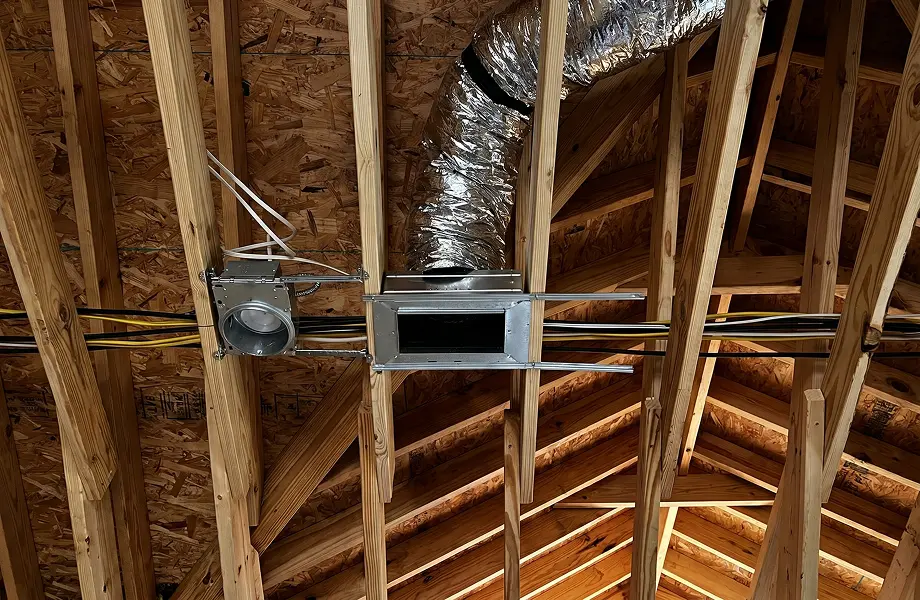


In 2026, air duct replacement costs typically range from $2,490 to $6,911, with most homeowners paying around $4,719 depending on system size and complexity. Pricing can shift significantly based on factors like the home's layout, accessibility of existing ductwork, insulation requirements, and whether the project involves a full replacement or partial upgrades.
Because ductwork is often hidden behind walls, ceilings, or crawl spaces, labor can quickly become a major portion of the total, especially in older homes or properties with inefficient layouts. Material choice (such as flexible ducts vs. rigid metal), energy-efficiency improvements, and local code requirements can also influence the final cost.
This guide breaks down what drives air duct replacement pricing, how different system configurations affect your investment, and what to look for when comparing contractor bids-so you can move forward with a clear scope, realistic expectations, and fewer surprises once work begins[1].
6 Factors That Affect the Ductwork Replacement Cost
Air duct replacement pricing comes down to scope and access, plus any required add-ons like testing or insulation. If you are budgeting multiple upgrades, the home services pricing hub can help you compare related project categories.
- System Size and Complexity: Larger homes and multi-zone HVAC systems typically need more duct runs, fittings, and labor time.
- Duct Material and Type: Sheet metal, flexible duct, and ductboard have different price points and durability. Some high-efficiency setups also call for more specialized components.
- Home Layout and Accessibility: Tight joist bays, finished basements, and long attic runs add labor. If your project involves a finished lower level, basement duct replacement may also include extra planning for moisture control and clearances.
- Labor Rates and Local Market: Contractor availability, regional wage patterns, and local demand can all move pricing up or down.
- Condition of Existing Ductwork and Insulation: Ducts that are heavily damaged, leaking throughout, or contaminated often cost more to address, and older homes can come with additional repair needs that raise overall project costs.[2]
- Permits, Testing, and Additional Services: Permits, air balancing, duct sealing, and post-installation testing can add line items. In some areas, leakage tests or inspections may be required, so confirm expectations with your local building department.
When you request quotes, ask for itemized estimates that separate materials, labor, testing, permits, and optional upgrades. It is the easiest way to compare bids and spot missing scope.
Cost to Replace Air Ducts by Service Type
Air duct replacement can mean a full system swap, replacing runs in a specific area, upgrading materials, or coordinating regulated work such as asbestos abatement. A pre-job inspection and checklist can help define what should be replaced and what can stay.[3]
| Type of Service | Cost | Features |
|---|---|---|
Replace Residential Air Duct | $4,144 - $7,730 | Full-home duct replacement for single-family homes, including trunk runs and major branches. Factors include home size, layout, and insulation. Small multifamily homes may be priced similarly if scope is comparable. |
Replace Commercial Air Duct | $13,241 - $30,921 | Large-scale replacements for office, retail, or industrial systems; often requires coordination with building operations and code compliance. Larger multifamily or mixed-use properties may be priced in this category. |
Replace Attic Air Duct | $3,411 - $6,922 | Duct work located in attics, often requiring insulation and fall protection measures. Roofing access and insulation add complexity. |
Replace Basement Air Duct | $3,104 - $6,168 | Basement runs and low-level trunks, sometimes constrained by low clearance or finished spaces; may require rerouting. |
Remove Asbestos From Air Duct | $2,632 - $7,273 | Specialized abatement for ducts with asbestos-containing materials, including containment, testing, and hazardous disposal by licensed asbestos contractors. |
Install Flexible Duct | $723 - $1,949 | Flexible duct installation for branch lines or repairs; faster and less invasive than rigid ducts but may reduce airflow if long or kinked. |
Install Metal Duct | $1,246 - $3,627 | Rigid sheet-metal duct installation for main trunks and high-performance systems, often performed alongside broader HVAC project costs. |
Commercial Air Duct Costs
For larger buildings, commercial duct replacement cost depends heavily on system size, access constraints, the amount of sheet-metal fabrication, and permitting. Typical pricing runs from $13,241 to $30,921, with an average of $20,554.
If you own a small multifamily or mixed-use property, pricing can sometimes look similar to light commercial work because of scale and code requirements.
Remove Asbestos From Air Duct Costs
Asbestos work is separate from standard duct labor. When ducts contain asbestos insulation or components, abatement typically involves containment, testing, licensed crews, and hazardous disposal.
Expect $2,632 to $7,273, with an average around $4,546, depending on how widespread the material is and how complex containment must be.
Residential Air Duct Costs
Residential replacement typically includes removing old ductwork, installing new runs, and sealing connections. Common triggers include major leakage, mold concerns, or HVAC upgrades.
Costs often range from $4,144 to $7,730, with an average near $5,869. Scope and insulation choices matter because duct losses can affect HVAC efficiency.[4]
Air Duct Replacement Estimate by Material
Material choice affects labor time, airflow consistency, noise, and how easy ducts are to maintain. The lowest upfront option is not always the best long-term fit, especially if the duct runs are long or hard to access later.
Review your options before you commit, especially if you are comparing metal duct replacement cost against other materials.
| Item | Cost | Description |
|---|---|---|
Flexible Duct | $3,526 - $6,751 | Flexible duct is a corrugated, insulated tube often used for short runs and tight spaces. Homeowners choose it for low cost and easy installation, though it may sag and reduce airflow if not supported. |
Metal Duct | $4,847 - $9,825 | Rigid metal ducts provide stable airflow and long service life. They are common in main trunk lines, resist pests and damage, and offer cleaner interiors with proper sealing. |
Fiberglass Duct | $3,812 - $7,555 | Fiberglass duct features rigid cores with insulating faces. It can improve thermal performance and reduce noise, but needs proper sealing and may be harder to clean than smooth metal. |
Fiberglass Lined Metal Duct | $4,742 - $9,584 | Metal ducts lined with fiberglass combine structural strength with built-in insulation. They reduce heat transfer and dampen sound but can trap contaminants and are harder to sanitize, so check local code and manufacturer guidance. |
Fiberglass Board Duct | $3,938 - $7,771 | Fiberglass board ducts are fabricated panels with high insulation value. Use them where thermal control and noise reduction matter, though they require careful handling and may not suit all supply runs. |
Fabric Duct | $4,912 - $10,940 | Fabric ducts distribute air through porous or perforated material for even airflow. They are lightweight, aesthetically flexible, and popular in commercial or exposed-ceiling homes. |
Plastic Duct | $3,310 - $6,424 | Plastic ducts are corrosion resistant and easy to route for certain short runs. Local codes often limit them to specific exhaust or specialized uses, not as primary supply/return ducts for central HVAC. |
Much of the material price difference shows up in labor and fittings. Straight runs in open, unfinished areas are usually faster. Tight attic work, finished ceilings, and custom transitions take longer and often cost more.
Insulation levels and airtight joints can also affect operating costs over time, since better insulation reduces heat loss and gain through the duct system.[5] Many homes use smooth metal ducts with external insulation because they are durable and easier to maintain.
How Much Does Duct Replacement Cost by Size
Project size affects how much duct is needed, how many fittings are required, and how long installation takes. Longer runs, larger duct diameters, and complicated branching layouts generally increase both labor and materials.
Size also influences whether the job needs new plenums, transition pieces, or additional supports. Contractors typically follow established sizing and sealing standards when planning the layout.[6]
Your HVAC system may be offline during portions of the work, and installers may need access to several rooms to reach concealed runs.
Single Duct Replacement (One Vent)
This type of job replaces one damaged run or boot serving a single room. Scope often includes one register, a short duct section, and sealing or insulation touch-ups.
- Cost Range: $422 - $1,296
- Average Cost: $748
Costs rise when the run is behind drywall or other finished surfaces. Material choice, insulation, and whether the register is replaced can also change the total. Many single-run jobs finish within a few hours.
Multiple Duct Replacement (Several Vents)
Replacing several runs usually covers a group of rooms or one floor. It can include multiple boots, tees, and some new trunk sections sized to support balanced airflow.
- Cost Range: $1,567 - $4,229
- Average Cost: $2,657
More branches usually mean more balancing and more time in tight spaces. If ceilings, soffits, or walls need to be opened and restored, labor can increase quickly. Many projects in this category take one to two days.
Whole House Duct Replacement
A whole-house duct replacement typically replaces the full network, from trunks and plenums to branches and register connections. The goal is to match the duct system to the HVAC equipment and the home layout.
- Cost Range: $4,641 - $8,830
- Average Cost: $6,515
A full replacement usually includes sealing and testing to confirm airflow and reduce leakage. Proper sizing and sealing can support efficient heat pump performance and overall HVAC operation.[7] These projects often take several days, with scheduled periods when the system is offline.
Attic Duct Replacement
Attic ductwork faces temperature extremes, and it often needs robust insulation. Projects may include replacing long trunks plus multiple branches feeding upper rooms.
- Cost Range: $3,411 - $6,922
- Average Cost: $4,951
Attic access, tight framing, and safety requirements can add labor time. Insulation upgrades and vapor barriers are common cost drivers. Many attic-focused replacements take one to two days.
Basement or Crawlspace Duct Replacement
Under-house ductwork often requires working around low clearance, plumbing, and structural elements. Replacement may include rerouting and extra joint sealing to reduce leakage and help manage moisture.
- Cost Range: $3,104 - $6,168
- Average Cost: $4,435
Costs can increase when cleanup or corrosion issues are involved, or when access is especially tight. Depending on scope, basement and crawlspace work can take several hours to a couple of days.
Average Air Duct Replacement Cost Per Square Foot
Some contractors use per-foot or per-square-foot figures as an estimating tool, but many residential quotes are presented as a lump sum or per run. Per-square-foot pricing can still be useful for comparison, as long as you know exactly what the number includes.
This approach often bundles materials, removal and installation labor, standard fittings, and basic sealing. It may exclude asbestos abatement, major demolition, or custom fabrication, so ask what is included before you use per-square-foot numbers to compare bids.
| Service Type | Cost | Details |
|---|---|---|
Air Duct Replacement | $2 - $4 | Replacement of existing duct runs with standard materials; cost varies with removal difficulty and sealing needs. |
Flexible Duct Installation | $0.92 - $2 | Flexible duct is quicker to install but can require extra support and sealing to prevent efficiency losses. |
Metal Duct Installation | $2 - $3 | Metal ducts last longer and require more fabrication and labor, increasing per-square-foot costs. |
Asbestos Duct Removal | $3 - $7 | Abatement adds testing, containment, and disposal costs; certified specialists raise the price. |
Attic Duct Replacement | $2 - $5 | Attic work can add access, insulation, and weatherproofing requirements that affect labor time. |
Basement Duct Replacement | $2 - $4 | Basement projects may require moisture-resistant materials and extra sealing for cold-air runs. |
Per-square-foot rates tend to rise with complicated layouts, lots of joints, and hard-to-reach runs. The more fitting work and sealing detail required, the more labor you are paying for.
Local code requirements, licensing, and whether the job includes testing and balancing can also affect pricing. Ducts that are appropriately sized, sealed, and verified can reduce energy losses and improve heating and cooling efficiency.[8]
Common Add-Ons for Air Duct Replacement
Add-ons increase the total project cost, but they can improve comfort, indoor air quality, or energy performance, depending on your home and existing duct conditions.
| Add-On | Cost | Details |
|---|---|---|
Insulation Upgrade | $1,030 - $3,029 | Adds insulated duct wraps or lined ducts to reduce heat loss and gain, improving system efficiency and comfort.[9] |
Whole-Home Air Purifier | $1,497 - $4,028 | Integrates a central air purifier into the system to cut particulates, pollen, and some odors for healthier indoor air. |
Microbial Treatment | $357 - $1,190 | Applies EPA-registered antimicrobial solutions to inhibit bacteria and fungi inside ducts after light contamination or cleaning. |
UV Light Installation | $748 - $2,401 | Installs UV lamps near the coil or in-duct to reduce microbial growth; bulbs require periodic replacement. |
Duct Sealing | $738 - $1,984 | Provides enhanced sealing beyond new joints, such as sealing existing adjacent ducts or using advanced sealants for higher efficiency. |
Mold Remediation | $1,266 - $4,742 | Removes mold from duct interiors with cleaning, containment, and follow-up inspections as needed; heavy or recurring growth may require duct replacement. |
Register and Grille Replacement | $311 - $1,251 | Replaces old or damaged registers and grilles to optimize airflow and finish details. |
Add-on totals depend on the quality of the products selected and how difficult they are to integrate into the duct layout. Permits, testing, and local labor rates can also change the final number.
Keep in mind that sealing new duct joints is part of a proper replacement. An optional duct sealing add-on typically means sealing older adjacent ducts, addressing hard-to-reach leakage points, or using higher-efficiency sealing methods.
For mold, light treatments may be offered after cleaning, but widespread or recurring growth usually calls for qualified remediation and, in some cases, replacing contaminated sections.[12]
Older systems or homes with hazardous materials may require asbestos duct removal and replacement, which increases testing, labor, and disposal requirements. If heavy debris is present, you may also need separate duct cleaning prices as part of the overall plan.
ROI of Air Duct Replacement
ROI is one way to think about air duct replacement in 2026, especially if you are weighing efficiency gains against upfront cost. Duct improvements that reduce energy loss can lower heating and cooling demand, and some upgrades may qualify for incentives, depending on the measures and your location.[10]
Key ROI Drivers
- Material Quality and Durability: Higher-grade materials and proper insulation can hold up longer and reduce future repair needs.
- Energy Efficiency: Better sealing, insulation, and correct sizing can reduce wasted heating and cooling.
- Professional Installation: Good layout, sealing, and balancing during residential duct replacement can help avoid comfort problems and callbacks.
- Market Demand: In some markets, updated HVAC components can support resale appeal.
- Maintenance Requirements: Well-sealed systems may need less frequent service, which can reduce the need for air quality testing investments services.
| Service | Estimated ROI | Details |
|---|---|---|
Basic Repair and Sealing | around 60-70% | Targeted sealing reduces leaks and can offer quick energy savings, but benefits are limited if ducts are old or poorly routed. |
Full Replacement (Standard) | around 70-80% | New ducts often improve airflow and efficiency across the system, enhancing potential resale appeal and lowering utility costs over time. |
Energy-Efficient Upgrade | approximately 85% | Insulated, properly sized, and balanced ducts may deliver strong long-term savings and are more likely to qualify for incentives. |
These ROI figures are broad estimates, not guarantees. Your actual return depends on energy costs, climate, duct design, and how your household uses heating and cooling.
How Season Affects Air Duct Replacement Cost
Seasonal demand can affect both scheduling and price. When HVAC companies are busiest, you may see longer lead times and higher labor costs in 2026.
| Season | Cost | Description |
|---|---|---|
Spring / Early Summer | $4,340 - $8,047 | Contractors prepare for cooling season, so availability tightens and lead times often get longer. Minor weather delays are possible in some regions. |
Summer Peak | $4,707 - $8,574 | Highest demand for HVAC-related work increases labor premiums and scheduling delays, especially before heat waves. |
Autumn | $3,938 - $7,359 | Demand eases after peak cooling months, offering more scheduling flexibility and potential off-peak pricing. |
Winter | $4,028 - $7,715 | Cold or snowy conditions can limit outdoor access and slow jobs; indoor duct access remains possible in many areas. |
Off-Season / Reduced Demand | $3,707 - $6,866 | Contractors often have open schedules and may offer discounts or faster start dates during slow periods. |
If saving money is the priority, ask about off-peak scheduling and flexible start dates. For attic work, attic duct replacement cost can climb during peak booking windows simply because crews are stretched thin.
Weather can also affect safety and access, which adds labor time in rainy or freezing months. In some regions, flood risk may influence how utility systems are protected, and some homes may need added sealing or elevated components.[11]
Air Duct Repair vs. Replacement Costs
Replacement means removing old ductwork and installing new sections across the system or a major portion of it. Repair usually focuses on sealing leaks, patching damage, or replacing a limited section. The right choice depends on how widespread the issues are and how much life is left in the existing ducts.
| Option | Cost | Considerations |
|---|---|---|
Replace | $2,490 - $6,911 | Full-system replacement improves longevity and efficiency but has a higher upfront cost; best when ducts are extensively damaged or very old. |
Repair | $298 - $953 | Repairs address localized leaks or damage with lower immediate cost, but may not solve systemic problems like poor design, undersizing, or widespread deterioration. |
When to Choose Replacement
Replacement is often the better value when deterioration is widespread, repairs keep recurring, or the duct system is past its expected lifespan. Ongoing moisture problems or visible mold growth can also be a sign that replacement is worth considering to protect indoor air quality.[12]
If you are comparing the average air duct replacement to ongoing repair costs, factor in how often you have needed service and whether comfort issues persist. You may also want to coordinate ductwork with equipment upgrades such as AC installation expenses.
When to Choose Repair
Repair is a good fit for newer systems with isolated leaks or minor physical damage. Use caution if repairs will disturb older duct insulation, since some materials can trigger special handling and regulatory requirements.[13] If the broader system is nearing the end of its lifespan, repeated repairs may not be the most cost-effective plan.
How to Save on Air Duct Replacement
You can often reduce surprises and control costs by tightening the scope early and asking the right pricing questions. Rebates and incentives may also help offset eligible upgrades, depending on your area.[14]
- Schedule a Thorough Inspection: Ask a reputable HVAC technician to evaluate the full duct system so you understand what needs replacement versus what can be repaired. Be cautious with inspections that are free but tied to high-pressure sales.
- Bundle Services: If timing works, coordinate duct work with HVAC maintenance or filter upgrades to reduce repeat trip charges and simplify scheduling.
- Compare Material Options: Request clear pros and cons by material, and ask for the flex duct replacement cost to be shown as a separate line item if it is an option.
- Get Multiple Detailed Bids: Ask for itemized quotes that break out labor, materials, permits, testing, and access work. Confirm how pricing is structured, such as per run or lump sum, so you can compare bids fairly.
- Check Federal Energy Credits: If you plan to claim a credit, review Form 5695 instructions and confirm eligibility before work begins.[15]
Find vetted home improvement contractors through homeyou to compare licensed air duct replacement pros, read reviews, and choose a contractor with clear pricing.
Frequently Asked Questions About Air Duct Replacement
Contractors remove accessible old ducts, design and size a new layout, install new trunk lines and branches, seal and insulate connections, and reconnect registers and grilles. They typically test basic airflow and check for leaks. Drywall or finish repairs are usually separate unless specifically included in the contract.
A single run or a few vents may be done in half a day. Replacing ducts for one level often takes one to two days. A whole-house duct replacement usually takes several days, especially if access is tight or ceilings need to be opened. Ask for a schedule in your bid.
Replacement is worth considering if ducts are very old, badly rusted, crushed, or contaminated with widespread mold or asbestos, or if design problems cause chronic comfort issues. If problems are limited to a few leaks or a short damaged section, targeted repairs and sealing may be sufficient.
For most homes, smooth metal ducts with proper external insulation offer long life, good airflow, and easier cleaning. Flexible duct is useful for short, tight runs when installed and supported correctly. Fiberglass and specialty materials can help with noise or temperature control but may be harder to clean or repair.
Ask about licensing and insurance, experience with your type of home, whether they follow recognized duct design standards, and what is included in the quote. Request an itemized estimate for labor, materials, permits, and testing. Confirm how they will handle access, cleanup, and any necessary patching.
Hidden issues behind walls or in attics can add costs, such as damaged framing, extensive mold, or previously unknown asbestos insulation. Additional expenses may include access holes, repairs to finishes, upgraded insulation, air balancing or testing, and bringing older ductwork or vents up to current code.
If ducts are the same age and many sections are failing, full replacement usually delivers better performance and fewer repeat disruptions. Staged work can fit tighter budgets but may leave old, leaky sections in place. Discuss priorities with a contractor so essential trunks and problem areas come first.
Properly designed and sealed new ducts can reduce hot and cold spots, improve airflow to distant rooms, and cut drafts from leaks. Replacing contaminated or damaged ducts, adding filtration upgrades, and improving insulation can also support better indoor air quality and more consistent temperatures throughout the home.
References
[1] U.S. Department of Energy, "Heat Distribution Systems", https://energy.gov/energysaver/heat-distribution-systems.
[2] U.S. Census Bureau, "Cost of Improving and Maintaining Older Homes Higher for New Owners", Census Library Stories, https://census.gov/library/stories/2023/10/older-home-costs.html.
[3] "Home Improvement ExpertTM Checklists", Building America Solution Center, http://basc.pnnl.gov/home-improvement-expert/checklists.
[4] U.S. Department of Energy, "Minimizing Energy Losses in Ducts", https://energy.gov/energysaver/minimizing-energy-losses-ducts.
[5] U.S. Department of Energy, "Guide to Home Insulation", https://energy.gov/sites/prod/files/guide\_to\_home\_insulation.pdf.
[6] Air Conditioning Contractors of America, "HVAC Industry Standards", https://acca.org/standards.
[7] U.S. Department of Energy, "Heat Pump Systems", https://energy.gov/energysaver/heat-pump-systems.
[8] U.S. Department of Energy, "Principles of Heating and Cooling", https://energy.gov/energysaver/principles-heating-and-cooling.
[9] U.S. Department of Energy, "Consumer Guide to Home Insulation Fact Sheet", https://energy.gov/energysaver/consumer-guide-home-insulation-fact-sheet.
[10] ENERGY STAR, "High-Efficiency Heating and Cooling", https://energystar.gov/newhomes/features-benefits/heating-cooling.
[11] Federal Emergency Management Agency, National Flood Insurance Program, "Protecting Building Utility Systems From Flood Damage", https://agents.floodsmart.gov/sites/default/files/media/document/2025-07/fema%5Fnfip-p-348-protecting-building-utility-systems-from-flood-damage-2017.pdf.
[12] U.S. Environmental Protection Agency, "A Brief Guide to Mold, Moisture and Your Home", https://epa.gov/mold/brief-guide-mold-moisture-and-your-home.
[13] U.S. Environmental Protection Agency, "Overview of the Asbestos National Emission Standards for Hazardous Air Pollutants NESHAP", https://www.epa.gov/asbestos/overview-asbestos-national-emission-standards-hazardous-air-pollutants-neshap.
[14] Database of State Incentives for Renewables & Efficiency (DSIRE), "Utility Rebates for HVAC Systems", https://dsireusa.org.
[15] United States, Internal Revenue Service, "Instructions for Form 5695, Residential Energy Credits 2024", https://www.irs.gov/pub/irs-pdf/i5695.pdf.