

In 2026, furnace repair cost typically runs from $87 to $168 per hour, with an average near $123.
This guide walks through common repair scenarios, what usually drives parts and labor totals, and how to compare estimates without guessing. Costs and examples mainly reflect gas forced-air furnaces; electric furnaces and heat-pump air handlers can have different repair needs and pricing[1].
Common Furnace Repair Costs by Type
Furnace repair covers everything from a quick sensor replacement to major component work. Pricing depends on what failed, how long the diagnosis takes, which parts are needed, and how quickly you need the repair completed.
For broader project planning, you can also review typical HVAC service prices while comparing estimates.
Forced-air furnaces move heated air through ducts, so some repairs can overlap with airflow and distribution issues that show up at vents, returns, or duct connections[2]. Costs also vary by furnace type and efficiency level.
Many items below are most common on gas or oil furnaces, while electric furnaces and condensing models can involve different parts and labor steps.
| Type of Service | Cost | Features |
|---|---|---|
Repair Furnace | $145 - $496 | General diagnostics and fixes for common failures, including minor part replacement and labor. |
Inspect Furnace | $118 - $278 | Visual and operational check to identify problems, safety issues, and maintenance needs. |
Repair Furnace Blower | $329 - $992 | Repairs to the blower assembly that circulates air, often involving bearings, belts, or fan components. |
Replace Furnace Motor | $690 - $1,795 | Full motor replacement for the blower; includes part and labor and may require electrical work. |
Replace Furnace Flame Sensor | $164 - $379 | Swapping a worn or fouled flame sensor to restore reliable ignition and safety sensing. |
Repair Furnace Heat Exchanger | $1,494 - $3,101 | Typically refers to removing and replacing a cracked or corroded heat exchanger; damage here is a serious safety issue that may justify replacing the entire furnace. |
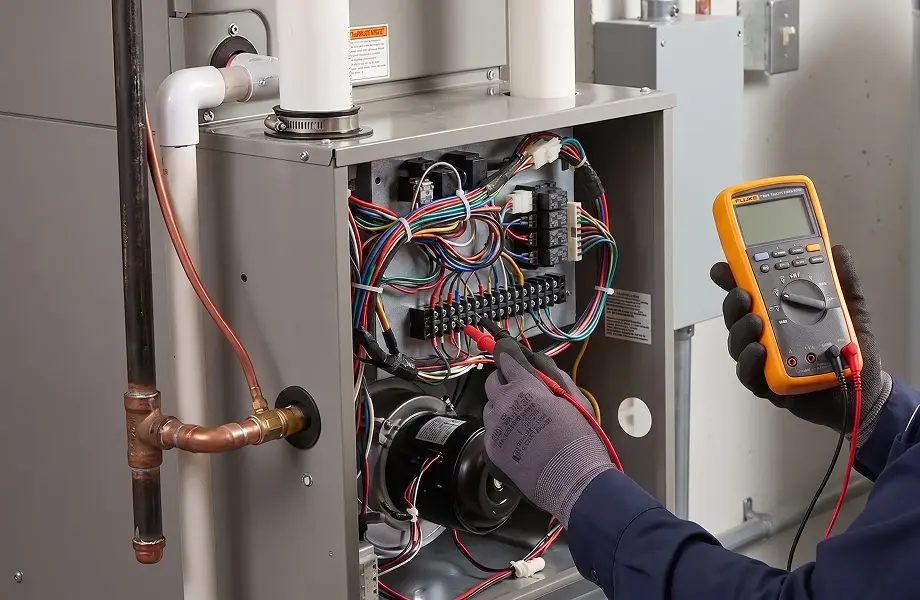
Repair Furnace Circuit Board | $389 - $1,142 | Control board diagnosis and repair when the unit will not respond to thermostats or cycles erratically. |
Repair Furnace Heat Exchanger Costs
A heat exchanger transfers combustion heat into the air stream. If it has cracks, corrosion, or signs of flue gas leakage, it needs prompt attention. Costs range from $1,494 to $3,101, with an average of $2,247.
In many residential gas furnaces, a failed heat exchanger is not patched. For safety, technicians may shut the unit down and quote heat exchanger replacement, or on older systems, recommend full furnace replacement due to carbon monoxide risk and code concerns.
Key cost drivers include the extent of damage, access inside the cabinet, furnace age, and whether replacement is the better value. Homes with radiant heating use different heat distribution methods, so repair needs and components can differ from forced-air systems[3].
Replace Furnace Motor Costs
The blower motor pushes heated air through ductwork. Replacement is common when bearings fail or windings burn out. Expect costs from $690 to $1,795, with an average of $1,142.
Pricing is usually shaped by:
- Motor size and type
- Compatibility with the existing blower assembly
- Any extra electrical work needed to complete the installation
Repair Furnace Circuit Board Costs
The control board manages ignition sequencing, fan operation, and safety controls. When it fails, you may see intermittent operation or a full shutdown. Repairs range from $389 to $1,142, with an average of $690.
Labor time often depends on diagnostic complexity and part availability. If you are planning upkeep, furnace tune-up costs can be useful to budget for, since routine service can catch problems early.
Cost to Repair a Furnace per Hour
Hourly pricing typically covers the technician's labor, basic diagnostics, and minor adjustments. Emergency calls and after-hours service can cost more, and some repairs shift to flat-rate pricing once the job scope and parts list are clear.

When you compare quotes, ask what the hourly rate includes. Specifically, confirm whether the rate covers furnace repair labor cost, travel time, diagnostics, and small parts, or if those are billed separately. It also helps to verify that the technician follows recognized HVAC industry standards[4].
Many companies charge a flat service call or diagnostic fee to come out, then apply hourly or flat-rate pricing for the repair. Before authorizing work, ask:
- Whether the service call fee is separate from repair labor
- What minimum time is billed
- How parts and labor will be itemized
If parts are needed, request an itemized invoice that separates labor hours from parts and any markup. Itemization makes bids easier to compare.
If the issue is not urgent, scheduling during normal business hours can help you avoid after-hours premiums. Collect at least two written estimates when you can.
6 Factors That Affect the Average Furnace Repair Cost
Your final price depends on what failed, how long it takes to diagnose, and how involved the fix is. These are the most common factors that move an estimate up or down.
- Repair Scope: Simple fixes, such as a clogged filter or thermostat adjustment, usually take less time than component replacements. Comparing the cost to repair a furnace with the furnace's remaining life can help you decide whether repair still makes sense.
- Furnace Age and Model: Older furnaces can require discontinued or hard-to-source parts, which increases cost and downtime. Some high-efficiency models also require specific tools and training.
- Parts Availability: OEM versus aftermarket options, shipping time, and local inventory all affect total cost. Obsolete parts can also extend the repair timeline.
- Labor Rates and Service Call Details: Local rates, minimum fees, and emergency scheduling can change the total quickly. Ask for a written breakdown of labor versus parts before work begins.
- Ductwork and Airflow Problems: Leaky or poorly sealed ducts can make a furnace run longer and can complicate troubleshooting. Major duct sealing or rerouting is often quoted as a separate scope of work and may be discovered during a furnace visit[5].
- Blower Motor and Electrical Components: Issues with motors, capacitors, or control boards can require deeper electrical diagnostics, which can increase labor time. Some repairs may also involve specialty motor work[6]. For larger jobs, including work involving gas piping, venting, or new electrical circuits, permits and inspections may be required. Confirm that your contractor is licensed and handles local requirements.
Prices for Emergency Furnace Repair and After-Hours Service
When the heat goes out during very cold weather, you may need service right away. Emergency service usually costs more because of overtime labor, off-hours dispatch, and faster parts sourcing.

After-hours calls often include a trip fee, overtime labor, and expedited parts handling, which explains much of the premium. Preseason maintenance and basic weatherproofing can reduce the chance of emergency breakdowns, and resilience improvements are commonly discussed in retrofit planning resources[7].
If you need an ignitor, compare the furnace ignitor repair cost with same-day fees. Ask for an itemized estimate so you can see labor and parts separately.
You may also qualify for local or federal home repair assistance for urgent work, depending on your area and eligibility[8].
If a furnace must be shut off for safety, such as a suspected heat exchanger issue, and parts are delayed, ask your contractor about safe temporary heating options. Avoid using unvented combustion heaters indoors unless you follow manufacturer's instructions and ventilation requirements.
DIY vs. Professional Furnace Repair Costs
Warning: Only some furnace tasks are reasonable homeowner projects. Others involve gas, ignition, or electrical components where mistakes can create real safety risks. Use the table below to compare typical DIY versus professional pricing.

DIY Risks and Common Challenges
Many homeowners can handle low-risk tasks like replacing filters, changing thermostat batteries, or making basic thermostat adjustments.
You should not attempt work like ignitor replacement, burner cleaning, and blower repair can involve the burner area, live electrical components, or the sealed combustion section. For most homeowners, these are better handled by trained technicians. Incorrect repairs can reduce efficiency, damage components, create fire risk, or increase carbon monoxide risk.
DIY work can also affect warranties, and local codes may require licensed professionals for certain repairs.
Benefits of Hiring a Technician
A technician can test airflow, verify safe combustion, and confirm that safety switches and controls are operating correctly. Professionals also typically have better access to parts and may provide labor warranties on the repair. Proper maintenance and certified equipment can support better system efficiency[9].
Hire a pro when the work involves gas, ignition, major electrical components, motors, or unclear symptoms that require deeper diagnostics.
For routine upkeep, plan for the cost of furnace maintenance as part of your annual budget. If safety, permits, or warranty coverage is a concern, professional furnace repair is usually the safer choice.
How Season Affects Furnace Repair Cost
Furnace repair demand changes throughout the year. During cold spells, schedules fill quickly, and emergency calls can raise labor premiums. Weather patterns and contractor availability also affect response times[10].
| Season | Cost | Description |
|---|---|---|
Peak Heating Season | $329 - $1,102 | Represents the coldest weeks when demand and emergency calls spike; longer waits and higher labor rates are common and same-day availability is limited. |
Winter | $284 - $971 | Covers the broader winter months with steady heating use; call volume is elevated, and unsafe systems may get priority scheduling that can raise costs. |
Spring | $234 - $831 | Cooler workload allows more routine service slots and faster scheduling, though spring storms in some regions can cause occasional delays. |
Summer | $218 - $791 | Lower heating demand typically improves availability and may result in lower labor surcharges, making it a common time for planned repairs. |
Off Season | $224 - $801 | Contractors often have greater schedule flexibility and may offer promotions; nonurgent repairs and tuneups are easiest to book. |
Peak demand matters most when widespread cold triggers many no-heat calls at once. In those weeks, overtime and triage scheduling are common.
If roads are icy or conditions are severe, visits can take longer and some repairs may require temporary measures until the correct parts arrive.
If you can plan ahead, requesting a furnace repair estimate in the off-season often gives you more appointment choices and a better chance at standard rates.
Furnace Repair vs. Replacement: When Each Makes Sense
Repair fixes a specific failure and is usually the lower-cost option up front. Replacement is a bigger investment, but it can reset reliability and may improve efficiency. Here is a side-by-side comparison to help you think through the tradeoffs.
| Option | Cost | Considerations |
|---|---|---|
Replace | $3,292 - $10,023 | Full-system swap restores reliability and efficiency, offers longer lifespan and warranty coverage, and can reduce annual energy bills despite a larger upfront investment. |
Repair | $145 - $496 | Targeted fixes cost less initially and are good for isolated failures, but repeated repairs shorten remaining useful life and may delay needed replacement. |
Many contractors weigh the repair cost against the replacement price and the furnace's remaining life. If a major repair becomes a large share of replacement cost on an older unit, replacement is often the better long-term value.
When to Choose Replacement
Replacement tends to make sense when the furnace is near the end of its expected life, has repeated breakdowns, or has multiple major components failing.
If you are comparing total project costs, it helps to reference average furnace installation investments while weighing warranty coverage and expected lifespan.
Some homeowners also consider switching to a heat pump for heating and cooling in one system, which can change replacement decisions and overall operating costs[11].
When to Choose Repair
Repair is often a good fit for newer systems, warranty-covered equipment, or a single failure that can be resolved quickly and cost-effectively.
For example, reviewing furnace motor repair cost can help you judge whether a motor-related repair is reasonable versus putting that money toward replacement. It can also help to understand how heat pumps operate when you are comparing alternatives[12].
If your furnace is older, one affordable repair can still be a sign that other parts are wearing out. The home repair cost guide can help you budget for related projects if the repair uncovers additional needs.
How to Save on Furnace Repair
You cannot control every breakdown, but you can control how you shop, schedule, and document the work. These steps can help reduce surprises and keep costs manageable.
- Check Local Rebates: Contact your utility provider and look for programs tied to furnace upgrades or related efficiency work[13].
- Watch for Early Warning Signs: Unusual noises, weak airflow, and short cycling are worth addressing early, and they can be part of what drives furnace blower repair cost.
- Maintain Filters and Vents: Regular filter changes and clear vents reduce strain on the blower and can extend component life.
- Bundle Service Visits: If you already plan a tune-up, ask about combining related repairs to avoid paying for multiple trips. For larger replacements, review federal incentive information in advance[14].
- Organize Records and Warranties: Keep receipts, model and serial numbers, and warranty paperwork accessible. It can help with claims and may support incentive documentation when applicable[15].
Find trusted furnace repair services with the right home improvement pros. Get reliable quotes, verified credentials, and workmanship warranties that help protect your investment.
Frequently Asked Questions About Furnace Repair
Most furnace repairs include a diagnostic visit, troubleshooting, basic safety checks, and the labor to replace or adjust the failed component. Contractors may also test ignition, airflow, and thermostat communication. Parts, permits, and follow-up tune-ups are usually itemized separately, so always ask for a written breakdown.
Simple fixes, like replacing a sensor or ignitor, often take under an hour once the technician is on site. More involved work, such as blower motors or heat exchangers, can require several hours and sometimes a return visit if parts must be ordered. Emergency weather conditions may also extend timing.
Ask if they are licensed and insured, what brands they service, and whether they charge flat diagnostic fees or hourly rates. Request an itemized written estimate, warranty details on parts and labor, and whether permits or inspections are required. Clarify emergency premiums and scheduling windows in advance.
Unexpected costs can include discovering additional failing parts during diagnosis, electrical or ductwork issues that must be corrected, or code upgrades needed for safety. Emergency or after-hours surcharges, permit fees, and temporary heating solutions while parts are on order can also increase the final bill.
Consider the furnace age, how often it breaks down, and whether the repair involves major components like the heat exchanger or blower motor. If repeated repairs add up or a single repair is a large share of the replacement cost, a new furnace or heat pump system may be more economical long term.
Homeowners can usually handle filter changes, thermostat settings, and basic cleaning around the unit. Work involving gas lines, burners, control boards, or wiring should be left to professionals. Mistakes can cause carbon monoxide leaks, fires, or void warranties, so err on the side of hiring a licensed technician.
Schedule annual maintenance, change filters on time, and keep vents and returns clear. Address strange noises, smells, or short cycling early instead of waiting for a full failure. Maintaining good duct sealing and proper thermostat use also reduces strain on motors and controls, extending system life.
Choose emergency service if there is no heat in very cold weather, signs of gas or carbon monoxide issues, burning smells, or frequent tripping of safety switches. If the system still heats somewhat and there are no safety warnings, you can usually schedule during regular hours to avoid premiums.
References
[1] U.S. Department of Energy, "Furnaces and Boilers", https://energy.gov/energysaver/furnaces-and-boilers.
[2] U.S. Department of Energy, "Heat Distribution Systems", https://energy.gov/energysaver/heat-distribution-systems.
[3] U.S. Department of Energy, "Radiant Heating", https://energy.gov/energysaver/radiant-heating.
[4] Air Conditioning Contractors of America, "HVAC Industry Standards", https://acca.org/standards.
[5] U.S. Department of Energy, "Minimizing Energy Losses in Ducts", https://energy.gov/energysaver/minimizing-energy-losses-ducts.
[6] U.S. Department of Energy, "Motor Systems", Energy Efficiency & Renewable Energy, https://www.energy.gov/cmei/ito/motor-systems.
[7] Federal Emergency Management Agency, "Homeowner's Guide to Retrofitting Six Ways to Protect Your Home From Flooding", https://www.fema.gov/sites/default/files/2020-07/fema%5Fhomeowners-guide-to-retrofitting%5Fguide.pdf.
[8] "Government Home Repair Assistance Programs", USAGov, https://usa.gov/home-repair-programs.
[9] U.S. Environmental Protection Agency, "Energy Star Certified HVAC Equipment", https://www.energystar.gov/saveathome/heating-cooling.
[10] U.S. Department of Energy, "Heating and Cooling Systems", https://energy.gov/energysaver/heat-and-cool.
[11] U.S. Department of Energy, "Heat Pump Systems", https://energy.gov/energysaver/heat-pump-systems.
[12] ENERGY STAR, "How Does a Heat Pump Work", https://energystar.gov/products/ask-the-experts/how-does-heat-pump-work.
[13] Database of State Incentives for Renewables & Efficiency (DSIRE), "Utility Rebates for HVAC Systems", https://dsireusa.org.
[14] U.S. Department of Energy, "Federal Tax Credits for Energy Efficiency", Energy Star, https://www.energystar.gov/about/federal-tax-credits.
[15] Internal Revenue Service, "Energy Efficient Home Improvement Credit", https://irs.gov/credits-deductions/energy-efficient-home-improvement-credit.