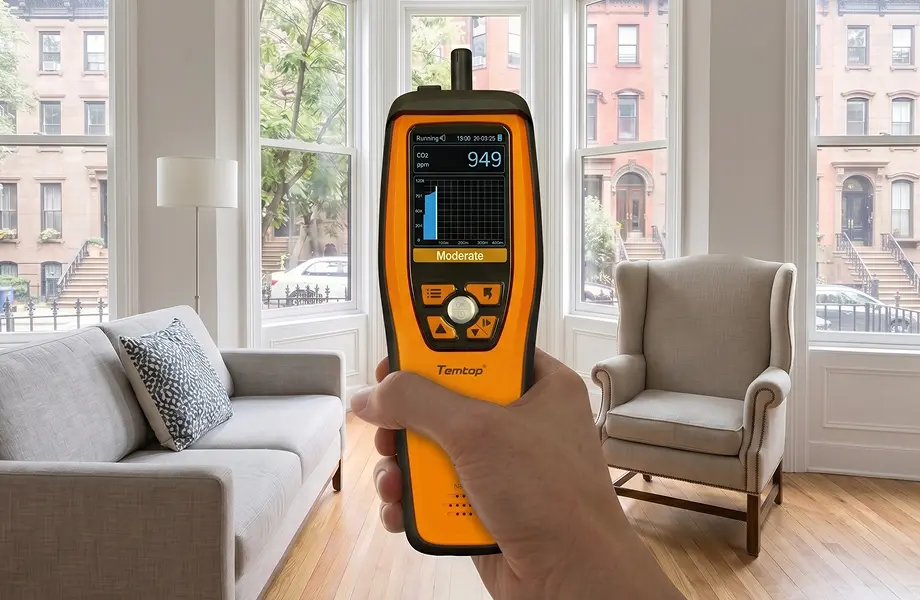


The typical air quality testing cost for a home inspection runs from $79 to $143 per hour in 2026. A standard appointment averages $109 per hour for routine sampling in common rooms and typical indoor concerns.
This guide breaks down what shapes pricing, including scope, sample count, lab fees, and specialty or urgent testing. You will also see a DIY vs. professional comparison, plus practical hiring tips. Keep in mind that testing is diagnostic it produces findings and a report. Any cleanup, repairs, mitigation, or HVAC changes are separate projects with their own costs[1].
How Much Does Air Quality Testing Cost Per Hour
Hourly pricing usually covers the technician's time on site, setup, sampling, and any basic instrument readings taken during the visit. Some providers bill hourly, while many offer flat packages or charge per sample, with lab analysis listed separately.
When you hire a home air quality testing service, your quote may include time for arrival and setup, instrument checks, sample collection, and initial observations. Lab processing and a written report are often itemized, since lab work can be a significant part of the total.

Rates usually change based on the equipment used, certifications, and how many areas are sampled. Ask for an itemized estimate that separates technician time from lab fees and report charges.
To avoid cross-contamination or exposure, follow any prep instructions and let the technician handle sample media and suspect materials. General safety guidance from consumer protection sources supports using appropriate precautions around potentially hazardous substances and equipment[2].
Indoor Air Quality Testing by Type
Air quality testing can be as simple as targeted sampling for one concern, or as broad as a whole-home evaluation that looks at multiple pollutant sources. Costs depend mainly on scope and test type, and results can help you prioritize repairs or decide whether to invest in systems like your HVAC. If you are weighing upgrades, it can also help to compare findings against potential HVAC system investments.
| Type of Service | Cost | Features |
|---|---|---|
Residential Air Quality Testing | $287 - $627 | Single-family home sampling for common concerns, often including some mix of particulates, humidity, CO/COâ_x0082__x0082_, and basic allergen or mold indicators. VOC panels or detailed mold spore analysis are usually add-ons that increase cost. |
Commercial Air Quality Testing | $621 - $2,495 | Larger-scale testing for offices or retail spaces, usually requiring more samples and a tailored plan to meet occupancy concerns. |
HVAC System Air Testing | $249 - $691 | Focused testing of HVAC outputs and ductwork to measure particulates, microbial growth, and system leaks. Specialized tracer gas testing is uncommon in homes and mainly used for complex or large-scale investigations. |
Radon Gas Testing | $149 - $330 | Short- or long-term radon monitoring to assess exposure risk in basements and living spaces; commonly required in real estate transactions. |
Mold Air Testing | $229 - $585 | Air sampling for mold spores and, when ordered, species identification, used when occupants report odors, allergies, or after water intrusion. |
VOC Screening | $259 - $651 | Tests for volatile organic compounds from paints, cleaners, new construction materials, or insulation. Results identify chemical sources. |
Indoor Air Quality Inspection | $290 - $645 | Visual and instrument inspection combining sampling with walkthrough assessment of ventilation, moisture sources, and pollutant pathways. |
Most professional tests include time for sampling plus lab processing. Some readings can be available the same day, while lab-based mold or VOC results often take two to five business days along with a written report.
Mold Air Testing Costs
Mold air testing measures airborne spore levels and can help narrow down whether there is an active indoor source, especially after leaks or when occupants notice odors or symptoms. Typical costs run $229 to $585, with an average of $370.
Pricing usually depends on:
- how many samples are taken (indoor and outdoor comparisons are common),
- what lab analysis is ordered, and
- whether species identification is requested.
Moisture is a key driver of mold growth, so many inspections include moisture readings or a walkthrough focused on damp areas[3].
Air-only testing can miss mold hidden inside walls or under flooring. For that reason, many professionals pair air samples with visual observations and moisture measurements, and may recommend surface or wall-cavity sampling. A broader scope costs more, but it can produce a clearer, more actionable result.
Radon Gas Testing Costs
Radon testing measures radon concentrations over a short or long period, commonly focusing on lower levels of the home. Expect $149 to $330, with an average of $215. Cost drivers include test duration, whether follow-up confirmation is needed, and access to basements or crawlspaces.
Many short-term professional tests run at least 48 hours. Results are often available within a few days, depending on the device and reporting method.
If elevated results lead to mitigation that involves drilling, cutting, or disturbing older building materials, it is important to follow applicable hazardous material rules and safe work practices. Federal asbestos regulations highlight the need for proper handling when asbestos may be present[4].
HVAC System Air Testing Costs
HVAC-focused testing checks airflow, filtration performance, and potential contamination in ductwork and mechanical components. Typical pricing ranges $249 to $691, with an average of $414.
Costs usually increase with:
- system size and number of zones,
- how many vents or registers are sampled, and
- accessibility, including attic or crawlspace runs.
Testing can also uncover issues that affect related services, including average duct cleaning prices. If VOC concerns are tied to recent spray foam work, ventilation guidance is especially relevant during evaluation and follow-up planning[5].
On-site readings for airflow and particulates may be available during the visit. Any lab samples add turnaround time. The report helps you decide whether follow-up work is worth it, but repairs and cleaning are separate from the testing price.
6 Factors That Affect the Air Quality Inspection Cost
Air testing is usually priced around a plan, not just a single reading. Technicians build a sampling approach based on what you want to learn and what the home conditions suggest. If you are coordinating multiple projects, the home services cost guide can help you estimate other related work.
- Sampling Scope: More rooms and more samples increase technician time and lab fees.
- Contaminant Type: Each target requires different tools and lab methods. For example, testing for airborne mold may use spore traps or cultures, which affects the mold air quality test cost.
- Sampling Method: Air sampling, surface swabs, bulk collection, and direct-reading meters vary in complexity. Bulk sampling of suspected asbestos or lead materials should be handled by qualified professionals using proper containment and protective equipment.
- Home Size and Layout: Larger homes, multi-level layouts, and open floor plans often require more sampling points for a representative snapshot.
- Moisture and Recent Water Damage: Leaks, damp materials, or high humidity usually call for added moisture assessment and targeted sampling, since moisture control is closely tied to indoor air problems[6].
- Accessibility and Special Conditions: Attics, crawlspaces, HVAC components, and prior flooding can increase labor and safety requirements. Flood-prone structures may also need special planning around utilities and damage conditions[7].
A good proposal should spell out the number of samples, sample locations, the lab used, expected turnaround time, and what the report includes. Ask whether the written findings will recommend next steps, such as follow-up testing or remediation. Those next steps are typically separate services.
Air Quality Testing Cost by Material
Many tests are selected based on what you suspect is in the air or dust, and different contaminants require different sampling methods and lab techniques. That choice affects both cost and turnaround time, as well as what you might do after you get results.
For chemical concerns, consider VOC air quality testing to identify volatile organic compounds. Material choices can also influence indoor air, and EPA guidance discusses selecting lower-emission options for some insulation and building products[8].
| Item | Cost | Description |
|---|---|---|
Asbestos Air Test | $319 - $751 | Samples target airborne fibers released from old insulation or drywall joint compounds. Useful after renovation or when friable materials are present. Asbestos-related air or dust testing should be coordinated with certified professionals; avoid disturbing suspect materials. |
Lead Air Test | $229 - $551 | Measures airborne lead dust often near renovation zones or old paint. Homeowners use this when children or pregnant occupants are present. Lead testing should be handled by certified pros, and occupants should not sand or scrape suspect paint without proper controls. |
Dust Particulate Test | $159 - $370 | Quantifies settled and airborne dust and particulates. Helpful for allergy mitigation planning and evaluating filtration upgrades. |
Mold Spore Test | $189 - $450 | Identifies common indoor mold spores and relative concentrations. Choose when there is visible growth, odor, or after water damage. |
Formaldehyde Air Test | $239 - $585 | Detects formaldehyde emissions from pressed-wood products and new installations. Testing helps decide ventilation or material replacement. |
Fiber Identification Test | $209 - $478 | Analyzes non-asbestos fibers from insulation, textiles, or composites. Useful when airborne fibers are seen after disturbance. |
Pollen Count | $129 - $313 | Measures outdoor-origin pollen that infiltrates indoor spaces. Homeowners with seasonal allergies use results to improve sealing and filtration. |
Pricing commonly shifts based on the lab method, number of samples, and whether outdoor control samples are included. Specialized analyses, such as chromatography for VOCs or electron microscopy for fibers, require advanced equipment and can increase costs.
On-site conditions matter too. Larger footprints, more rooms, or sampling during active remediation can add labor. Rush processing, chain-of-custody documentation, and equipment rentals may also show up as line items.
Air Quality Testing Cost by Size
The more area you cover, the more sampling locations and lab work are usually required. That is why costs often rise for larger homes or complex layouts.
Size and configuration influence how many instruments are needed and how long the technician is on site. Expanded scopes may also include additional checks for mold, VOCs, particulates, and HVAC performance.
Single-Room Air Quality Test
A focused assessment of one space, such as a bedroom, nursery, or home office. Testing may include particulates, humidity, and a limited set of common VOC checks.
- Cost Range: $179 - $440
- Average Cost: $287
Costs can increase when access is difficult, sampling needs to be repeated, or lab processing is added. Lab-based results often take a few days along with a written report.
Multi-Room or Partial-Home Testing
Testing several rooms or one level can capture differences between spaces, such as kitchens versus bedrooms. It is often used when odors or symptoms are localized, or when part of a home is being renovated.
- Cost Range: $319 - $790
- Average Cost: $498
Each additional room typically adds sample collection time and lab fees. Travel time between sampling points and rush reporting can also affect the total.
Whole-Home Air Quality Assessment
A comprehensive inspection may include living areas, bathrooms, attics, and mechanical spaces to create a broader view of indoor air.
- Cost Range: $430 - $991
- Average Cost: $651
Larger properties may require more instruments, longer on-site work, and broader lab panels. Accessibility, number of HVAC zones, and seasonal conditions can influence the final price. Reports typically outline findings and possible next steps, while remediation remains separate.
HVAC System Testing
Targeted testing of ductwork, vents, and the air handler helps isolate mechanical system sources and evaluate filtration and airflow.
- Cost Range: $269 - $745
- Average Cost: $448
This work may involve ladder access, brief system shutdowns, and specialized tools. The focus is diagnostic testing to help decide whether duct sealing, cleaning, or repairs are needed, not the cleaning or repairs themselves[9].
Commercial-Scale or Large-Property Testing
Larger buildings and multiunit properties often require stricter protocols, more sampling locations, and expanded reporting. Providers offering commercial air quality testing may also coordinate plans around occupancy and documentation needs.
- Cost Range: $932 - $3,886
- Average Cost: $1,832
Costs can rise with square footage, number of zones, documentation requirements, and time-weighted or overnight sampling. Larger projects may be staged across multiple days, which can extend timelines.
Air Quality Testing Cost Per Square Foot
Some contractors quote testing per square foot for larger homes or multi-zone properties, since it ties pricing to sampling density and time on site. Smaller homes are more often priced as a flat package or by the number of rooms or samples.
Per-square-foot pricing can make bids easier to compare, but only if the scope is equally clear. Confirm what is included, such as the number of sample locations, which contaminants are tested, and whether lab fees are part of the rate.
| Service Type | Cost | Details |
|---|---|---|
Indoor Air Quality Testing | $0.16 - $0.48 | Includes general particulate, humidity, and temperature readings; cost varies with number of sample locations and required lab analyses. |
HVAC System Air Quality Inspection | $0.22 - $0.58 | Covers visual inspection, duct testing, and basic filter analysis; complexity of duct runs and attic access raise costs. |
Mold Air Quality Testing | $0.18 - $0.56 | Typically includes some combination of air and surface sampling plus lab identification; hidden moisture sources and multiple rooms increase price. |
Radon Air Quality Testing | $0.08 - $0.21 | Lab-backed radon monitoring or continuous monitors may be used; foundation type and required test duration influence cost. |
VOC Air Quality Testing | $0.19 - $0.58 | Measures volatile organic compounds using sorbent tubes or canisters; number of compound targets and lab turnaround affect price. |
Commercial Air Quality Testing | $0.24 - $0.72 | Designed for larger or multi-zone properties, includes more samples and reporting; building size and regulatory requirements change pricing. |
Sampling density, number of rooms, and how many contaminants are included are the biggest cost drivers in per-square-foot bids. More samples mean more on-site time and more lab fees.
Building tightness and ventilation patterns can affect how pollutants build up and disperse, which may influence test design and whether follow-up diagnostics are recommended[10]. Access challenges, including attics and crawlspaces, can also raise the effective rate.
DIY vs. Professional Air Quality Testing: Cost Comparison
DIY kits are often used as a low-cost screen, while professional testing is usually chosen when you need documentation, clearer interpretation, or a more reliable sampling plan. If you plan a residential air quality test, the comparison below can help you match the option to the decision you are trying to make.

DIY Risks and Limitations
DIY kits can miss intermittent issues, and results depend heavily on correct placement, timing, and handling. A single short-term radon test or a poorly placed mold sample can produce a result that does not reflect typical living conditions.
If you are testing after a flood or major water event, use reentry and safety guidance before spending time in the home or disturbing materials[11].
DIY options are generally best for basic screening. Testing tied to regulated materials, such as asbestos or lead, or complex VOC panels is better handled by certified professionals who can manage collection and documentation properly.
Advantages of Hiring a Professional
Professionals typically use calibrated instruments, multi-point sampling, and lab processing with documented chain-of-custody. They can also interpret results in context, which matters when decisions involve health concerns, property transactions, or expensive repairs.
If mold is found, public health guidance emphasizes proper cleanup practices to reduce exposure and help prevent recurrence[12]. Testing professionals can also recommend what to do next, such as moisture control steps, targeted remediation, or HVAC improvements.
Air Quality Testing Add-Ons and Common Upgrades
Add-ons are optional services or equipment that can expand what you learn from testing, improve indoor comfort, or support longer-term control. They increase the total cost, so it helps to choose upgrades that match the issues your results point to.
| Add-On | Cost | Details |
|---|---|---|
Allergen Treatment | $179 - $615 | Targeted cleaning and product application to reduce common indoor allergens; useful for allergy sufferers or after contamination findings. |
Odor Removal | $199 - $772 | Treatments that neutralize persistent smells using masking agents or ozone-free neutralizers; often paired with cleaning. Avoid ozone generators in occupied homes due to potential health risks. |
UV Air Purifier Installation | $631 - $2,206 | In-duct or stand-alone UV units that reduce microbial growth on coils and in air streams. Equipment should be installed and sized correctly to meet safety and performance guidelines. |
HVAC Filter Upgrade | $84 - $313 | Higher-MERV or HEPA-compatible filters that capture finer particles may reveal the need for duct repairs linked to cost of air duct replacement. |
Dehumidifier Installation | $1,194 - $3,400 | Whole-house or point dehumidifiers to control humidity and inhibit mold growth, often improving comfort and system efficiency. |
Air Sanitization | $289 - $922 | Chemical or fogging sanitization to reduce surface and airborne microbes after remediation or during severe contamination. This is a supplemental step and does not replace source removal or moisture control. |
Post-Remediation Verification | $249 - $675 | Follow-up testing to confirm contaminants are reduced to acceptable levels after treatment or repairs. |
Price differences often come down to equipment quality and installation complexity. Duct condition matters too. Leaky or poorly designed ducts can pull in contaminants and increase energy loss, which may limit the benefit of upgrades[13]. You may also see related recommendations that add cost, such as coil cleaning, which ties into typical service pricing like AC coil cleaning fees.
If you are upgrading HVAC equipment or controls as part of a broader plan, factor that into the overall air quality improvement cost; new equipment often reduces pollutant sources and improves filtration[14].
For odor removal, sanitization, or UV devices, ask what products and methods will be used and how they will be applied. Avoid ozone-based treatments in occupied spaces, and follow product directions carefully to reduce the chance of introducing new indoor air problems.
How to Save on Air Quality Testing
You can often keep costs in check by narrowing the scope to what you actually need, and by making it easy for the technician to collect good samples in one visit.
- Prepare the Home: Clear access to attics, crawlspaces, vents, and mechanical areas so the visit does not run long.
- Combine Services: If you already have an HVAC or moisture inspection planned, ask whether sampling can be coordinated to reduce repeat travel and setup.
- Request a Detailed Air Quality Test Estimate: Ask for a written scope listing sample types, locations, and what the report includes, so you can compare quotes fairly.
- Verify Credentials and Labs: Confirm technician qualifications and which lab is being used, since invalid sampling can mean paying twice.
- Leverage Energy or Weatherization Programs: If you qualify, assistance programs may support improvements that reduce pollutant sources and improve indoor comfort[15].
To compare pricing and scope from multiple providers, reach out to local HVAC contractors through homeyou, then choose the quote that is clearest about samples, lab fees, and report turnaround.
Frequently Asked Questions About Air Quality Testing
Most services include an on-site walkthrough, placement of sampling devices or direct readings, collection of air or surface samples, documentation of conditions, and a written lab-backed report. Some also review HVAC operation and moisture issues. Remediation, cleaning, or repairs are almost always separate services.
A typical visit for a standard home takes one to three hours, depending on size and sample count. Some basic meter readings are available on the spot. Lab-based mold, VOC, or specialty analyses usually take two to five business days, followed by a written report and recommendations.
If symptoms or odors are limited to one area, a single-room or partial-home test can be enough. Whole-home testing is better for long-standing problems, water damage, or when you are buying or selling. Ask the inspector to explain how many sample locations are needed for reliable results.
Extra costs often come from adding more samples than planned, specialty lab panels, rush processing, or return visits when conditions change. Post-remediation verification, detailed moisture mapping, or HVAC-focused testing can also increase the total. Make sure your estimate lists sample counts and lab fees separately.
DIY kits can be useful for basic screening or curiosity checks, especially for a single concern. However, they have limits in accuracy and interpretation. For persistent health symptoms, real estate transactions, water damage, or regulated materials like asbestos and lead, a certified professional is strongly recommended.
Ask about certifications, what contaminants they test for, how many samples are included, which lab they use, and how detailed the report will be. Confirm turnaround time, whether they have any ties to remediation companies, and how they avoid cross-contamination while working in your home.
Not automatically. Basic packages may cover general indicators and a limited set of contaminants. Targeted tests for mold spores, radon, or VOCs are often add-ons. Tell the contractor your specific concerns so they can design a sampling plan and explain exactly which pollutants will be included.
Clear access to basements, attics, and HVAC equipment, and move items away from vents and test areas. Avoid heavy cleaning, painting, or using strong chemicals just before testing. For radon or certain VOC tests, follow any instructions about keeping windows closed and HVAC operation before the visit.
References
[1] U.S. Department of Energy, "Principles of Heating and Cooling", https://energy.gov/energysaver/principles-heating-and-cooling.
[2] U.S. Consumer Product Safety Commission, "The Inside Story: A Guide to Indoor Air Quality",https://www.cpsc.gov/Safety-Education/Safety-Guides/Home/The-Inside-Story-A-Guide-to-Indoor-Air-Quality.
[3] U.S. Environmental Protection Agency, "A Brief Guide to Mold, Moisture and Your Home", https://epa.gov/mold/brief-guide-mold-moisture-and-your-home.
[4] U.S. Environmental Protection Agency, "Overview of the Asbestos National Emission Standards for Hazardous Air Pollutants NESHAP", https://www.epa.gov/asbestos/overview-asbestos-national-emission-standards-hazardous-air-pollutants-neshap.
[5] U.S. Environmental Protection Agency, "Ventilation Guidance to Promote the Safe Use of Spray Polyurethane Foam (SPF) Insulation, Incluyendo La Versión De Español", https://epa.gov/saferchoice/ventilation-guidance-promote-safe-use-spray-polyurethane-foam-spf-insulation-incluyendo.
[6] U.S. Environmental Protection Agency, "Moisture Control Guidance for Building Design, Construction and Maintenance", https://www.epa.gov/sites/default/files/2014-08/documents/moisture-control.pdf.
[7] Federal Emergency Management Agency, National Flood Insurance Program, "Protecting Building Utility Systems From Flood Damage", https://agents.floodsmart.gov/sites/default/files/media/document/2025-07/fema%5Fnfip-p-348-protecting-building-utility-systems-from-flood-damage-2017.pdf.
[8] U.S. Environmental Protection Agency, "Identifying Greener Insulation", https://epa.gov/greenerproducts/identifying-greener-insulation.
[9] U.S. Department of Energy, "Heat Distribution Systems", https://energy.gov/energysaver/heat-distribution-systems.
[10] U.S. Department of Energy, "Guide to Home Insulation", https://energy.gov/sites/prod/files/guide\_to\_home\_insulation.pdf.
[11] Centers for Disease Control and Prevention, "Safety Guidelines Reentering Your Flooded Home", https://www.cdc.gov/floods/safety/reentering-your-flooded-home-safety.html.
[12] "Mold Clean Up Guidelines and Recommendations", Centers for Disease Control and Prevention, https://cdc.gov/mold-health/about/clean-up.html.
[13] U.S. Department of Energy, "Minimizing Energy Losses in Ducts", https://energy.gov/energysaver/minimizing-energy-losses-ducts.
[14] ENERGY STAR, "High-Efficiency Heating and Cooling", https://energystar.gov/newhomes/features-benefits/heating-cooling.
[15] "Home Weatherization and Energy Efficiency Assistance", USAGov, https://usa.gov/weatherization-energy-programs.