

In 2026, dry well installation cost typically falls between $1,846 and $4,582, with many homeowners landing near $2,968 for a standard residential setup.
This guide walks through labor, materials, site prep, permits, and common upgrades. You will also see DIY versus professional cost comparisons, plus practical hiring tips that can help you avoid drainage problems and expensive rework.
Emergency Dry Well Installation Costs
If a dry well collapses, backs up, or fails during a storm, you may need same-day help to reduce the risk of basement water, yard flooding, or washouts. Emergency crews often cost more because they may be working overtime, mobilizing equipment quickly, and dealing with limited daylight or poor weather.

Emergency pricing reflects more than speed. A full emergency dry well installation often runs $2,624 to $5,984, while a same-day repair typically costs $682 to $2,364, with added line items for travel, hauling equipment, and sourcing aggregate or liners on short notice, similar to after-hours responses for other drainage and plumbing issues like clogged drains costs. Coordinating any emergency fix with your broader landscaping and drainage plan can also help prevent repeat problems[1].
Addressing standing water quickly can help limit moisture conditions that contribute to mold issues inside the home, especially when water threatens basements or crawlspaces[2].
Cost to Install a Dry Well by Type
A dry well project is usually made up of several smaller services, such as inspection, excavation, pipe work, and backfill. Each step affects the total. Planning placement with basic design tools can also help you coordinate drainage with other landscaping project estimates so the system works with the yard layout, not against it[3].
| Type of Service | Cost | Features |
|---|---|---|
Inspect Dry Well Location | $168 - $442 | A site visit to evaluate soil, slope, and zoning requirements; informs sizing and placement. |
Excavate Dry Well Area | $742 - $1,864 | Trenching or hole digging to create the dry well cavity and any trenches, including debris removal and disposal. |
Build Gravel Drainage Base | $318 - $698 | Laying a compacted gravel bed that supports filtration and promotes infiltration. |
Install Drainage Pipe | $528 - $1,486 | Connecting perforated pipe to the dry well or from drains to direct runoff. |
Connect Downspout to Dry Well | $412 - $1,124 | Adapting gutter downspouts into underground piping that feeds the dry well. |
Install Dry Well | $1,846 - $4,582 | Placing and backfilling the dry well unit, which may be prefab or custom stone. |
Clean Dry Well | $284 - $682 | Removing sediment and flushing the system to restore capacity and flow. |
Install Dry Well Costs
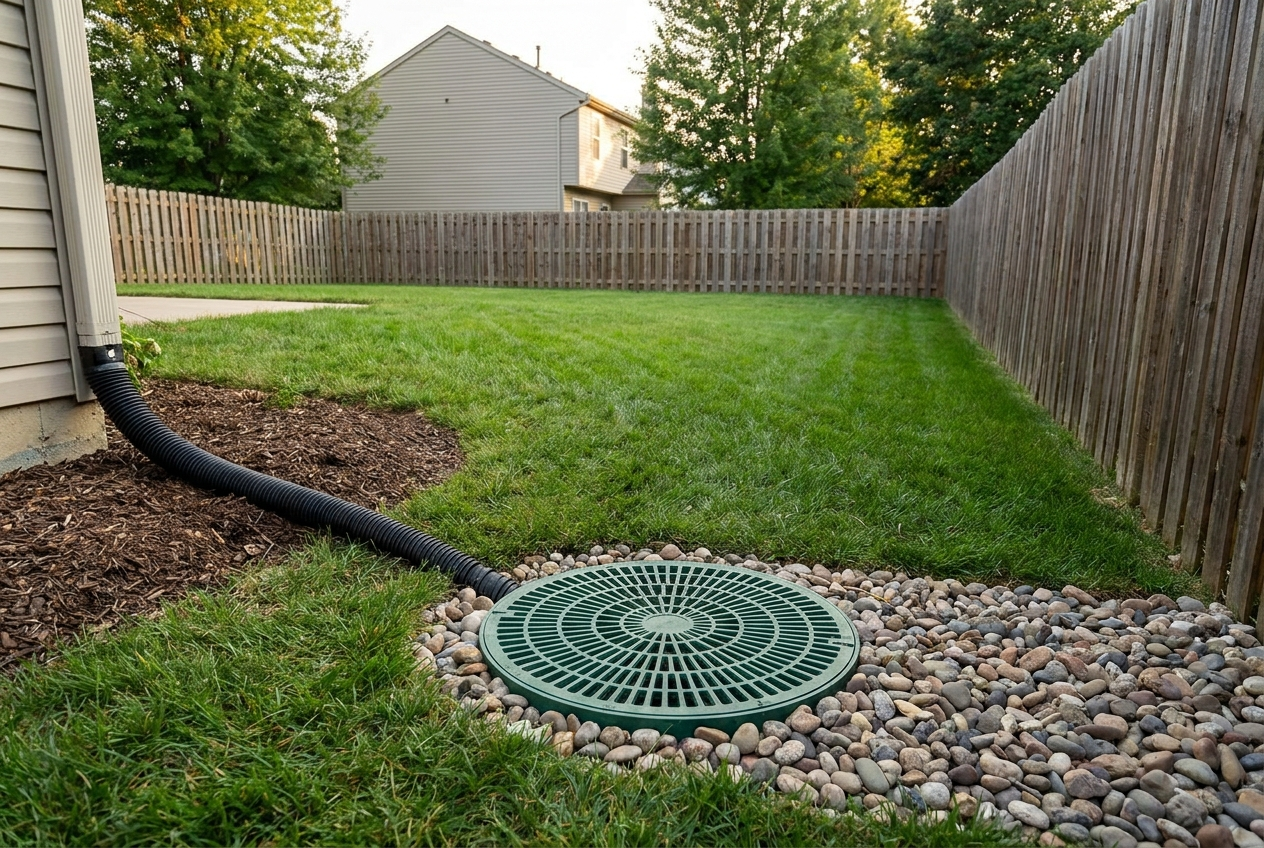
This line item covers setting the dry well unit in place, backfilling, and tying in inlet piping when needed. Many installations fall in the $1,846 to $4,582 range, with an average around $2,968. The final price is often driven by the unit type, permit requirements, and how easily equipment can access the location.
Excavate Dry Well Area Costs
Excavation includes digging the cavity for the dry well and any connecting trenches, plus hauling or disposing of spoil. Typical pricing runs $742 to $1,864, averaging $1,186. Hard digging conditions, such as compacted or low-permeability soils, can mean a larger pit and more material, which can push costs higher.
Install Drainage Pipe Costs
This covers materials and labor to run pipe that carries water into the dry well. Costs commonly range from $528 to $1,486, with an average near $914. Pipe length, trenching depth, and how much landscape restoration is needed are frequent cost drivers.
Connect Downspout to Dry Well Costs
Routing downspouts into an underground line helps keep concentrated runoff away from the foundation and reduces erosion. This work often falls between $412 and $1,124, averaging $688. The scope grows with multiple downspouts, longer runs, and more complex routing around patios, walks, or planting beds.
Dry Well Installation Cost by Material
Material choice affects installation effort, durability, and maintenance. It can also change the amount of excavation and site prep needed, so it is worth comparing performance and upkeep expectations before you commit.
Below is a quick comparison of common dry well materials.
| Item | Cost | Description |
|---|---|---|
Plastic Chamber | $1,542 - $3,628 | Modular chambers snap together for easy installation. They are lightweight, space-efficient, and work well where excavation depth is limited. |
Concrete Dry Well | $2,468 - $5,486 | Precast concrete units provide high strength and long service life. They resist deformation and suit heavy-traffic or compacted soils. |
Prefabricated Dry Well | $1,764 - $4,024 | Factory-made tanks arrive ready to set and reduce on-site labor. They offer predictable capacity and quicker installation. |
Gravel Dry Well | $1,428 - $3,486 | Excavated pit filled with stone plus inlet piping; often wrapped in filter fabric or paired with a small distribution structure to reduce clogging. Many use pea gravel; compare pea gravel prices. |
Polyethylene Tank | $1,668 - $3,846 | Rotationally molded tanks are corrosion-resistant and lightweight. They are suitable for residential sites where chemical resistance or ease of handling matters. |
Corrugated Pipe Dry Well | $1,386 - $3,284 | Large-diameter corrugated pipe sections create a void for water storage. They are flexible, economical, and good for irregular shapes. |
Reinforced Dry Well | $2,684 - $5,864 | Reinforced concrete or composite units increase structural capability. Choose this when soil loads or surface traffic demand extra strength. |
Material pricing is closely tied to excavation requirements, site access, and whether special handling equipment is needed. Features like tight side yards, deep installations, or the need to work around utilities can add labor time and increase overall costs.
For long-term value, focus on durability, maintenance needs, and how well the material supports good stormwater practices. More durable, lower-maintenance components can reduce future repairs and support sustainable landscape construction approaches[4].
Dry Well Installation Cost By Size
Dry well size and configuration influence cost because larger systems usually require more excavation, more aggregate, and longer pipe runs. Site access and soil conditions also shape the scope, especially in areas with challenging ground conditions or a high water table[5].
Single Dry Well for One Downspout
This setup captures runoff from one downspout, often near a corner of the home or along one side of the yard. Many are compact enough for a simple layout and a single inlet connection.
- Cost Range: $1,648 - $3,924
- Average Cost: $2,586
Costs can rise if digging reveals rock, hardpan, or difficult access that calls for machinery. The dry well style also matters, such as a precast unit versus a gravel-only basin, along with any permit requirements and landscape repair afterward.
Multiple Dry Wells for Large Yards
Larger properties or multiple runoff sources may call for two or more wells to spread infiltration and reduce pooling. Placement depends on slope, available space, and how much storage is needed.
- Cost Range: $3,628 - $8,142
- Average Cost: $5,486
Multiple excavations and longer piping runs usually increase labor and coordination. Some layouts also involve conveyance features, and contractors may weigh alternatives alongside culvert installation charges when balancing flow routing and infiltration. Yard restoration and access can also move the price up or down.
Dry Well Sized for Complete Downspout System
These systems are designed to take runoff from several downspouts, commonly on one side of the house. They often include distribution piping to spread inflow and reduce stress at a single entry point.
- Cost Range: $2,486 - $5,428
- Average Cost: $3,682
More connections and longer laterals add complexity. Soil permeability influences required basin size, and deeper work can add labor and potential dewatering steps when groundwater is shallow.
Dry Well for Yard Drainage Problems
When a yard stays saturated or water consistently collects in low areas, a larger basin, or multiple basins, may be needed. Placement usually targets natural collection points or areas where grading funnels runoff.
- Cost Range: $2,864 - $6,488
- Average Cost: $4,326
Pricing depends on the volume of water being managed, the number of basins, and whether additional drainage components are required. Tree roots, tight access, and restoring turf or hardscape can also add to the total.
6 Factors That Affect the Dry Well Cost
Dry well pricing in 2026 comes down to site conditions and system design choices. These are the main topics you should expect to cover when you meet with a contractor or inspector.
- Site Drainage and Runoff Risk: Higher runoff volumes and faster flow typically require larger capacity and, in some cases, added steps to manage sediment and pollutants before water enters the system[6].
- Soil Permeability: Sandy soils usually absorb water faster, which can reduce system size. Clay, compacted soils, or slow-draining sites often need more void space, deeper excavation, or engineered approaches.
- Groundwater Depth and Floodplain Status: High groundwater or floodplain constraints can trigger stricter setbacks, vertical separation requirements, or design limitations. In some cases, contractors may recommend an alternate stormwater approach.
- Required Capacity and Design Complexity: A basic residential basin costs less than multi-chamber layouts with pretreatment, inspection ports, and overflow routing.
- Accessibility and Excavation Difficulty: Tight access, steep slopes, and limited equipment staging can increase labor time and equipment costs.
- Proximity to Trees and Underground Utilities: Roots can complicate excavation and affect long-term performance. Avoiding buried utilities increases planning and safe-digging needs[7].
Local rules often set minimum distances from foundations, property lines, drinking water wells, and septic systems. Those setbacks can limit placement and increase pipe runs, which affects overall dry well cost.
When you compare quotes, look for clear notes on drain sizing, soil testing, and permit fees so you can accurately evaluate the cost to install a dry well. For related budgeting, the project cost estimates directory covers other services homeowners often schedule alongside drainage work.
Dry Well Installation Repair vs. Replacement Costs
Replacement removes the old system and installs a new one. Repair focuses on specific problems, such as clogged components or localized failures, without rebuilding the full system. The better option depends on remaining service life, the cause of the failure, and how disruptive the work will be[8].
| Option | Cost | Considerations |
|---|---|---|
Replace | $2,488 - $6,128 | Full replacement restores system life and reduces future failures, but has higher upfront cost and more disruption. Best for aged or severely damaged systems. |
Repair | $486 - $1,824 | Targeted repairs are less expensive and quicker, ideal for minor or isolated issues, but may have shorter remaining life and need more work later. |
When to Choose Replacement
Replacement is often the better fit when the dry well is old, fails repeatedly, or has major structural issues. If repair attempts keep returning, rebuilding can be more cost-effective over time. Some homeowners use the general guideline of replacing when repair costs approach half the replacement cost, but dry wells also depend heavily on siting, soil conditions, groundwater, and whether the original design is the underlying problem.
When to Choose Repair
Repair is a practical choice for newer systems, isolated clogs or damage, or situations where most of the system is still performing well. It can also make sense when budget is tight and the fix is likely to restore function without repeated follow-up work.
Return on Investment for Dry Well Installation
A dry well can help reduce the likelihood of water-related damage and preserve yard usability, both of which can influence how homeowners view value and payback in 2026. Returns are also shaped by local buyer expectations and how common drainage problems are in your area.
- Material Quality and Durability: Higher-grade components typically last longer and may reduce future repair needs.
- Professional Installation: Better evaluation, grading, and compaction can reduce failure risk, which supports long-term value.
- Market Demand: In areas where drainage problems are common, buyers may place more value on effective runoff management.
- Maintenance Requirements: Systems designed for simpler inspection and cleaning tend to stay functional longer.
- Curb Appeal and Landscape Protection: Preserving established landscaping can support property value, and trees are often associated with higher residential values[9].
| Service | Estimated ROI | Details |
|---|---|---|
Basic Repair or Small-Scale Dry Well | 40-55% | Fixes localized problems with modest cost and moderate resale impact; lower durability raises long-term costs. |
Standard New Installation | 55-70% | Properly sized system for typical yard drainage; balances cost, longevity, and buyer appeal. |
Premium Upgrade With Larger Capacity | 65-80% | Oversized or modular systems reduce risk in heavy-rain areas and have stronger resale value for buyers in flood-prone markets. |
Landscape-Integrated Installation | 60-75% | Blends function with aesthetics, protects landscaping and mature trees, and appeals to buyers who value yard usability. |
Treat ROI figures as directional, not guaranteed. Much of the value can come from avoiding water damage and protecting finished spaces, and appraisals do not always itemize drainage improvements separately. Returns vary by market, home value, and system design.
DIY vs. Professional Dry Well Installation Costs
DIY can reduce labor costs, but it also increases the chance of mistakes that lead to poor drainage or rework. A full DIY installation often runs $286 to $1,184, compared with $1,928 to $4,664 for professional service. Below is a cost comparison for common dry well tasks.

DIY Risks and Professional Benefits
Excavation can expose buried utilities and disrupt nearby landscaping. Sizing, slope, and backfill compaction matter, and mistakes can lead to standing water, clogging, or collapse. Rocky or clay soils can turn a weekend job into a longer, more expensive project. DIY work may also lack inspection sign-off or warranty coverage, which can increase the cost of fixing problems later. Always contact your local utility locating service (such as 811 in the U.S.) and check permit requirements before any excavation.
Professionals bring equipment, experience, and familiarity with permits and local requirements. They can evaluate runoff needs, set proper grades, compact backfill correctly, and reduce the risk of utility damage. Some professionals hold industry-recognized credentials that reflect training and standards[10]. Many also provide workmanship warranties and coordinate inspections when required.
Add-Ons for Dry Well Installation
Add-ons improve access, performance, and integration with the rest of your drainage plan. They add to the project total, but can also reduce maintenance needs or help manage heavy runoff more reliably.
| Add-On | Cost | Details |
|---|---|---|
Overflow Connection | $386 - $1,126 | Routes excess water from the dry well to a discharge point (storm line, swale, or daylight outlet) once the well is full. Gutters and downspouts connect to the inlet side, not directly to the overflow. |
Filter Fabric Wrap | $126 - $368 | A geotextile wrap that reduces sediment entry and prolongs system life, especially on sites with fine soils. |
Sump Pump Integration | $1,186 - $3,124 | Adds an automatic pump to move excess water away when infiltration is slow or groundwater rises. |
Rain Garden Integration | $862 - $2,386 | Combines planting beds with the dry well to improve filtration, manage runoff, and enhance curb appeal. |
Access Riser | $182 - $514 | A removable riser or lid for easy inspection and maintenance without full excavation. |
Vegetative Cover | $244 - $696 | Topsoil and plantings to stabilize soil, reduce erosion, and conceal the inlet area. |
Backflow Preventer | $328 - $918 | Prevents reverse flow into the dry well from sewer or storm lines, which may be required by code when tying into those systems. |
Persistent moisture near foundations can also contribute to pest concerns, so some homeowners pair drainage work with a termite inspection[11]. Add-on pricing depends on materials, access, and how much added excavation or plumbing is required. Comparing the total scope can also clarify whether a dry well upgrade or the investment in French drains fits your property better.
Any overflow routing or connection to municipal storm or combined sewer systems should follow local requirements, including backflow prevention and approved discharge locations.
Dry Well Installation Cost Per Hour
Some contractors bill hourly for dry well work, especially for small repairs, troubleshooting, or projects where site conditions are still unknown. Hourly rates typically run $98 to $176, covering labor time, equipment use, and related site tasks.
Rates often track closer to excavation, drainage, or plumbing-adjacent labor markets than to basic groundskeeping roles[12]. In some areas, this means hourly charges can run higher than typical yard-care work.

Hourly costs can climb with poor access, rocky soil, or heavy equipment needs. Before work begins, ask how hours are tracked, whether travel or cleanup time is billed, and whether the contractor can offer a not-to-exceed cap for uncertain conditions.
Seasonal Effects on Dry Well Installation Cost
Season can affect both price and scheduling in 2026. Weather, soil conditions, and contractor demand shift throughout the year, and local rainfall patterns can also change how quickly crews can work.
| Season | Cost | Description |
|---|---|---|
Spring | $1,864 - $4,622 | Warmer soils and spring runoff make scheduling busy in some areas. Expect moderate to high demand and occasional weather-related delays. |
Summer | $1,946 - $4,788 | Peak construction season in many regions, higher labor rates, and faster completion when weather is stable. Holidays can tighten schedules. |
Autumn | $1,768 - $4,396 | Cooler temperatures and lower storm frequency often improve availability; contractors may offer more flexible start dates. |
Winter | $1,984 - $4,982 | Frozen ground or heavy precipitation can limit work in cold climates, increasing prep costs or causing postponements. |
Off Season | $1,688 - $4,218 | Contractors can be easier to schedule and may offer discounts, but weather constraints may extend timelines. |
Peak Demand: Busy periods can raise labor costs because crews book out, and some contractors price higher for fast starts.
Weather Limitations: Rain, frozen ground, and saturated soils can slow excavation, increase erosion control needs, and add restoration work. In some communities, permit offices or HOAs may also limit excavation during freeze conditions or very wet periods.
Labor Availability and Regional Differences: Coastal, mountain, and northern climates have different workable windows. Some urban markets stay busy longer due to consistent demand.
Off-Season Advantages: Slower months can be easier to schedule and sometimes less expensive, as long as local weather supports safe installation. If you plan to re-landscape after drainage work, coordinating timing with planting windows can improve long-term results[13].
How Much Does a Dry Well Cost by Region
Location affects cost because soil, labor markets, permitting, and material availability vary across the U.S. The ranges below show how pricing can shift by region.
| Region | Cost | Description |
|---|---|---|
Northeast | $2,148 - $4,986 | Higher labor and permitting costs in dense urban areas, plus rocky soil in some states that increases excavation time. |
Midwest | $1,726 - $4,368 | More expansive soils and seasonal freeze-thaw cycles can require deeper or larger systems, affecting material and labor needs. |
South | $1,642 - $4,146 | Generally softer soils lower excavation costs, but high water tables in some areas can require specialized drainage solutions. |
West | $1,988 - $4,864 | Variable terrain and higher material transport costs in remote areas raise prices, with arid zones needing different designs. |
Local permitting timelines, inspection availability, and contractor demand can still shift total costs significantly. When you request bids, confirm whether site prep, hauling, restoration, and final inspections are included. Local plumbing and stormwater rules can also affect sizing, setbacks, and whether engineered plans are required[14].
How to Save on Dry Well Installation
You can often reduce costs by making the job easier to execute and by tightening the scope before work begins. These steps help contractors price accurately and help you avoid change orders.
- Prepare The Site: Clear small debris, mark visible utility locations, and provide a clear access path so crews spend less time on basic setup.
- Get Itemized Onsite Estimates: Ask for multiple, itemized on site bids so you can compare the same scope and spot add-ons you may not need[15].
- Bundle Related Work: Combine grading, downspout rerouting, or landscaping to reduce repeat mobilization and simplify permits and inspections.
- Choose Appropriate Materials And Sizing: Have the contractor evaluate runoff and soil conditions so the system is sized correctly and built with durable components.
- Agree On Warranty And Payment Terms: Get milestones, inspection checkpoints, and warranty terms in writing, and tie final payment to completion and sign-off.
Compare estimates for dry well installation by talking to with local home improvement contractors, so you can hire confidently and protect your property's drainage for the long term.
Frequently Asked Questions About Dry Well Installation
A dry well is an underground structure that collects runoff from downspouts or yard drains and lets it slowly soak into the soil. Homes with frequent puddling, soggy spots, or water near the foundation often benefit from a dry well as part of an overall drainage plan.
Most installations include a site visit, layout and sizing, utility locating, excavation, gravel base, setting the dry well or tank, connecting pipes or downspouts, backfilling, and basic surface restoration. Some contractors also handle permits, inspections, and optional add-ons like overflow lines or access risers.
A straightforward residential dry well often takes one to two working days once permits and materials are ready. Complex sites, long pipe runs, rock removal, or weather delays can extend work to several days. Permit review and scheduling usually add extra time before the crew actually starts digging.
Good options include plastic chambers, polyethylene or prefabricated tanks, and precast or reinforced concrete units in high-load areas. A properly graded gravel base and filter fabric are also important. The best choice depends on soil type, groundwater level, traffic above the area, and access for equipment.
Extra costs can come from hitting rock or roots, relocating unmarked utilities, needing a larger system than planned, or adding erosion control and landscape repair. Some homeowners also face permit or inspection fees, dewatering in wet soils, or upgrading to overflow piping to meet local rules.
Repair makes sense for newer systems with localized clogs or minor damage. Replacement is usually better when the dry well is undersized, structurally failing, poorly located, or causing repeated backups. Ask a pro to evaluate soil conditions, groundwater level, and the original design before deciding.
Ask about their experience with drainage projects, proof of license and insurance, what size and type of dry well they recommend, how they determined that sizing, what is included in the quote, permit handling, warranty terms, and how they will protect existing landscaping and utilities during excavation.
Keep gutters and inlet grates clean, direct sediment-heavy flows through small catch basins, and have the dry well inspected and cleaned if you notice slower drainage. Avoid driving heavy vehicles over the area unless it was designed for traffic, and watch for new low spots or persistent surface water.
References
[1] United States Environmental Protection Agency, "Resource Conserving Landscaping", https://archive.epa.gov/.
[2] U.S. Environmental Protection Agency, "A Brief Guide to Mold, Moisture and Your Home", https://epa.gov/mold/brief-guide-mold-moisture-and-your-home.
[3] Hansen, Gail, et al, "Landscape Design Software: Evaluation and Recommendations for Homeowners", EDIS, https://doi.org/10.32473/edis-ep526-2015.
[4] Sorvig, Kim, and J. William Thompson, "Sustainable Landscape Construction", https://doi.org/10.5822/978-1-61091-811-4.
[5] A. Eastwood, David, "RECOMMENDED GUIDELINES FOR DESIGN AND CONSTRUCTION OF INGROUND SWIMMING POOLS IN HOUSTON, TEXAS", GEOTECH ENGINEERING and TESTING, https://foundationperformance.org/pastpresentations/EastwoodPresPaper-12Sep07.pdf.
[6] "Research Report Impact of Ant Control Technologies on Insecticide Runoff and Efficacy", NPMA PestWorld, https://npmapestworld.org/content-pages/technical-resources/pmf-research-reports/research-report-impact-of-ant-control-technologies-on-insecticide-runoff-and-efficacy.
[7] O'Brien, Patrick, et al, "Performance Standards for Municipal Tree Maintenance", Arboriculture & Urban Forestry, https://doi.org/10.48044/jauf.1992.059.
[8] U.S. Department of Housing and Urban Development, "The Rehab Guide Foundations", https://huduser.gov/publications/pdf/foundations.pdf.
[9] Anderson, L. M. and H. K. Cordell, "Residential Property Values Improved by Landscaping With Trees", Southern Journal of Applied Forestry, https://doi.org/10.1093/sjaf/9.3.162.
[10] International Society of Arboriculture, "ISA Certified Arborist", https://isa-arbor.com/credentials/types-of-credentials/isa-certified-arborist.
[11] PestWorld, "What Is a Termite Inspection and Why Do You Need One", https://pestworld.org/news-hub/pest-articles/what-is-a-termite-inspection.
[12] Bureau of Labor Statistics, "Landscaping and Groundskeeping Workers", https://bls.gov/oes/2022/may/oes373011.htm.
[13] Brancalion, Pedro H. S. and Karen D. Holl, "Guidance for Successful Tree Planting Initiatives", Journal of Applied Ecology, https://doi.org/10.1111/1365-2664.13725.
[14] International Code Council, "International Plumbing Code (IPC) Home Page", ICC, https://iccsafe.org/content/international-plumbing-code-ipc-home-page/.
[15] Abbott, Richard, and Kenneth Miller, "Estimating and Pricing Tree Care Jobs", Arboriculture & Urban Forestry, https://doi.org/10.48044/jauf.1987.025.