

In 2026, the typical sprinkler installation cost ranges from $2,875 to $6,845, with an average around $4,535.
Below, you will find what drives price differences, such as system size, materials, zoning, and labor, plus ways to compare options and quotes so you can hire with fewer surprises.
Cost to Install a Sprinkler System Per Hour
Hourly pricing is common for short installs, partial tie-ins, and repairs where the scope is still being diagnosed. Rates typically run $88 - $132 per hour, and the final total depends on crew size, troubleshooting time, and site access.
Full new-system installs are more often quoted as a flat project price or per-square-foot bid. Hourly billing is usually reserved for smaller add-ons, leak hunts, and adjustments. Even routine upkeep like this supports the kind of healthy, established landscaping that can factor into home value[1].

Hourly charges typically cover crew labor, basic tools, and truck time. Valves, piping, and specialty parts are often billed separately. Labor is usually the largest share of an hourly invoice, reflecting typical wage levels for grounds and landscaping workers[2].
Before work begins, ask whether the job will be billed hourly, as a flat bid, or as a mix of both. Also ask what triggers a change in pricing, such as unexpected leaks or hard digging.
For a directory of costs across other services and project types, explore the home services pricing page to compare hourly and flat-rate options.
Irrigation System Installation Cost by Type
Sprinkler work can range from a simple head replacement to a full underground system. Your price depends on scope, system complexity, yard access, soil conditions, and local labor.
Many homeowners bundle installation with other landscaping upgrade costs. If you are doing both, ask how the contractor accounts for timing and site conditions, and request the underground sprinkler installation cost as a clearly separated line item so you can compare proposals.
| Type of Service | Cost | Features |
|---|---|---|
Install Sprinkler System | $2,875 - $6,845 | Full underground layout with zones, piping, heads, and a basic controller; includes trenching and connection to the water supply. |
Replace Sprinkler Head | $92 - $285 | Swap or upgrade worn or damaged heads to restore spray pattern and coverage, usually a quick, low-disruption job. |
Repair Sprinkler Pipe | $185 - $925 | Fix leaks, broken lines, or damaged fittings; may require localized excavation or trenching to reach the break. |
Install Sprinkler Control Timer | $235 - $745 | Add a new timer or basic controller to automate watering schedules; smart controllers add features and cost. |
Upgrade Sprinkler Controller | $285 - $985 | Replace older controllers with advanced or weather-based models for better water efficiency and remote scheduling. |
Repair Sprinkler Valve | $145 - $585 | Diagnose and fix valves that do not open or close properly; may involve solenoid replacement or debris removal. |
Winterize Sprinkler System | $88 - $238 | Blow out lines or drain the system to help prevent freeze damage; seasonal service that protects pipes and valves. |
Install Sprinkler System Costs
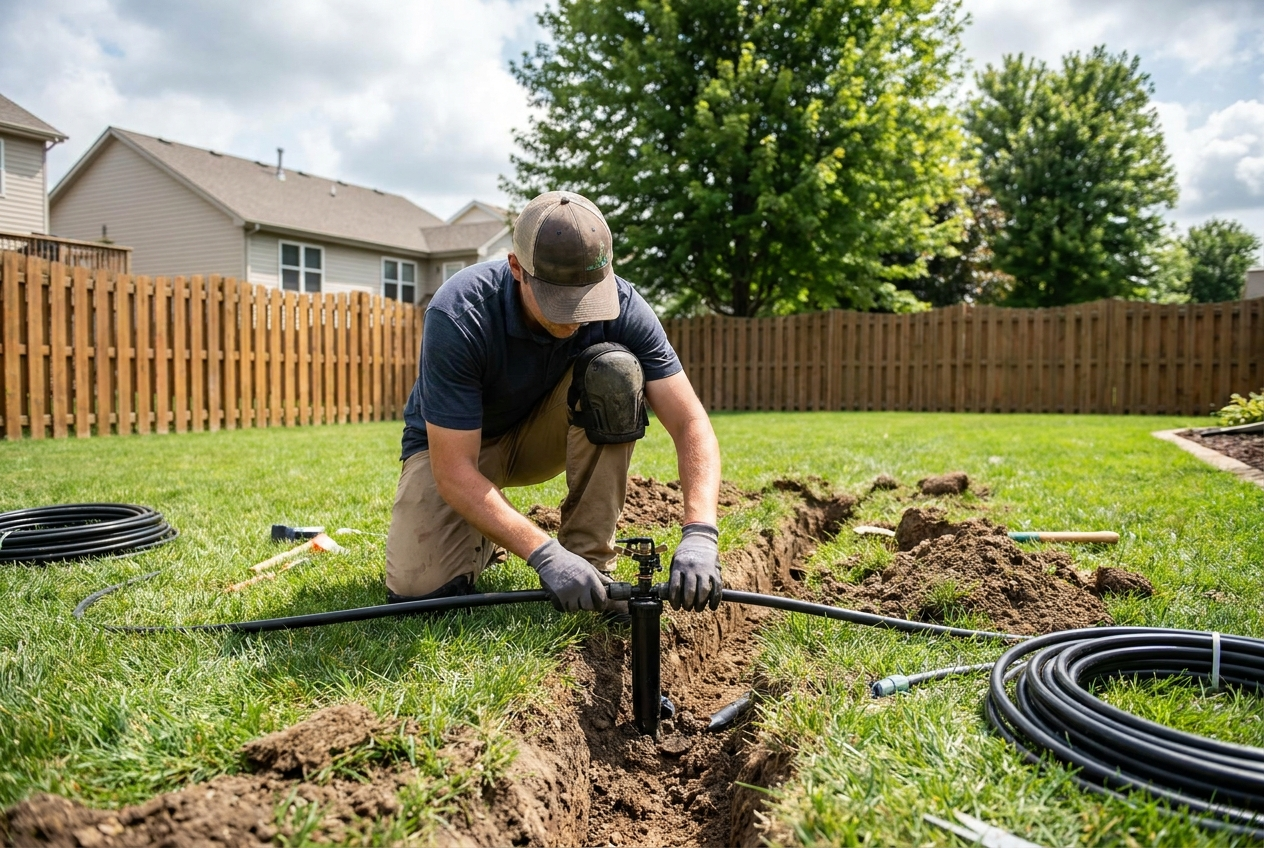
This covers installing a new underground layout, typically when building a lawn, renovating landscaping, or replacing an aging system. Typical pricing runs $2,875 - $6,845, with an average of $4,535.
The biggest cost drivers include:
- Yard size and number of zones
- Soil type and trenching depth
- Head types and spacing
- Permits and inspection requirements
- Any electrical work, meter changes, or upgrades
If work is near mature trees, some homeowners choose to consult an arborist to help protect root systems[3].
Most new systems also need a code-compliant backflow preventer and often a dedicated irrigation shutoff. How the system ties into your water service, such as tapping the main line after the meter, adding an irrigation meter, or connecting to a well, may require a licensed plumber and city or utility inspection. That can add cost and extend scheduling.
Repair Sprinkler Pipe Costs
Repairing broken or leaking underground lines is common after shifting soil, lawn work, or normal wear. Expect $185 - $925, with an average of $415.
Pricing depends on pipe depth, accessibility, pipe material, and how much digging is required. If a leak has been soaking the yard for a while, you may also see knock-on costs for turf recovery or increased lawn service prices.
Install Sprinkler Control Timer Costs
A controller automates watering and can reduce waste when it is programmed correctly. Installation typically costs $235 - $745, with an average of $425.
Costs rise with smart features, higher station counts, tricky mounting locations, and any required low-voltage wiring or weather sensors.
6 Factors That Affect the Sprinkler System Cost
A sprinkler estimate is usually built from a handful of practical variables that affect labor time, materials, and inspections. Here are six that tend to move the price the most.
- Property Size and Layout: Larger yards and irregular shapes need longer pipe runs and more heads, which increases labor and materials. If your plan includes major grading or re-leveling, include related prep costs, such as topsoil delivery costs.
- Zone Count and Complexity: More zones mean more valves, manifold work, and programming. Landscapes with mixed plantings and separated areas take longer to design and install, which raises the cost to install sprinkler system.
- Water Source and Pressure: City water, well systems, and shared meters can change what equipment is needed. Low pressure can require regulators or other specialty components, which increases parts and labor.
- Soil Type and Terrain: Rocky soil, heavy clay, or steep slopes slow trenching and can require extra measures. In runoff-prone areas, installers may recommend drip zones, shorter run times, or drainage adjustments, especially where chemical runoff is a concern[4].
- Permit Requirements and Local Codes: Many municipalities require permits, backflow prevention, and inspections, and installations must comply with local codes and standards[5]. These requirements affect design time and scheduling.
- Additional Features and Accessories: Smart controllers, rain sensors, freeze protection, drip tie-ins, and premium nozzles add to the upfront price. They can also reduce water use and maintenance over time.
Sprinkler Installation Cost by Material
Pipe and fitting choices affect initial price, longevity, and how often repairs are needed. When you compare bids, look for clarity on what materials are included and where they will be used.
Design decisions, including plant selection and water-conserving landscaping, can also change zone layout and run times, which affects material quantities and overall cost[6]. Most residential systems use PVC or polyethylene for buried piping, with metal parts used mainly at valves, risers, manifolds, and specific connection points.
| Item | Cost | Description |
|---|---|---|
PVC Sprinkler | $3,185 - $5,945 | Common plastic piping used for underground mains and laterals. Lower cost and easy to join for many residential sites. |
Polyethylene Sprinkler | $3,415 - $6,295 | Flexible tubing often used for drip lines and short runs. Resistant to cracking and helpful for irregular layouts and winterizing. |
Copper Sprinkler | $4,385 - $8,245 | Durable metal with good longevity and a neat appearance in exposed areas. Often used for short exposed sections or tie-ins. |
Stainless Steel Sprinkler | $4,585 - $8,595 | Highly corrosion-resistant and strong, commonly used for certain heads, risers, or fittings in harsher environments. |
Brass Sprinkler | $4,015 - $7,380 | Often used for heavy-duty fittings, valves, and some heads. Common at key connection points paired with plastic piping. |
Galvanized Steel Sprinkler | $4,215 - $8,065 | Coated steel that is less common in new residential underground irrigation. More often found in older systems or limited exposed sections. |
Metal Sprinkler | $3,895 - $7,195 | General category for metal valves, risers, and specialty fittings paired with PVC or poly pipe. Used where extra strength is needed. |
Material price differences come down to raw material cost and installation effort. Corrosion resistance, required fittings, and whether the system needs sleeves or protective measures can also increase labor and parts.
Site conditions matter just as much. Rocky soil, long trench runs, complex zone layouts, and permit requirements can increase installation time and material quantities, so bring these details up during walkthroughs.
Sprinkler Installation Cost Per Zone by Size
Zone size and layout affect how many heads, how much pipe, and how much wiring is needed. Smaller zones are simpler, while larger or irregular zones require more trenching, longer runs, and more tuning.
Estimating crew hours and travel time helps explain why two systems that look similar can price differently, since time and labor estimates are a core part of job pricing[7]. Many installs take one to three working days depending on yard size, soil, and crew size. Larger multi-zone systems can take longer.
Small Front-Yard System
A compact layout for a narrow front yard or lawn strip often uses a single zone with four to six spray heads.
- Cost Range: $1,085 - $2,295
- Average Cost: $1,585
Costs often increase with tight access, paved areas that require careful cutting, and backflow requirements. Labor tends to be a larger share of the bill when crews have to work around established landscaping.
Standard Backyard Setup
A medium backyard often includes one zone for lawn plus a second zone for beds or slopes. Many systems land in the six to ten head range.
- Cost Range: $1,485 - $3,185
- Average Cost: $2,240
Soil type, existing irrigation conditions, and head count affect time and materials. Extra wiring for a timer, or changes to beds and hardscaping, can also raise costs.
Whole-Lawn Installation
A full-yard system divides the property into multiple zones to maintain coverage and pressure across front and back areas.
- Cost Range: $3,925 - $7,895
- Average Cost: $5,675
More zones usually mean more valves, longer main lines, and more programming time. Complex layouts may also need pressure management equipment.
Garden-Bed or Shrub Zone
Beds and shrubs are often watered with drip tubing, micro-sprays, or low-flow emitters, rather than pop-up spray heads.
- Cost Range: $915 - $2,325
- Average Cost: $1,495
Drip components can cost more per foot than basic spray heads, and working around plants adds time. Layout precision also matters more, since small changes can affect plant health.
Multiple-Zone System for Larger Yards
Larger properties often need several independently controlled zones for turf, beds, slopes, and trees.
- Cost Range: $5,215 - $10,195
- Average Cost: $7,485
Higher complexity means more valves, more trenching, and a more capable controller. Permits, pressure management, and smart features can raise both labor and materials.
Lawn Sprinkler Installation Cost Per Square Foot
Many contractors price sprinkler installs per square foot because head count, piping, and layout time scale with area. Per-square-foot pricing often bundles standard materials, trenching, and baseline labor into one unit rate, making it easier to compare bids.
This approach typically includes pipe, valves, common heads, and a basic controller install, with add-ons priced separately. Winterization is usually billed as a flat fee per system or per zone, rather than by square footage.
| Service Type | Cost | Details |
|---|---|---|
Install New Sprinkler System | $0.93 - $2 | Includes main lines, typical heads, valves, and standard labor. Complex layouts can raise cost. |
Replace Sprinkler Pipe | $1 - $2 | Cost varies with pipe depth, removal needs, and how much trenching is required. |
Install Irrigation Line | $0.72 - $1 | Adds lateral lines and heads for new zones. Soil conditions and access affect labor. |
Remove Old Sprinkler System | $0.48 - $1 | Includes excavation or cutting and disposal. Partial removals usually cost less than full tear-outs. |
Upgrade Sprinkler Coverage | $0.62 - $1 | Reconfiguring zones or adding heads improves coverage but increases materials and labor. |
Winterize Sprinkler System | $0.03 - $0.12 | Illustrative per-area range. Most pros charge a flat fee per system or per zone for blowouts. |
Soil type, slope, and any existing irrigation infrastructure can raise or lower the per-square-foot rate. Rocky or compacted soil and steep grades usually increase trenching time.
Zone design and head type also affect pricing. Rotors, sprays, and micro-sprays cover different areas and use different spacing. Simple design tools can help map zones and highlight more efficient layouts, which may reduce per-square-foot costs[8].
How Much Does a Sprinkler System Cost by State
Costs vary by state due to labor rates, contractor availability, delivery logistics, and local market conditions. Permits and building rules can also influence design and pricing, so it helps to check local requirements as you budget[9]. Some cities require licensed irrigators or plumbers for parts of the work, so confirm credentials before you sign.
| State | Cost | Details |
|---|---|---|
California | $3,485 - $7,815 | Higher labor and permit costs in urban areas can raise prices. Longer delivery distances for some materials can add to totals. |
Texas | $2,585 - $6,065 | Rural areas may have lower labor rates, but long travel times can add fees. Seasonal demand often peaks in hotter months. |
Florida | $2,645 - $6,395 | Long irrigation seasons can affect system planning. Competitive coastal markets may reduce some installation pricing. |
New York | $3,375 - $7,695 | Urban regions often have higher labor and permit costs. Tight lot sizes can require more complex layouts. |
Illinois | $2,925 - $6,815 | Chicago-area labor costs can push prices up, while other areas may be less expensive. Winter weather can affect scheduling. |
Colorado | $2,965 - $6,925 | Mountain conditions can affect installation logistics. Remote locations may add travel and handling charges. |
Washington | $3,045 - $7,095 | Demand for water-efficient systems can influence component choices. Urban centers often have higher labor and permitting costs. |
State ranges are a useful starting point for 2026. For a job-specific number, compare multiple written quotes, confirm permits and inspections, and review the proposed design and zone plan before hiring.
DIY vs. Professional Sprinkler Installation Costs
DIY can lower upfront costs, but it shifts the job's planning, troubleshooting, and liability to you. Hiring a professional typically costs more, but it can reduce rework and may include warranty support.

A DIY sprinkler system install typically costs $1,485 - $3,925, while hiring a pro runs $2,875 - $6,845. Savings can be real, but layout mistakes, poor head placement, or wiring issues can lead to wasted water and repeat repairs.
A DIY sprinkler-head replacement often costs $12 - $58, compared with $92 - $285 for professional service. Pros usually bring experience with zoning, pressure balancing, and leak diagnosis, which can reduce the risk of hidden damage.
When installing or wiring a control timer, follow electrical safety guidance[10]. Plug-in low-voltage timers are typically more DIY-friendly. Hardwired timers or new circuits may require a licensed electrician.
In many areas, tying into the main water line, installing required backflow prevention, or running new electrical circuits must be done by licensed professionals. Check local rules so you know which parts you can legally do yourself.
If you plan seasonal upkeep, budget for those ongoing tasks alongside other outdoor work, such as lawn maintenance fees. A realistic look at your time and skill level will make the choice clearer.
Add-Ons for Sprinkler Installation
Add-ons can increase convenience, improve watering accuracy, or help reduce waste. They also raise the initial project price, so it helps to prioritize what you will actually use.
| Add-On | Cost | Details |
|---|---|---|
Rain Sensor | $145 - $425 | Detects rainfall and prevents automatic watering during storms, saving water and avoiding overwatering. |
Drip Zone | $525 - $1,495 | Adds low-flow tubing and emitters for beds and shrubs, ideal for water-sensitive plants and tight spaces. |
Soil Moisture Sensor | $235 - $675 | Measures soil moisture and adjusts schedules to prevent unnecessary cycles and promote healthier roots. |
Smart Controller Integration | $285 - $865 | Connects the system to Wi-Fi or a smart hub for remote scheduling, weather adjustments, and usage tracking. |
Backflow Preventer | $385 - $985 | Protects the home water supply from contamination, often required by local codes and recommended for safety. |
Flower Bed Extension | $295 - $935 | Extends irrigation lines into ornamental beds, with targeted heads or drip for delicate plants. |
Fertilizer Injector | $345 - $995 | Enables timed, automated application of liquid nutrients through the irrigation system for consistent feeding. |
Price differences usually come from component quality and how much modification is needed to fit the add-on into the existing layout. Availability and local labor also matter.
Some changes to watering patterns and soil moisture can affect pest activity, which may lead some homeowners to schedule a termite inspection[11]. Fertilizer injectors also make proper backflow prevention more important and may trigger additional device or inspection requirements under local rules. If you are deciding between add-ons, ask which options reduce future maintenance versus those that are mainly convenience upgrades.
ROI of Sprinkler Installation
ROI for sprinkler installation in 2026 depends on ongoing savings and how the system supports curb appeal. Benefits often include more consistent lawn health, less water waste from manual watering mistakes, and fewer landscaping setbacks during dry periods. Some areas also offer rebates for water-efficient upgrades, which can improve payback.
Key ROI Drivers
- Material Quality and Durability: Higher-quality pipes, valves, and heads can reduce repair frequency and help the system last longer.
- Energy and Water Efficiency: Smart controllers and low-flow nozzles can reduce water use and may qualify for rebates.
- Professional Installation: Good zoning, pressure regulation, and leak testing can reduce callbacks and help maintain performance.
- Market Demand: In neighborhoods where well-kept landscaping is expected, irrigation can be a stronger selling point.
- Maintenance Requirements: Systems that are easy to service and winterize can cost less to own.
- Curb Appeal and Aesthetics: Healthy green space can improve visual appeal and perceived value[12].
| Service | Estimated ROI | Details |
|---|---|---|
Basic Repair and Tune-Up | around 30-45% | Short-term fixes restore function and reduce waste, but resale impact may be limited. |
Standard New Installation | roughly 60-75% | Full systems can improve lawn health and curb appeal, creating long-term value in many markets. |
Smart Water-Saving System | approximately 70-85% | Weather-based controllers and sensors can increase savings and appeal, improving typical payback and marketability. |
Premium Landscape Integration | around 75-90% | Systems coordinated with premium landscaping may increase perceived value for some buyers. |
Treat these ROI figures as broad, illustrative ranges from some industry sources, not guarantees. Water costs, neighborhood expectations, home value, and installation quality all affect outcomes. Daily convenience, like less manual watering and fewer dry patches, can matter just as much as resale.
Seasonal Effects on Sprinkler Installation Cost
Timing in 2026 can affect both pricing and how quickly you can get on a contractor's schedule. Busy periods often mean higher demand and longer lead times. Weather can also limit trenching windows, especially in regions with frozen ground or heavy rain.
| Season | Cost | Description |
|---|---|---|
Spring / Early Summer | $3,065 - $7,185 | High demand as lawns green up, with tighter schedules. Weather is often favorable for trenching and system testing. |
Peak Season | $3,185 - $7,345 | The busiest period can push prices up and extend lead times. Booking early helps secure preferred dates. |
Summer / Dry Season | $2,985 - $7,085 | Heat and drought can increase demand. Extreme temperatures may limit work hours and slow crews. |
Autumn / Fall | $2,745 - $6,595 | Cooler weather can make installs easier and may improve availability. Some homeowners schedule installs for fall planting. |
Winter / Off Season | $2,515 - $6,295 | Cold regions see fewer installs due to frozen ground. Mild areas may offer lower demand and faster scheduling. |
During high-demand months, contractors often have fewer open slots, which can influence both hourly rates and project bids. Weather delays can add prep work, such as waiting for soil to dry or adjusting for frost risk.
If you are coordinating irrigation with planting, timing can also support healthier establishment for new vegetation[13]. Since seasons shift by region, use these ranges as a guide, then ask local installers when their schedules and pricing typically change.
Sprinkler Installation: Repair vs. Replacement
Repairs typically address specific parts, such as a valve, head, or section of pipe. Replacement usually means installing a new system, or rebuilding major sections, to resolve broad problems. The right choice depends on how widespread the issues are and how much life the system has left.
| Option | Cost | Considerations |
|---|---|---|
Replace | $3,295 - $8,195 | Full replacement can resolve widespread wear and improve efficiency, but requires a higher upfront investment and more installation work. |
Repair | $165 - $895 | Repair costs less upfront and minimizes disruption, but repeated fixes can add up over time. |
When to Choose Replacement
Replacement tends to make sense when the system is older, multiple zones fail, pipe problems are widespread, or repairs have become frequent. If repair costs approach 50% or more of replacement cost, many homeowners consider replacement for better long-term value and updated efficiency, especially when aligning with sustainable landscape goals[14]. This 50% figure is a rule of thumb, so also consider system age, known design issues, and your expected water savings.
When to Choose Repair
Repair is often a good fit for newer systems with an isolated failure, when warranty coverage applies, or when you need a lower-cost fix to restore function. It is also practical for single-zone issues where the rest of the system performs well.
How to Save on the Average Sprinkler Installation Cost
A few planning steps can reduce labor time and avoid expensive change orders. These ideas can help you keep costs down without cutting corners on performance.
- Plan Zones Around Plant Types: Group beds and turf into zones so equipment matches real watering needs, which can reduce wasted coverage.
- Prepare the Site Before Arrival: Clear obstacles and debris, and have utilities marked, so crews can work efficiently.
- Choose Drought-Tolerant Plantings: Plants that match your climate can simplify irrigation design and reduce system complexity[15].
- Bundle Related Tasks: Coordinate grading or landscaping work with irrigation to reduce repeated mobilization and disruption.
- Get Detailed Written Scopes: Ask for itemized quotes listing materials, zone layout, and warranty terms, so you can compare bids more accurately.
If you are ready to start comparing sprinkler installation options, you can find local landscapers nearby through homeyou and request itemized quotes for your yard and layout.
Frequently Asked Questions About Sprinkler Installation
Most installations include design and zoning, trenching, underground piping, valves and manifolds, sprinkler heads, a controller, and connection to your water supply with required backflow protection. Pros typically test coverage and adjust heads. Landscaping repair, permits, and smart add-ons are often priced as separate line items.
Many typical yard installations take one to three working days, depending on property size, soil, access, and crew size. Larger multi-zone systems, rocky ground, or complex layouts can extend the schedule. Permit approvals, inspections, and any plumbing or electrical work may add extra days before and after field work.
Most homes use PVC or polyethylene pipe underground, paired with quality plastic or metal heads and brass or stainless fittings at key connection points. The best choice depends on soil, freeze conditions, and exposure. Ask contractors which pipe, valves, and heads they use and what warranties they provide on those components.
Use zoning based on plant types, choose efficient nozzles or drip for beds, and install a modern controller with rain or soil-moisture sensors. Adjust run times seasonally and fix leaks quickly. Combining a right-sized system with climate-appropriate plants usually saves more water than any single upgrade alone.
Surprises often include hard digging in rocky or root-filled soil, extra valves or zones, upgrading backflow prevention, repairing old piping discovered during trenching, or restoring damaged turf, concrete, or landscaping. Permit fees, inspections, and needed plumbing or electrical work can also add costs not shown in basic estimates.
DIY can work for small yards or simple repairs if you are comfortable digging, planning zones, and troubleshooting leaks or wiring. A pro is usually better for multi-zone systems, code-required backflow connections, and tying into the main water line, and often includes design help and warranty coverage.
Ask about their license and insurance, experience with similar yard sizes, what materials they plan to use, and whether permits and backflow testing are included. Request an itemized, written quote with a zone plan, brand list, warranty terms, and a timeline. Also confirm who handles repairs if issues appear later.
Consider replacement if the system is old, leaks are widespread, several zones fail, or you have repeated repairs each season. If problems are isolated to a few heads, a valve, or a short pipe section and the rest performs well, targeted repairs usually make more sense. A professional inspection can clarify options.
References
[1] Anderson, L. M. and H. K. Cordell, "Residential Property Values Improved by Landscaping With Trees", Southern Journal of Applied Forestry, https://doi.org/10.1093/sjaf/9.3.162.
[2] Bureau of Labor Statistics, "Landscaping and Groundskeeping Workers", https://bls.gov/oes/2022/may/oes373011.htm.
[3] International Society of Arboriculture, "ISA Certified Arborist", https://isa-arbor.com/credentials/types-of-credentials/isa-certified-arborist.
[4] "Research Report Impact of Ant Control Technologies on Insecticide Runoff and Efficacy", NPMA PestWorld, https://npmapestworld.org/content-pages/technical-resources/pmf-research-reports/research-report-impact-of-ant-control-technologies-on-insecticide-runoff-and-efficacy.
[5] National Fire Protection Association, "List of 300+ Codes and Standards", NFPA, https://nfpa.org/for-professionals/codes-and-standards/list-of-codes-and-standards.
[6] United States Environmental Protection Agency, "Resource Conserving Landscaping", https://archive.epa.gov/.
[7] Abbott, Richard, and Kenneth Miller, "Estimating and Pricing Tree Care Jobs", Arboriculture & Urban Forestry, https://doi.org/10.48044/jauf.1987.025.
[8] Hansen, Gail, et al, "Landscape Design Software: Evaluation and Recommendations for Homeowners", EDIS, https://doi.org/10.32473/edis-ep526-2015.
[9] International Code Council, "International Plumbing Code (IPC) Home Page", ICC, https://iccsafe.org/content/international-plumbing-code-ipc-home-page/.
[10] Electrical Safety Foundation International, "Home Electrical Safety", https://www.esfi.org/home-electrical-safety/.
[11] PestWorld, "What Is a Termite Inspection and Why Do You Need One", https://pestworld.org/news-hub/pest-articles/what-is-a-termite-inspection.
[12] Rosiers, François D., et al, "Landscaping Attributes and Property Buyers' Profiles Their Joint Effect on House Prices", Housing Studies, https://doi.org/10.1080/02673030701608183.
[13] Brancalion, Pedro H. S. and Karen D. Holl, "Guidance for Successful Tree Planting Initiatives", Journal of Applied Ecology, https://doi.org/10.1111/1365-2664.13725.
[14] Sorvig, Kim, and J. William Thompson, "Sustainable Landscape Construction", https://doi.org/10.5822/978-1-61091-811-4.
[15] Irish, Mary, and Gary Irish, "Agaves, Yuccas, and Related Plants A Gardener's Guide", Choice Reviews Online, https://doi.org/10.5860/choice.38-1563.