
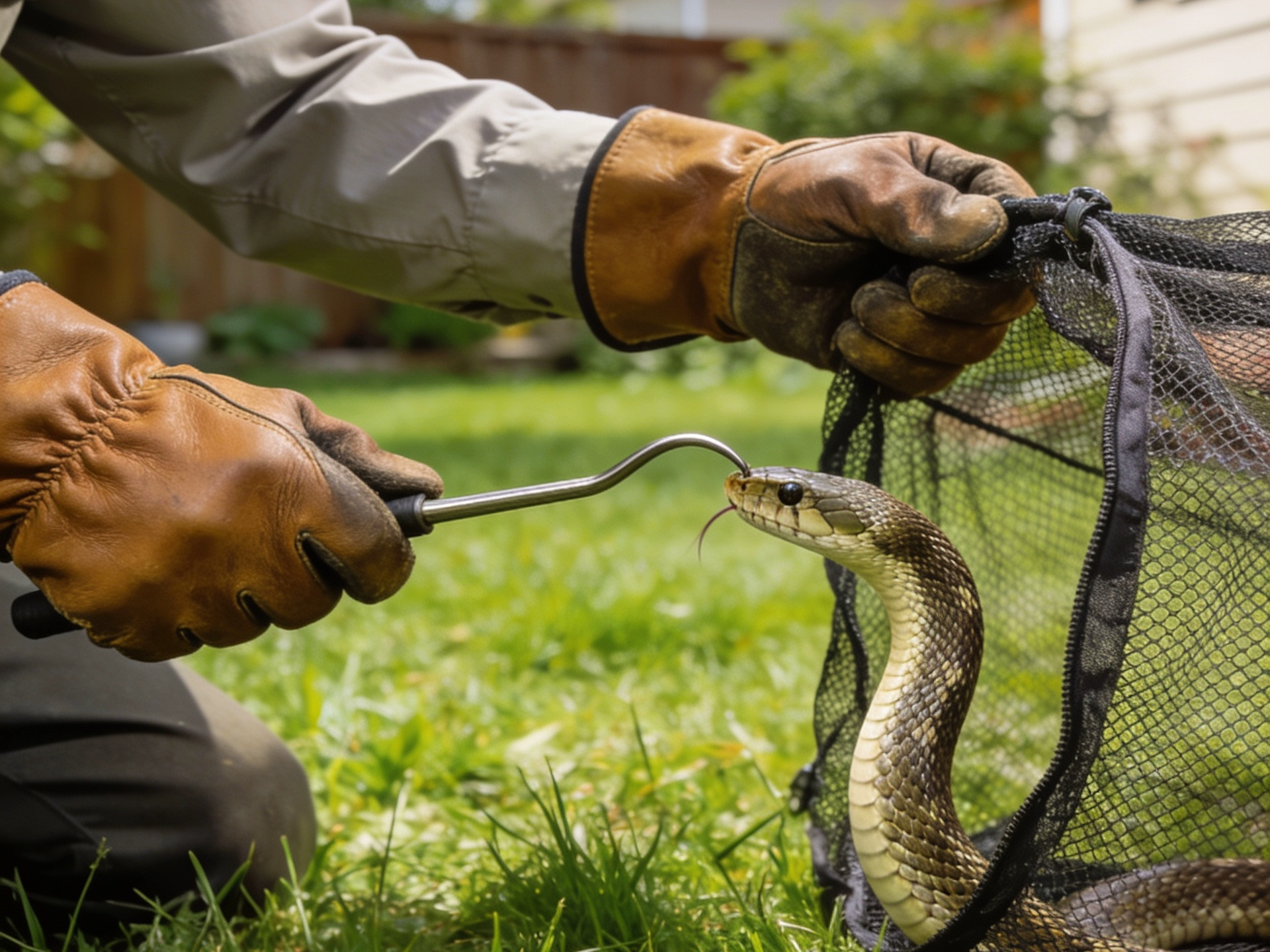


In 2026, snake removal cost typically falls between $148 and $396, with many jobs averaging about $238.
Below, you will find the biggest price drivers, what different service levels usually include, and hiring tips that can help you get safe removal without paying for surprises[1].
Key takeaways
Low-end removals can be as little as $148 for quick, simple jobs.
Most homeowner jobs cluster around $238 for balanced service and safety.
Complex access, nighttime work, or emergency calls may approach $396 due to added time and precautions.
Request multiple quotes, verify credentials, and ask how containment and relocation will be handled.
Preventive steps often cost less than repeated removal visits.
6 Factors That Affect Snake Removal Cost
Snake removal is priced case by case because the time, risk level, and access challenges can change fast. Here are the main factors a technician typically weighs when building an estimate.
- Snake Species and Size: Venomous species or large constrictors often call for more protective gear and more cautious handling, and some areas may also require relocation rules or permits. That can raise labor time and liability.
- Health and Safety Risks: If the situation involves higher bite risk, or the area has other pest activity, the technician may need extra containment and safety steps; pest control programs commonly emphasize safety protocols and careful handling practices.
- Home Construction and Entry Points: Gaps around utility lines, unscreened vents, and aging foundations can make both access and exclusion more involved, especially if repairs are needed to close off likely entry routes[2].
- Location and Accessibility: A snake in an attic, crawlspace, wall void, or up in landscaping typically takes longer to reach than one in an open yard. Difficult access can also require ladders, protective equipment, or a second set of hands.
- Scope of Work and Related Repairs: Some calls stay limited to capture and removal. Others expand into exclusion, cleanup, or repairs that increase labor and materials. If you are planning multiple fixes, the home services pricing directory can help you compare related project categories.
- Infestation Size and Recurrence: One snake is often a single-visit issue. Repeat sightings, or signs that snakes are returning, may call for monitoring, trap checks, and habitat changes to address what is attracting them.
How Much Does Snake Removal Cost by Type
Snake services can include inspection, removal, exclusion work, cleanup, and follow-up prevention. Cost depends on urgency, access, and how much work is required beyond the initial capture. Many wildlife control programs also prioritize nonlethal capture and exclusion approaches when appropriate[3]. If you are comparing options across providers, it can help to benchmark against general pest control prices.
| Type of Service | Cost | Features |
|---|---|---|
Inspect Snake Entry Point | $92 - $228 | Visual and physical inspection to find how snakes enter; often includes crawlspace, foundation, and attic checks. |
Remove Snake | $148 - $396 | Live capture or lethal removal performed by trained technicians, typically per incident or per hour. |
Relocate Captured Snake | $72 - $214 | Transport and release of captured snakes to a suitable habitat following local regulations. |
Seal Snake Entry Point | $186 - $612 | Exclusion work to close gaps and reinforce vents, screens, and foundation penetrations. |
Install Snake Deterrent | $286 - $892 | Hardware or habitat modifications such as fencing, mesh, and landscape adjustments to deter snakes. |
Control Snake Population | $384 - $948 | Multi-visit programs that reduce local snake activity through habitat modification and monitoring. |
Clean Snake Dropping | $118 - $268 | Sanitation and deodorizing of contaminated areas, sometimes requiring PPE and disinfectants. |
Remove Snake Costs
This covers on-site capture and safe removal when a snake is found in or near the home. Typical pricing runs $148 - $396 and averages about $238. The biggest cost drivers are species concerns, how hard the snake is to reach, and whether the visit is urgent.
Seal Entry Point Costs
Sealing helps prevent repeat entry and is often recommended after inspection. Work commonly ranges from $186 - $612 with an average near $338. Costs rise with the number of gaps, the need for minor repairs, and the materials required. Exclusion and sealing methods are widely used to limit animal access to structures[4].
Relocate Captured Snake Costs
Relocation applies when live capture is permitted and the technician transports the snake away from your property. Expect $72 - $214 with an average of $128, shaped by travel time, handling difficulty, and local requirements. For similar pricing structures, you can also review broader animal removal services costs.
Emergency Costs for Snake Removal from House
Finding a snake indoors can feel urgent, especially at night or around children and pets. Emergency pricing is usually higher because the crew may respond outside normal hours, spend more time securing the area, and take extra precautions to prevent the snake from disappearing into inaccessible spaces.

Emergency quotes often account for travel time, scheduling disruption, and, in some situations, the need for a two-person team in tight or higher-risk spaces. Pest management programs commonly emphasize established handling and containment practices for safety[5].
If your provider can seal gaps after the removal, you may be able to reduce the chance of repeat calls, and some companies offer bundled pricing for removal plus exclusion. In properties with overlapping pest issues, providers may also itemize other hazards separately, such as bee removal fees, when multiple risks are being addressed at once.
Cost of Snake Removal by State
Snake removal pricing can shift by state due to local labor costs, availability of qualified providers, regional demand, and regulations. Local wage differences can influence what companies charge for on-site work, including related outdoor service labor[6]. Climate and housing styles can also affect how often calls occur and how complex removal and exclusion tend to be.
| State | Cost | Details |
|---|---|---|
California | $182 - $458 | Higher labor and living costs in urban areas raise prices. Seasonal fire risk and dense suburban development can increase call frequency and access complexity. |
Texas | $142 - $388 | Large state with varied markets. Rural areas often have lower labor rates while metro regions show higher demand and faster response times. |
Florida | $158 - $412 | Warm climate leads to year-round snake activity, increasing seasonal demand. Coastal and flood-prone areas may require special handling. |
New York | $174 - $442 | Urban centers command higher labor and permit costs, while upstate locations see different seasonal patterns and lower contractor density. |
Illinois | $154 - $404 | Chicago-area labor rates and suburban housing density can raise costs. Winters reduce activity but spring and summer calls rise. |
Washington | $162 - $418 | Pacific Northwest moisture and forested regions affect species and access needs. Rural and mountain properties may require longer travel and higher fees. |
Arizona | $164 - $428 | Desert climate increases range of venomous species and demand for rapid, safe removals. Remote properties can add travel and containment costs. |
State ranges are a starting point. For the most useful number, ask local providers for a written estimate that spells out the service scope, any required permits, and whether exclusion or follow-up visits are included.
DIY vs. Professional Snake Removal Costs
DIY snake removal can look cheaper at first, but the real tradeoff is safety, effectiveness, and the risk of repeat visits. Below is a side-by-side view of common tasks homeowners attempt versus what a professional typically charges.

DIY Risks and Practical Challenges
Trying to handle or relocate a snake without training can lead to mistakes, including misidentifying the species, leaving entry points open, or getting injured. Basic inspection and small sealing projects may be manageable, but wall voids, tight crawlspaces, and any possibility of venomous species can raise the risk quickly. If you do take on simple tasks, step-by-step checklists can help you avoid common oversights[8].
Advantages of Hiring a Professional
A qualified pro brings handling tools, protective equipment, and experience working in confined areas. Many also offer documentation of findings and repairs, which can be useful if you need a record of what was done. If habitat changes are part of prevention, some providers coordinate work that overlaps with tree or landscape evaluation performed by credentialed arborists[9].
How to Decide Between DIY and Pro Services
DIY may make sense when the snake is clearly nonvenomous, is outdoors in an open area, and you can keep people and pets away. Hire a pro when the snake is inside, sightings are frequent, or your household cannot safely wait.
If you are planning exclusion work, it often overlaps with other pest issues. Comparing it to rodent removal costs can help you decide if bundling services is worthwhile. For long-term results, exclusion and habitat reduction are commonly emphasized as prevention strategies[7].
Common Add-Ons for Snake Removal
Add-ons are optional services that can be paired with removal. They increase the total cost, but they can also reduce repeat sightings or make follow-up easier.
| Add-On | Cost | Details |
|---|---|---|
Emergency Response | $96 - $268 | Priority dispatch for active or dangerous snake encounters, often used when immediate removal is necessary. |
After-Hours Service | $82 - $224 | Service provided outside normal business hours for nighttime sightings or weekend calls, useful for urgent situations. |
Wildlife Education | $44 - $132 | On-site guidance about species, attractants, and habitat modification to reduce future encounters[10]. |
Follow-Up Inspection | $74 - $188 | A scheduled return visit to verify exclusion measures and check for renewed activity. |
Detector Installation | $144 - $418 | Installation of sensors or alarms in attics, crawlspaces, or yard perimeters to alert homeowners to presence. |
Disposal Certificate | $28 - $96 | Formal paperwork confirming proper removal and disposal, sometimes required by landlords or insurers. |
Attic Cleanup | $168 - $472 | Debris removal, sanitation, and minor insulation repair after a snake removal from attic spaces. |
Add-on pricing depends on materials, equipment, travel, and how difficult the work area is to access. Company estimating practices also matter, since pricing often comes down to crew time and task difficulty.
How to Save on Snake Removal
You can often reduce the total bill by making the home easier to inspect and harder for snakes to enter again. Basic exclusion steps, such as tightening up gaps around doors and exterior openings, can cut down on repeat calls and help the paid service go further[11].
- Inspect and seal entry points: Note gaps at vents, foundations, and door sweeps. If you cannot repair them right away, mark them so the technician can find them quickly.
- Clear debris and manage landscaping: Remove woodpiles, dense ground cover, and tall grass near the home. Yard choices that reduce shelter for snakes and their prey can also lower encounters[12].
- Store food and water securely: Bring pet food indoors and address standing water to reduce attractants that can draw in prey animals.
- Schedule smartly: When possible, book during standard hours to avoid after-hours premiums.
- Bundle related tasks: If you already plan inspection, sealing, and habitat changes, grouping them into one visit can reduce repeat trip charges.
Vetted home service pros in homeyou's network can help you with local snake removal, prioritizing safety, quality, and lasting exclusion.
Frequently Asked Questions About Snake Removal
References
[1] Larramendy, Marcelo L., and Sonia Soloneski, "Integrated Pest Management and Pest Control - Current and Future Tactics", https://doi.org/10.5772/1383.
[2] U.S. Department of Housing and Urban Development, "Durability by Design A Guide for Residential Builders and Designers", https://huduser.gov/portal/sites/default/files/pdf/Guide-Durability-by-Design.pdf.
[3] "Research Report A Non-Lethal Technique for Raccoon Removal From Human-occupied Structures", npmapestworld org, https://npmapestworld.org/content-pages/technical-resources/pmf-research-reports/research-report-a-non-lethal-technique-for-raccoon-removal-from-human-occupied-structures.
[4] Stop Pests, "What Exclusion Techniques Work for Rodents", https://stoppests.org/frequently-asked-questions/what-exclusion-techniques-work-for-rodents/?keywords=rats.
[5] Bruesch, Jay C., "Institutional pest management current trends", Executive housekeeping today, https://pubmed.ncbi.nlm.nih.gov/10134138/.
[6] Bureau of Labor Statistics, "Landscaping and Groundskeeping Workers", https://bls.gov/oes/2022/may/oes373011.htm.
[7] Stop Pests, "Developing a Pest Exclusion Program for Cockroaches and Rodents - StopPests.org", https://stoppests.org/ipm-training/training-opportunities/stoppests-webinars/developing-a-pest-exclusion-program-for-cockroaches-and-rodents/\#7.
[8] "Home Improvement ExpertTM Checklists", Building America Solution Center, http://basc.pnnl.gov/home-improvement-expert/checklists.
[9] International Society of Arboriculture, "ISA Certified Arborist", https://isa-arbor.com/credentials/types-of-credentials/isa-certified-arborist.
[10] Sorvig, Kim, and J. William Thompson, "Sustainable Landscape Construction", https://doi.org/10.5822/978-1-61091-811-4.
[11] U.S. Department of Energy, "Doors", https://energy.gov/energysaver/doors.
[12] United States Environmental Protection Agency, "Resource Conserving Landscaping", https://archive.epa.gov/.


