
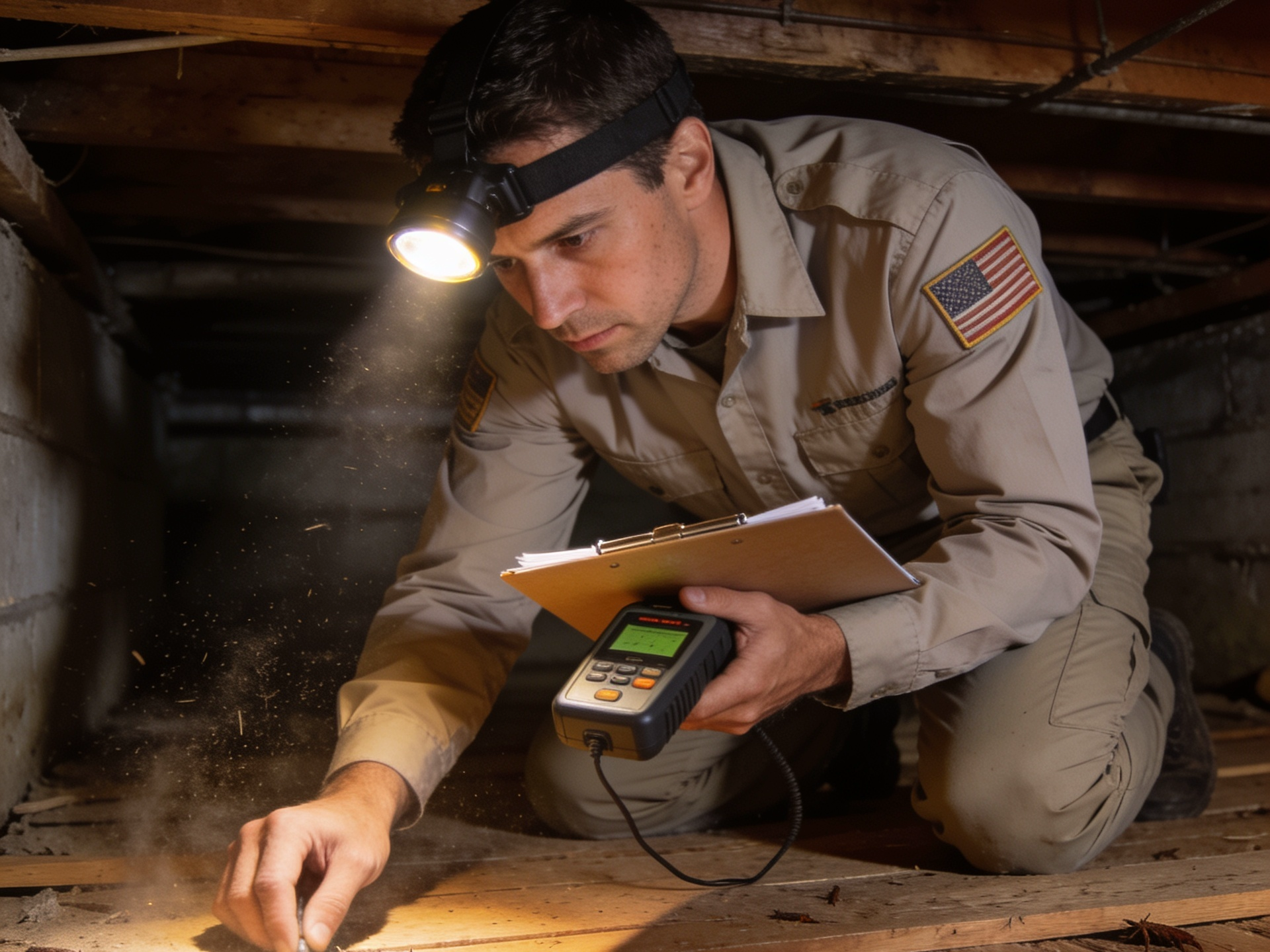


In 2026, the termite inspection cost typically runs from $96 up to $214, with many homeowners paying about $148 for a standard visit.
This guide breaks down what drives pricing, such as inspection scope, property size, and visible signs of infestation. It also compares basic and comprehensive options, then shares hiring tips that align with what a termite inspection generally includes and why homeowners schedule one[1].
Key takeaways
Basic visual inspections are usually the lowest-cost option, often near $96.
Standard inspections commonly cluster around $148.
Comprehensive or certified inspections can approach $214.
Larger homes and suspected infestations tend to raise the price.
Compare a few written estimates, and look for licensed inspectors who provide a written report.
6 Factors That Affect the Annual Termite Inspection Cost
Termite inspection quotes can look different even within the same city. Use the factors below to understand what you are being charged for, and what to ask before you book.
- Home Size and Square Footage: Larger homes take longer to check inside and out, which increases time on site and labor.
- Age and Construction Materials: Older homes, and homes with wood framing or untreated lumber, may require closer inspection and more documentation. Building design and materials can also affect risk and access points[2].
- Accessibility and Crawlspace Condition: Tight crawlspaces, cluttered basements, and limited exterior access can add time. Some situations also call for protective gear or special tools.
- Visible Signs of Infestation or Damage: If the inspector finds mud tubes, swarm evidence, or wood damage, the visit may shift from a quick check to a more detailed assessment and write-up.
- Inspection Type and Report Detail: A basic visual inspection usually costs less than an inspection that includes extra diagnostics or a more detailed written report. Ask what the standard report includes before you schedule.
- Technician Experience and Follow-Up Plans: Inspectors who offer monitoring, bait systems, or broader prevention planning may charge more, especially when services are designed around integrated pest management approaches[3].
Before the appointment, request a written scope that lists the areas to be inspected, the tools to be used, and whether add-ons like moisture readings are included. That makes it easier to compare quotes on the same terms.
How Much Does a Termite Inspection Cost by Type
Termite inspections range from quick visual checks to more detailed evaluations of specific areas like crawl spaces or structural framing. Pricing depends heavily on scope and what the inspector is expected to document. Standard checklists can also shape what is covered during an inspection[4].
If you are budgeting for potential follow-up, it can help to review typical pest control prices alongside inspection costs.
| Type of Service | Cost | Features |
|---|---|---|
Whole-Home Termite Inspection | $96 - $214 | A full visual inspection of accessible interior and exterior areas, often used for maintenance or real estate needs. |
Structural Wood Damage Inspection | $148 - $318 | Focused assessment of framing, beams, and joists for decay or infestation; may include probing and moisture checks. |
Crawl Space Termite Inspection | $104 - $226 | Inspection of the foundation perimeter and subfloor in confined conditions; limited access can raise labor time. |
Attic Termite Inspection | $92 - $198 | Examines roof framing and vents for evidence of termites or damage; access and insulation type affect time on site. |
Basement Termite Inspection | $88 - $189 | Checks sill plates and wall framing where moisture and cracks can increase risk. |
Termite Inspection Report | $44 - $136 | Written findings with photos and recommendations; often requested for lenders and real estate listings. |
Treatment Recommendation and Estimate | $58 - $148 | A plan outlining treatment options and projected scope, which may include baiting or liquid barrier approaches. |
General Termite Inspection Costs
A general termite inspection is typically a visual, noninvasive survey of accessible areas. Inspectors look for signs of activity and for conditions that can attract termites, which is why it is commonly scheduled as routine maintenance or during a home sale.
Costs run $96 - $214, with an average of $148. Pricing usually moves with the size of the home, the number of access points, and whether the inspector has to work in tight or obstructed spaces.
Structural Wood Damage Inspection Costs
A structural wood damage inspection is a more detailed evaluation, often requested when decay is visible, damage is suspected, or documentation is needed for a transaction.
Expect $148 - $318, with an average of $224. Costs can rise when moisture testing is needed, when the inspection requires more extensive probing, or when reporting requirements are more detailed. Documentation practices used in pest-control settings can influence how inspectors record findings and prioritize next steps[5].
Treatment Recommendation Costs
If active termites or damage are confirmed, the inspector may provide a treatment recommendation and estimate, including suggested follow-up. Typical ranges are $58 - $148, average $96.
Pricing depends on the proposed method, property size, severity, and access. Whole-structure heat treatment is one specialized approach that requires additional equipment and preparation[6]. For budgeting, compare any proposed figures with typical termite treatment costs.
Termite Inspection Cost By Size
Inspection fees often change based on how much area is being evaluated and how difficult it is to access key zones. Square footage, the number of entry points, and whether the inspector must crawl or use specialized tools all affect time on site.
Larger or more complex inspections can also involve additional equipment, such as moisture meters or scopes. Site conditions around the home, including landscaping and moisture near the foundation, can influence where inspectors focus their time[7].
Single-Area Inspection
A single-area inspection is common when the concern is limited to one location, such as a basement corner, porch post, or one exterior entry.
- Cost Range: $72 - $168
- Average Cost: $116
Costs may increase when access is difficult, when probing or moisture testing is added, or when the inspector is asked to evaluate related areas during the same visit.
Multiple-Area Inspection
This covers several targeted zones, such as a basement plus a deck and one interior wall. It is broader than a single-area check but does not cover every room.
- Cost Range: $132 - $276
- Average Cost: $194
Price typically rises with the number of locations, the distance between them, and any need for ladders or added diagnostic tools.
Attic and Crawl-Space Inspection
This option focuses on two areas where issues are often found, the attic and the crawl space. Inspectors look for evidence like mud tubes, damaged wood, and moisture concerns.
- Cost Range: $168 - $318
- Average Cost: $236
Confined spaces often take longer and may require protective gear and extra lighting, which can increase labor.
Whole-Home Inspection
A whole-home inspection is a complete interior and exterior walkthrough of the residence, typically covering accessible rooms, exterior grade, and visible foundation areas.
- Cost Range: $98 - $221
- Average Cost: $152
Longer time on site, use of specialized tools, and more detailed reporting can all push this price upward.
Entire-Structure Inspection
This applies to larger properties with multiple structures, such as detached garages, workshops, or outbuildings. The inspector evaluates each structure on the parcel.
- Cost Range: $242 - $486
- Average Cost: $358
Travel between buildings, added documentation, and the overall footprint tend to drive costs higher.
Cost of Termite Inspection by State
Inspection costs vary across the U.S. due to differences in labor rates, contractor availability, travel time, and local demand. State and local rules can also affect inspection requirements, which can influence pricing[8].
| State | Cost | Details |
|---|---|---|
California | $114 - $244 | Higher labor costs and strong demand in many metro areas can increase prices. Coastal moisture can also make inspections more detailed. |
Texas | $94 - $209 | A large service area can raise travel costs, while competition may lower prices in some metros. |
Florida | $108 - $238 | Higher risk and frequent real estate activity can keep demand steady, which may affect scheduling and pricing. |
New York | $118 - $256 | Urban labor costs are higher, and older homes may require more time on site. |
Illinois | $91 - $207 | Labor rates are often moderate, though home age and localized risk can shift individual quotes. |
Washington | $97 - $216 | Moisture conditions may lead to more detailed inspections in some areas, and rural access can add travel time. |
Colorado | $88 - $198 | Lower prevalence in some regions can affect demand, while long distances to rural properties may increase fees. |
State averages are a starting point. For a useful comparison, ask local companies for written quotes based on your home's size, access, and the type of report you need.
DIY vs. Professional: Professional Termite Inspection Costs and Considerations
Choosing between a DIY check and a professional inspection changes what you pay and what you learn. A DIY approach may help you spot obvious red flags, but it can be easier to miss early or hidden issues.
For broader budgeting, project cost estimates lists costs across other home services and categories.

DIY Risks and Practical Limitations
A homeowner doing a visual check can miss subtle signs, including hidden moisture sources or early damage inside walls and framing. Crawl spaces also introduce safety and exposure concerns, especially when access is tight.
Some professionals incorporate broader exclusion planning as part of inspection and prevention discussions, which can be more involved than a basic visual review[9].
Advantages of Hiring a Professional
Professionals bring training, tools, and reporting formats that are often helpful for real estate documentation. They can also spot less obvious damage and recommend next steps that align with current pest management practices[10].
How to Decide Between DIY and Pro
If you see swarm activity, mud tubes, or damaged structural members, bring in a professional promptly. Waiting can allow damage to progress and lead to higher repair costs.
For routine seasonal awareness, a careful DIY walk-through can be reasonable. Still, a professional inspection is a safer choice when buying or selling a home, or when crawlspace entry and exclusion work are part of the job. Effective sealing and exclusion techniques can reduce reinfestation risk when those steps are needed[11].
Is a Termite Inspection Worth the Cost?
Termite damage costs U.S. homeowners an estimated 5 billion dollars each year, and most of it is not covered by standard homeowner's insurance. An inspection is one of the lowest-cost ways to catch a problem before it becomes a structural one.
A single inspection running near $148 can reveal hidden activity that, left undetected, could require thousands in repairs. For homes in moderate to high-risk regions, an annual inspection often pays for itself in avoided damage alone.
Beyond prevention, a current inspection report can protect your position in a real estate transaction. Buyers and lenders frequently require one, and a clean report can speed up closing. When damage is found early, treatment options tend to be less extensive and less expensive than remediation after the fact.
Termite Inspection Add-On Costs
Add-ons expand what a basic inspection covers. They can raise the total price, but they may also provide clearer documentation, targeted diagnostics, or extra detail for repair planning.
Termite Inspection Report Cost
A detailed written report is one of the most requested add-ons, especially for real estate transactions and lender requirements. Report costs are included in the add-on table below, alongside other diagnostic services.
| Add-On | Cost | Details |
|---|---|---|
Moisture Meter Readings | $34 - $92 | Measures moisture in wood and framing to flag conditions that attract termites and help target repairs. |
Thermal Imaging Scan | $126 - $302 | Detects heat anomalies behind walls that may suggest moisture or activity. Often used as a noninvasive screening tool. |
Borescope Examination | $84 - $212 | A small camera checks voids through small access points to help confirm hidden activity. |
Fungus and Mold Detection | $112 - $284 | Tests for fungal decay and mold that can accompany wood damage and affect repair planning. |
Preventive Barrier Consultation | $68 - $172 | Recommendations on barriers and property changes intended to reduce future risk. |
Reinspection After Treatment | $72 - $176 | Follow-up to confirm outcomes and document remaining concerns, sometimes used for warranty records. |
Detailed Infestation Mapping | $98 - $248 | A map of affected areas to guide contractors and support repair planning or documentation needs. |
Add-on pricing typically reflects tool requirements, technician time, and whether testing involves deeper access. Detailed mapping can be especially helpful when planning landscape or construction changes, since it helps clarify risk areas for designers and contractors[12].
If sampling or lab work is involved, costs can climb. Moisture and fungus findings can also affect repair priorities, and they may overlap with broader foundation-related planning guidance used in rehabilitation work[13]. When budgeting beyond inspection, it can be useful to compare typical termite control prices as well.
How Season Affects Termite Inspection Cost
In 2026, inspection pricing can shift by season because demand and scheduling change throughout the year. Weather can also affect access and time on site, especially in wet months or during extreme cold.
| Season | Cost | Description |
|---|---|---|
Spring / Early Summer | $101 - $223 | Warmer temperatures can increase activity and demand, which may tighten appointment windows and raise prices. |
Summer | $103 - $226 | Busy schedules can affect availability, and some markets may price higher during peak demand. |
Autumn / Fall | $89 - $201 | Cooler weather may reduce demand in some areas, which can improve scheduling and lower short-term pricing. |
Winter | $95 - $212 | Cold weather can slow access or lengthen the visit, which can raise labor time. |
Rainy Season | $104 - $229 | Wet conditions can delay work and increase moisture-related checks, affecting price and timing. |
During peak periods, inspections may cost more simply because crews are booked, and weekend or short-notice slots can be priced higher. Weather-related delays can also add time or require a return visit.
If an inspection during a busy season leads straight into treatment planning, costs and scheduling may look more like a treatment project. In some cases, that can include services with different timelines, such as termite fumigation costs. Wet conditions may also require extra precautions related to application methods and runoff, which can influence labor and material needs[14].
How to Save on Termite Inspection
You can often keep inspection costs in check by reducing the time an inspector needs to access and evaluate key areas. These steps do not reduce the quality of the inspection, they help the visit stay focused and efficient.
- Prep Accessible Areas: Clear storage from crawlspaces, attics, and basements so the inspector can move and see problem areas faster.
- Gather Property Records: Share prior reports, treatment history, and warranties so the inspector does not repeat work that is already documented.
- Manage Landscaping and Vegetation: Keep plants, mulch, and firewood away from the foundation to reduce wood-to-soil contact and moisture near the house[15].
- Combine Service Visits: If possible, schedule the inspection alongside other routine maintenance visits to reduce separate trip charges and coordination time.
- Request a Written Scope: Ask for a written scope that separates inspection work from any recommended treatments, so you can compare quotes and prioritize.
Connect with vetted home improvement contractors on homeyou to compare options, review scope details, and hire a contractor who provides clear documentation.
Frequently Asked Questions About Termite Inspection
References
[1] PestWorld, "What Is a Termite Inspection and Why Do You Need One", https://pestworld.org/news-hub/pest-articles/what-is-a-termite-inspection.
[2] U.S. Department of Housing and Urban Development, "Durability by Design A Guide for Residential Builders and Designers", https://huduser.gov/portal/sites/default/files/pdf/Guide-Durability-by-Design.pdf.
[3] Larramendy, Marcelo L., and Sonia Soloneski, "Integrated Pest Management and Pest Control - Current and Future Tactics", https://doi.org/10.5772/1383.
[4] "Home Improvement ExpertTM Checklists", Building America Solution Center, http://basc.pnnl.gov/home-improvement-expert/checklists.
[5] Kloosterman, L. and K. Mager, "Pest Control in Food Businesses: An Introduction", https://doi.org/10.1533/9780857098634.3.465.
[6] "Controlled Environment Heat Treatment as a Safe and Efficient Method of Pest Control", http://cool.culturalheritage.org/byauth/nicholson/heatpest.html.
[7] United States Environmental Protection Agency, "Resource Conserving Landscaping", https://archive.epa.gov/.
[8] Association of American Pesticide Control Officials, "Documents 2002 to Present", http://aapco.org/documents.
[9] Stop Pests, "Developing a Pest Exclusion Program for Cockroaches and Rodents - StopPests.org", https://stoppests.org/ipm-training/training-opportunities/stoppests-webinars/developing-a-pest-exclusion-program-for-cockroaches-and-rodents/\#7.
[10] Bruesch, Jay C., "Institutional pest management current trends", Executive housekeeping today, https://pubmed.ncbi.nlm.nih.gov/10134138/.
[11] Stop Pests, "What Exclusion Techniques Work for Rodents", https://stoppests.org/frequently-asked-questions/what-exclusion-techniques-work-for-rodents/?keywords=rats.
[12] Sorvig, Kim, and J. William Thompson, "Sustainable Landscape Construction", https://doi.org/10.5822/978-1-61091-811-4.
[13] U.S. Department of Housing and Urban Development, "The Rehab Guide Foundations", https://huduser.gov/publications/pdf/foundations.pdf.
[14] "Research Report Impact of Ant Control Technologies on Insecticide Runoff and Efficacy", NPMA PestWorld, https://npmapestworld.org/content-pages/technical-resources/pmf-research-reports/research-report-impact-of-ant-control-technologies-on-insecticide-runoff-and-efficacy.
[15] Brancalion, Pedro H. S. and Karen D. Holl, "Guidance for Successful Tree Planting Initiatives", Journal of Applied Ecology, https://doi.org/10.1111/1365-2664.13725.


